John Walter Whitlinger was born in 1869 to John Finley & Julia Whitlinger. He was usually called J. W. He and his siblings were the fourth generation of Whitlingers in the United States. His great grandfather John came from Germany in the 1700’s. He was a farmer who fought in the War of 1812.
John’s third child was Simon, J.W.’s grandfather, born in 1816, the same year our town Warren was founded. Simon built a tannery on the southeast corner of Pennsylvania Ave. and North 2nd Street in 1845, just a few years before Warren was changed to Apollo Borough. There was a tannery in nearly every village in early days. Shoes & boots were made to order and went straight from the cow to the foot in most cases! Simon then went into the Leather & Harness business and soon added ready-made clothing. He was quite the entrepreneur! Simon married Violet Taylor & they had 5 children. Simon built the first three-storied frame building in Apollo at the bottom of N. Second Street. Later in 1876, when the school house became too crowded, the second floor of the Simon Whitlinger house was used as classrooms. Simon died in 1902 at the age of 86.
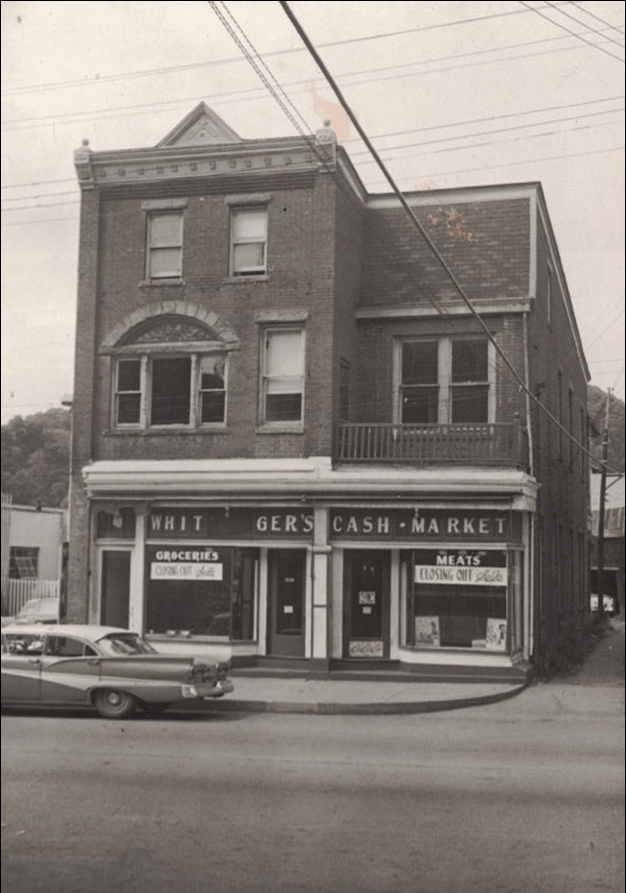
Simon’s son John Finley took over the tannery then built a butcher shop on 10th Street. The tannery closed in the early 1900’s, but the butcher shop thrived. This is where John Walter comes in. J.W. worked for his father, John Finley for awhile. When his father gave J.W. the store, he moved the meat market to 1st Street and then opened a branch store at 712 N. Warren in the early 1900’s. The cattle for the butcher came from the West Apollo train station and family members would drive them across the bridge to the shops.
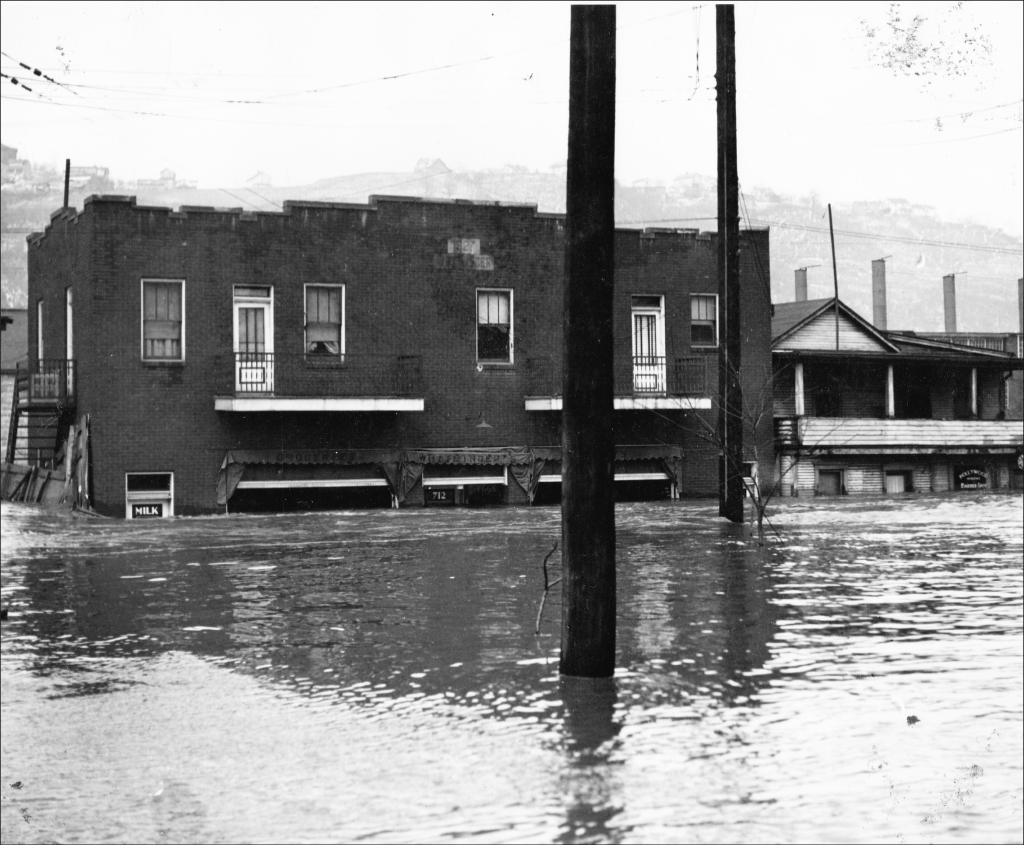
J.W.’s oldest son Edgar began working for J.W. in 1910. In 1922 J.W. moved the 1st Street building a block down and expanded the store into the building next door & added groceries. In 1927 he remodeled the Warren Avenue building, adding groceries there too. J.W. and his wife Annie McClelland Whitlinger had ten children. Edgar worked in the N. Warren Avenue store. Their son, LeRoy and his twin brothers Hugh & William worked at the store on 1st Street and ran it after J.W. retired. The 1936 Flood hit both stores hard. LeRoy got in a boat & went into the alley. He and another man broke a window to get into the store and loaded the boat with whatever they could get out. LeRoy then began handing out the food and told people, “If it’s edible, eat it. If it’s cat food, feed your cat & if it’s dog food, feed your dog.” Most of the canned goods lost their labels so they were put in bushel baskets & sold for pennies. People would open the cans, not knowing what they were getting. You ate what you got because it was quite a while before there were delivery trucks coming into Apollo.
J.W. was involved in the town and served on the Apollo Council for a short time. He disagreed about building the high school on the corner of N. 2nd and Pennsylvania Ave. He thought it should be built up by the Grove. He quit Council after that. Meanwhile Annie was involved in the American Legion, the Women’s Christian Temperance Union and the Apollo 1st Methodist Church. J.W. attended church with her occasionally. J.W. retired in 1937 and turned the stores over to his sons. There was a large tree behind the 1st Street store with a bench built around it. That’s where you could find him after retirement. There was always someone there to shoot the breeze with. That store was torn down in the 1960’s to make room for the new Apollo Plaza. J.W passed away in 1943 at around 73 years old and Annie died in 1959 at 90 years old. They are buried in the Riverview Cemetery in Apollo.
The following comes from the Apollo News-Record “Remember When” Column. Unfortunately it is undated and the author is not noted.
John Whitlinger Had A Butcher Shop
I remember when John W. Whitlinger operated a butcher shop on First Street; the shop was located in a small building between the old hotel and Cowan’s Department Store. At that time a butcher shop sold meat only, which included fish and poultry; there were no groceries like the present day combination grocery and meat markets.
I remember when the butcher shops sold oysters from a wooden tub with a cake of ice in the tub to keep them fresh. You could purchase a pint or a quart and they were placed in a cardboard container. However the oysters were sold only during the Months that contained the letter “R”.
Mr. Whitlinger owned a butcher shop on Warren Ave., at Tenth St. prior to the one at First St. and he had a slaughter house on Tenth St., where he did his own butchering. Along with other butchers in the valley they would go to the stockyards in Pittsburgh and purchase a car load of beef cattle and have them shipped to Leechburg where each butcher would unload his stock.
Mr. Whitlinger’s son Edgar would ride the streetcar to Leechburg where he would unload the cattle and drive them on foot to Apollo over the dirt road now known as Route 66 but at that time the road was not improved. Edgar sometimes had trouble keeping the cattle on the proper road but he would bring them through to Eleventh St. and up the Sugar Hollow road to the eastern edge of the Whitlinger Farm where they were turned out to pasture, then later when the Whitlingers needed to kill a beef they were all driven to the slaughter house. One was selected and the others were returned to the farm because it was much easier to handle them that way than to bring them one at a time.
During this time period the retail price of beef steak was 35 cents to 40 cents per pound. How many pounds would you like to have at that price???

 Apollo Area Historical Society