On Tuesday, March 17, 90 years after the devestating flood came through the Kiski Valley, the AAHS hosted a program for the community. We walked through the flood via a powerpoint presentation. Here is the recreated program for your viewing pleasure! Here is a link to Google Maps that will help as you “walk along” with us!
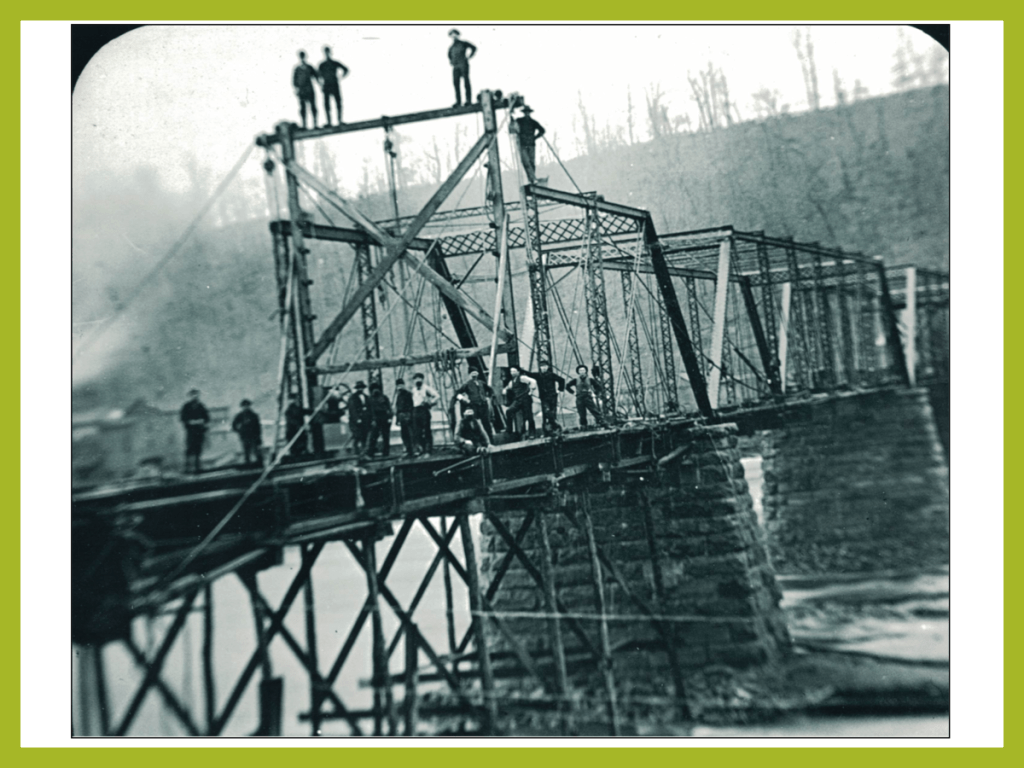
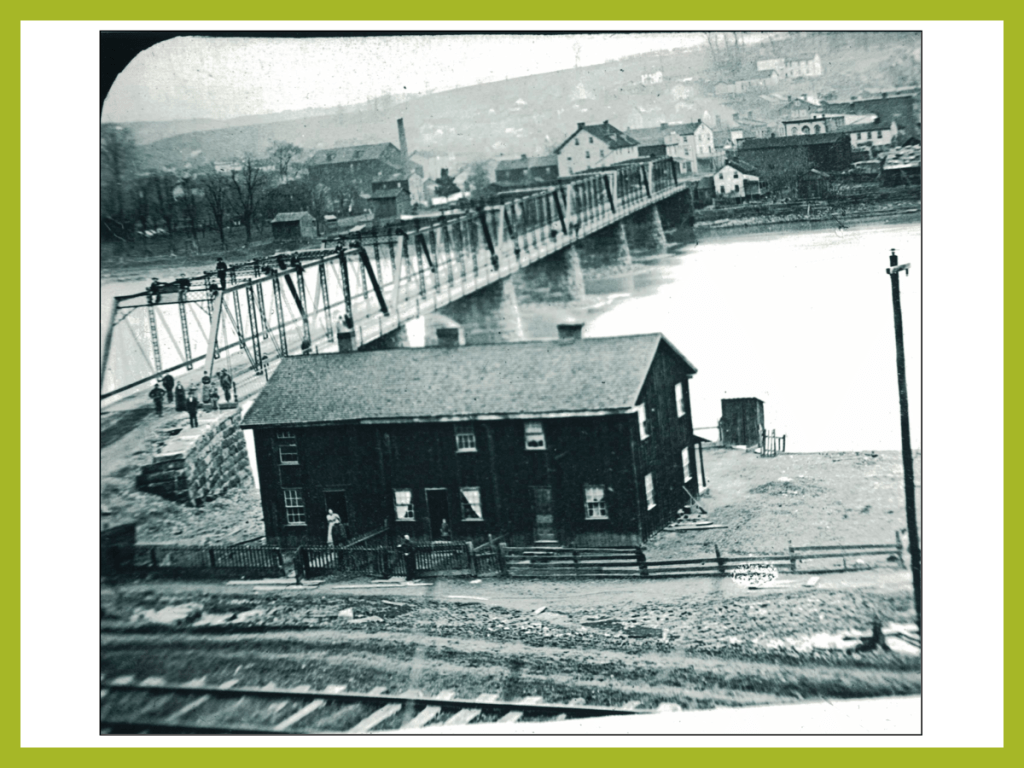
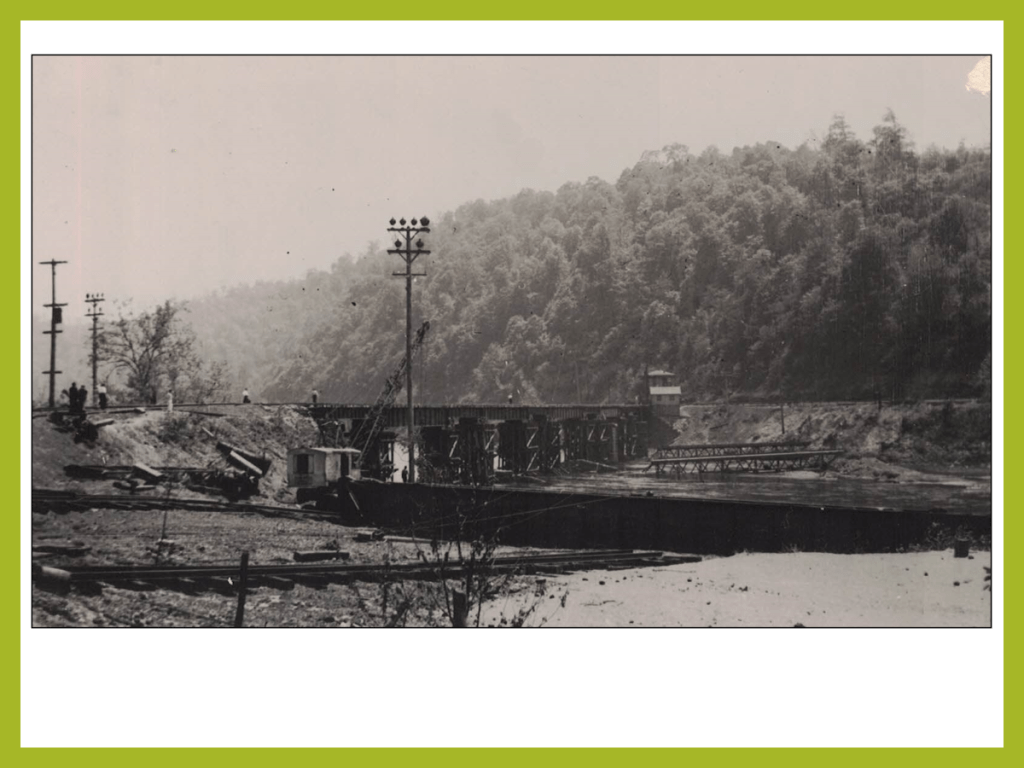
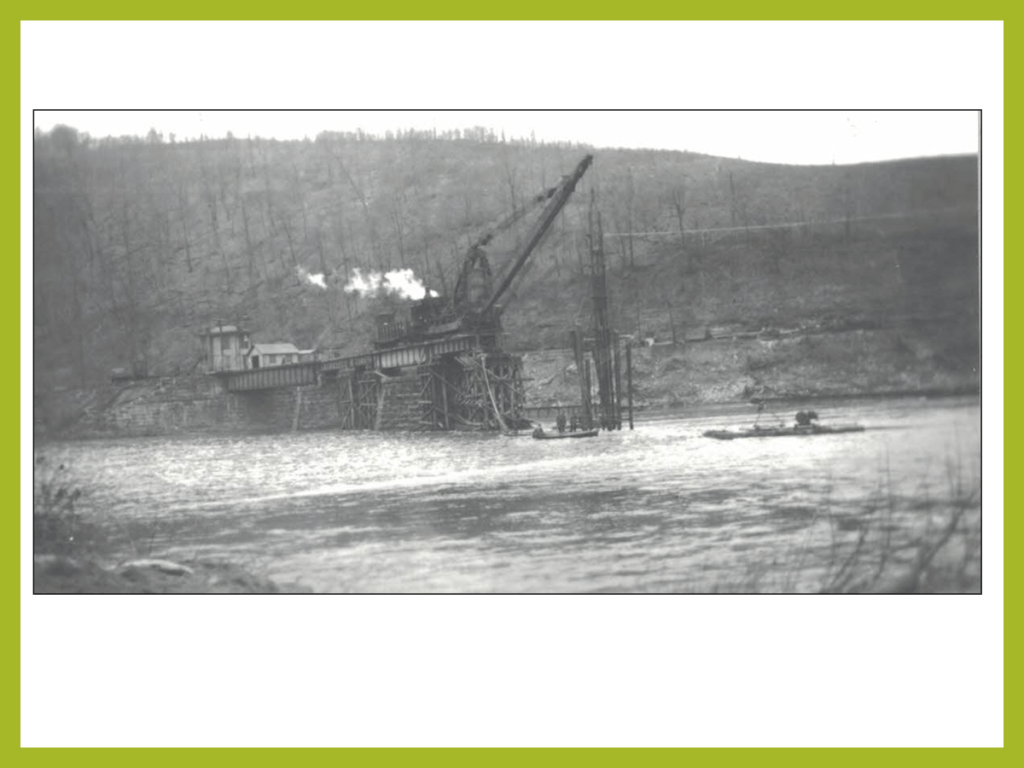
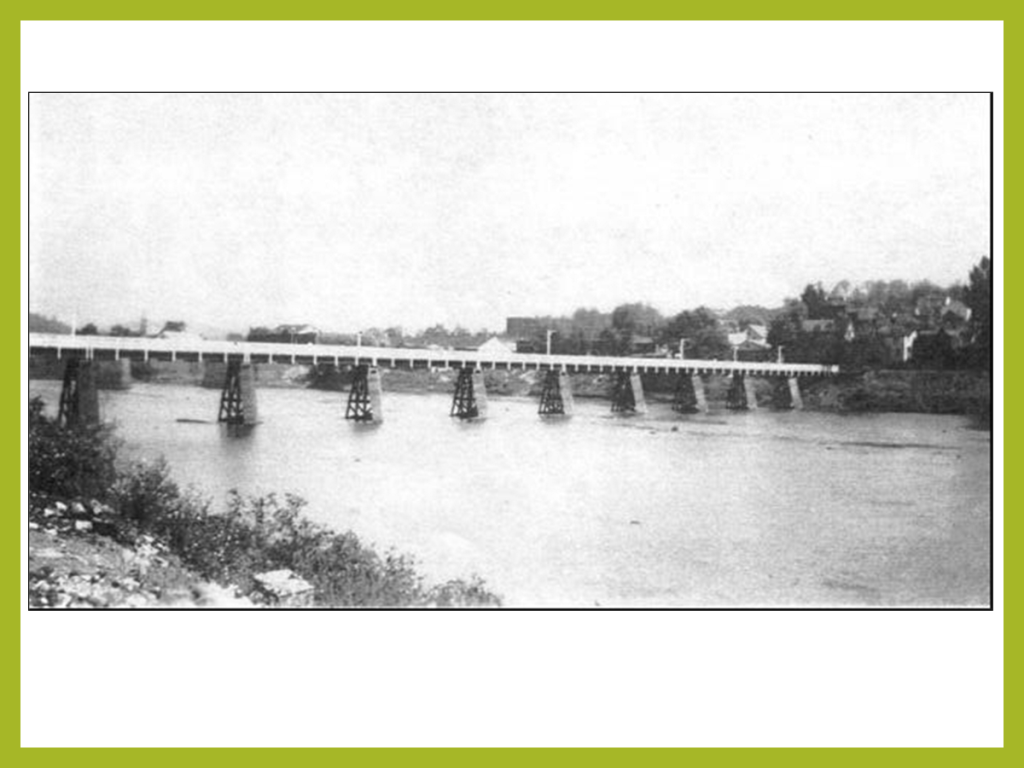
There have been many floods in the Kiskiminetas River including the Johnstown Flood of May 1889. A notable one occurred in 1831 when parts of the Leechburg Dam was swept away. In 1866, Dam #2 above Apollo was destroyed. This was a calamity to the town as the Rolling Mill was run by water power at the time. January 1881, the Apollo Toll Bridge was destroyed by a big ice gorge. The new bridge was completed on March 17, 1882 only to be wiped out on March 17, 1936, only 54 years later. Here are some earlier pictures of the 1882 bridge.
Before we begin our walk, I want to present a youtube song about Pegtown & the flood. It’s not completely accurate as no one drowned in our area. However it is a nice little video.

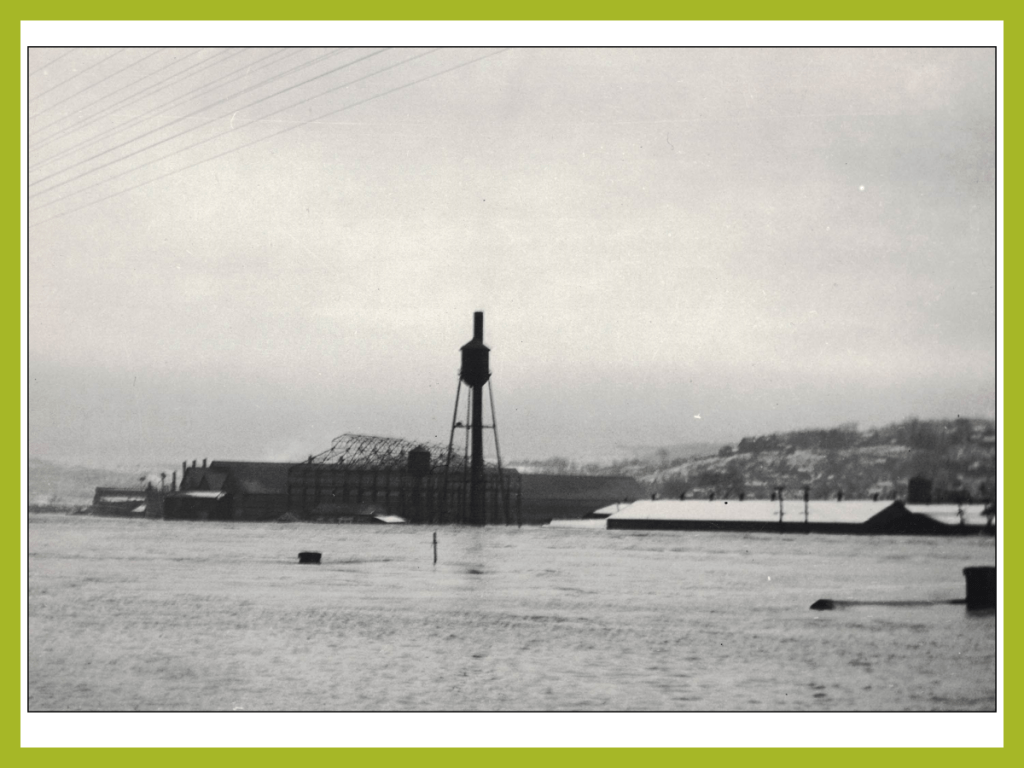
I’d like to give you some background about the 1936 St. Patrick’s Day Flood. During January and February of 1936 the weather had been very cold, very similar to what we are experiencing now in fact. The ground was frozen to an unusual depth. When rain came in March, the water could not soak into the ground. Rain fell in the area for more than four days. There were no flood control dams at that time so the rain and thawing snow caused a rapid run-off from the hills and mountains farther up in the watershed. By the evening of March 16, the rivers were nearing the flood stage, but the families in the area were unprepared for what was to come. They were startled as they watched the flood waters cover roads and railways. On March 17, many industries located on the river banks had to close due to the high waters. The uncontrollable flood waters came so swiftly and unexpectedly that people fled with just the clothes on their backs.
We are going to take a walk through Apollo and see the devastation that those flood waters had on our town. Walk with me out the door of this WCTU building and turn left to look down the street.The various news articles included are from the Apollo News-Record from after the flood.
Scope of Flooding
A flood, the equal of which has never been known here, swept through the Kiskiminetas Valley Tuesday evening and Wednesday leaving in its wake wreck, ruin and disaster.
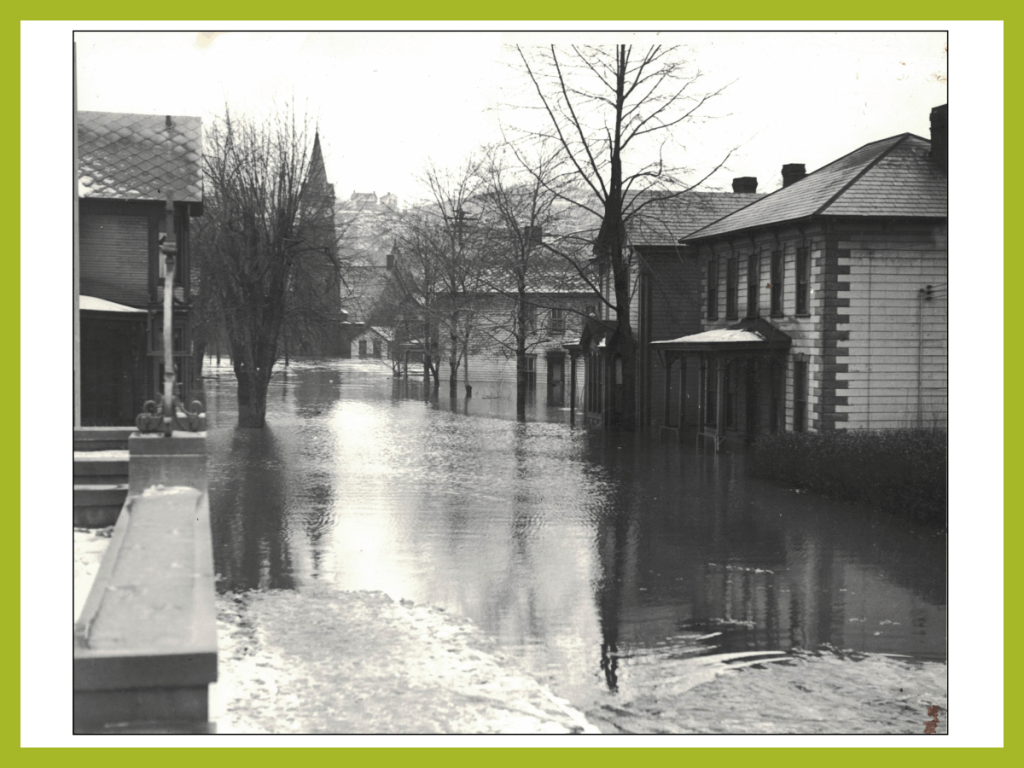
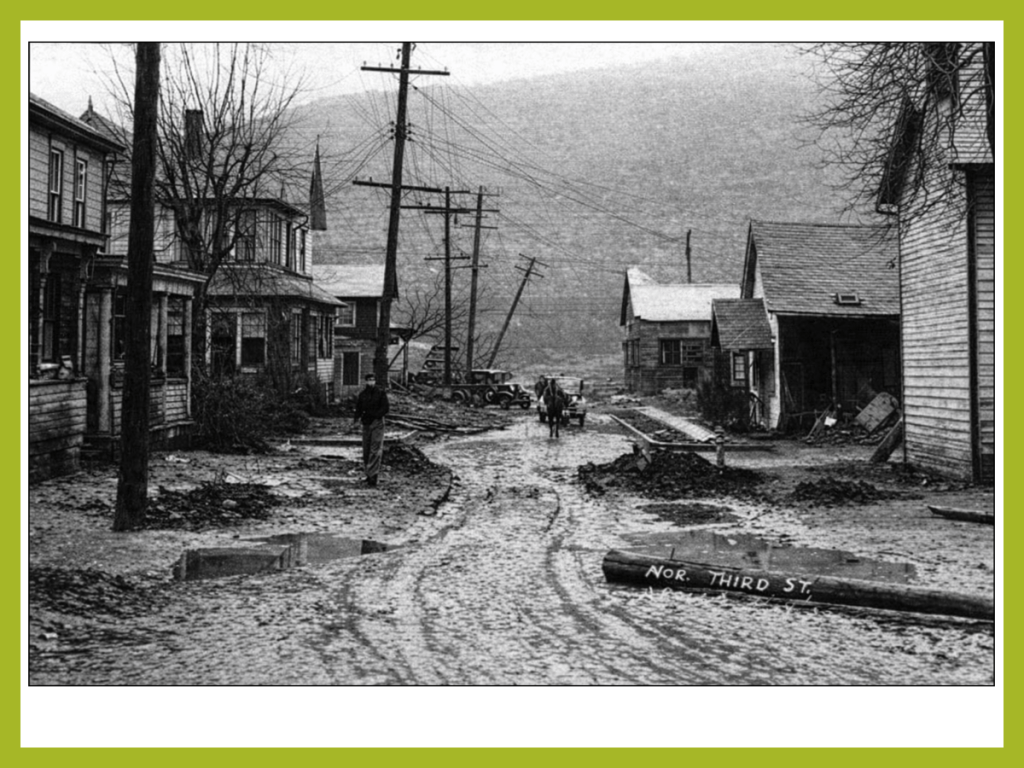
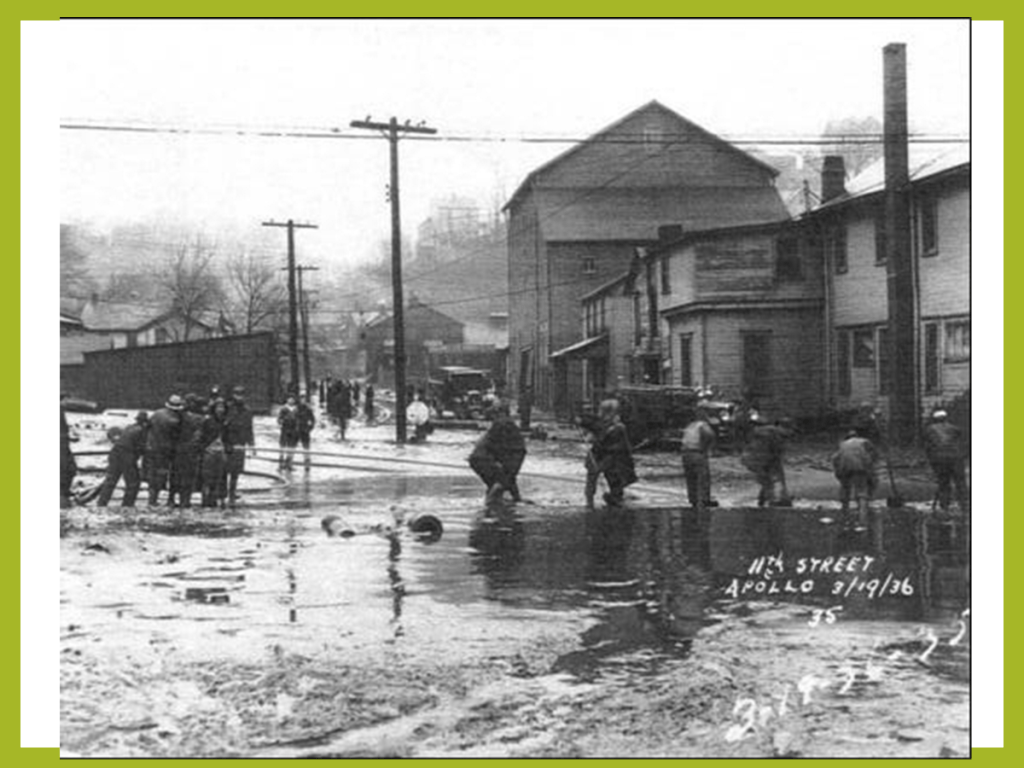
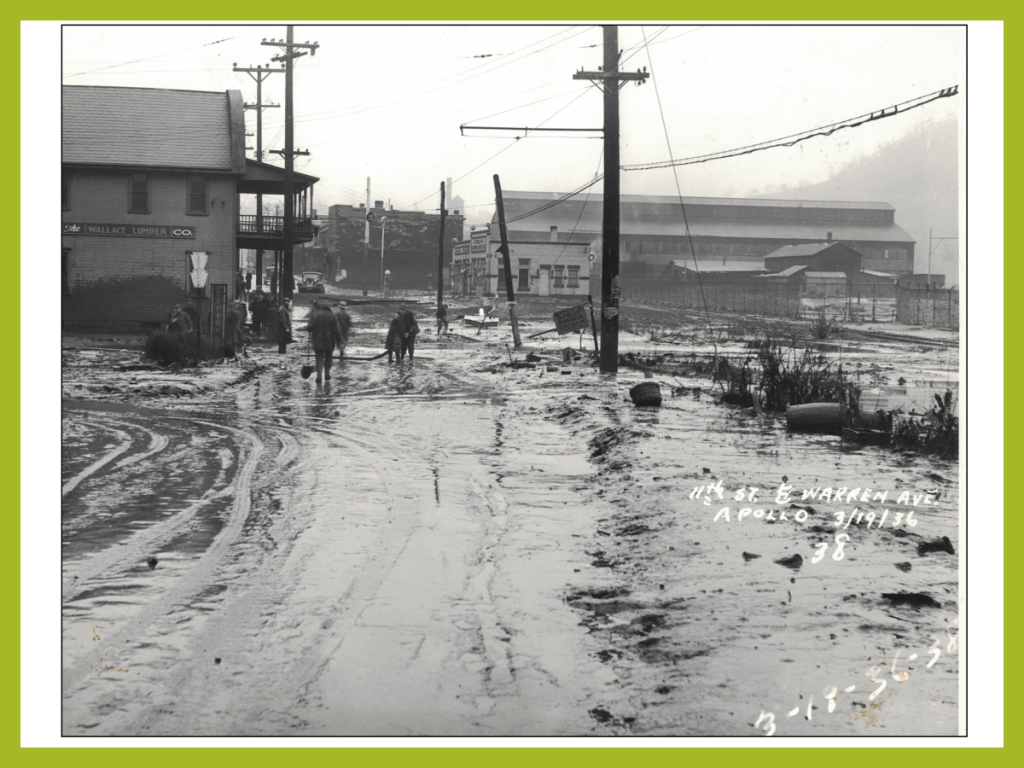
Apollo was flooded on First Street to within a few feet of the street car on Warren Avenue. At N. Second Street the water reached the S. M. Jamison home. N. Third St. was covered to midway along the Lutheran Church. N. Fourth St. was flooded to near Pennsylvania Ave. At N. Fifth St. the water reached the Lee Bortz home; at N. Sixth St. to the Philip Koch home; on N. Seventh St. to the Alcorn property; on N. Eighth St. to the rear of the Fiscus store; at N. Ninth St. to the upper side of the Preston C. Grimm home and at N. Eleventh St. and Warren Ave. there was a 2-foot stage of water and the water was backed up Sugar Hollow for more than a mile.
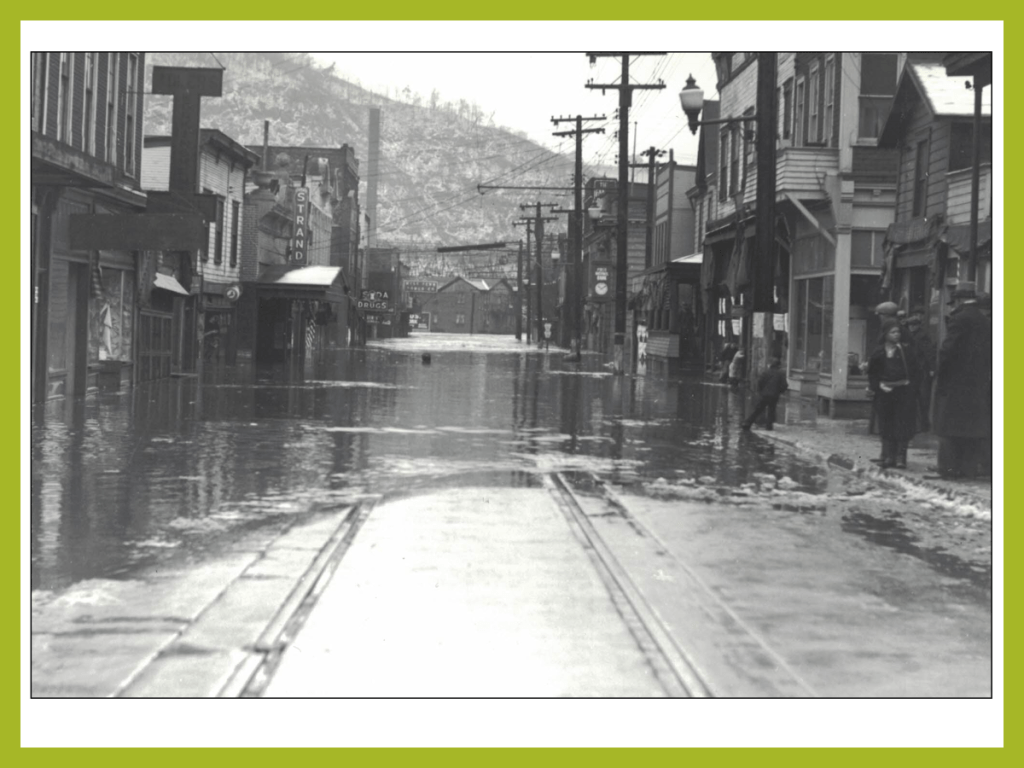
This condition naturally covered Warren Ave. from First St. to the north end of town flooding all business houses and destroying the very heart of the business section. It is impossible at this time to secure any estimate of the damage but most businesses along First St. and Warren Ave. have been practically washed out. Cleaning up business places is underway but there is no definite time known when stores may be reopened.
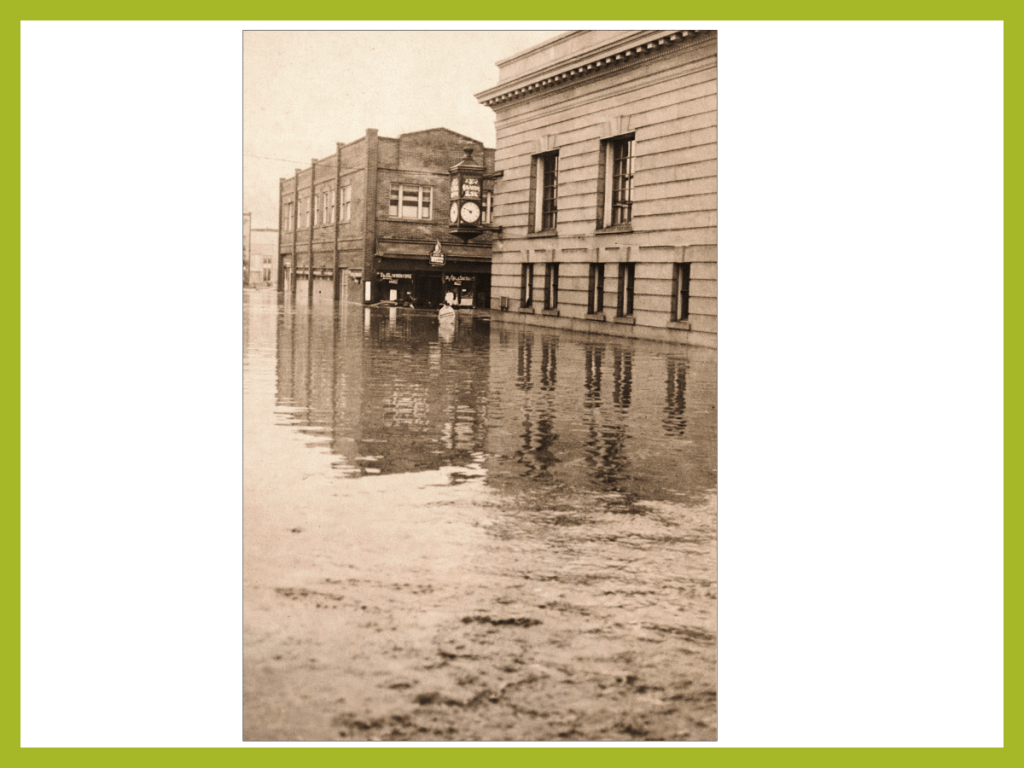
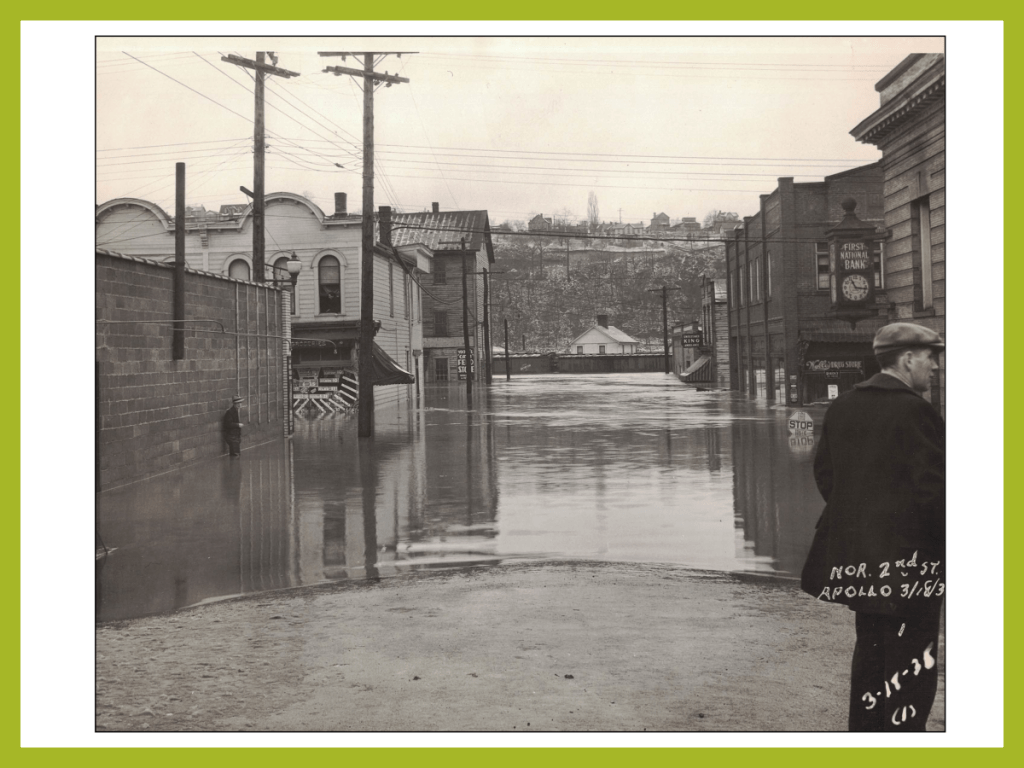
Now we’ll go to the corner where the Dollar Tree is now and turn left and walk to the alley. Look up & down Warren Avenue. You’ll have to remember that the plaza was not there yet.
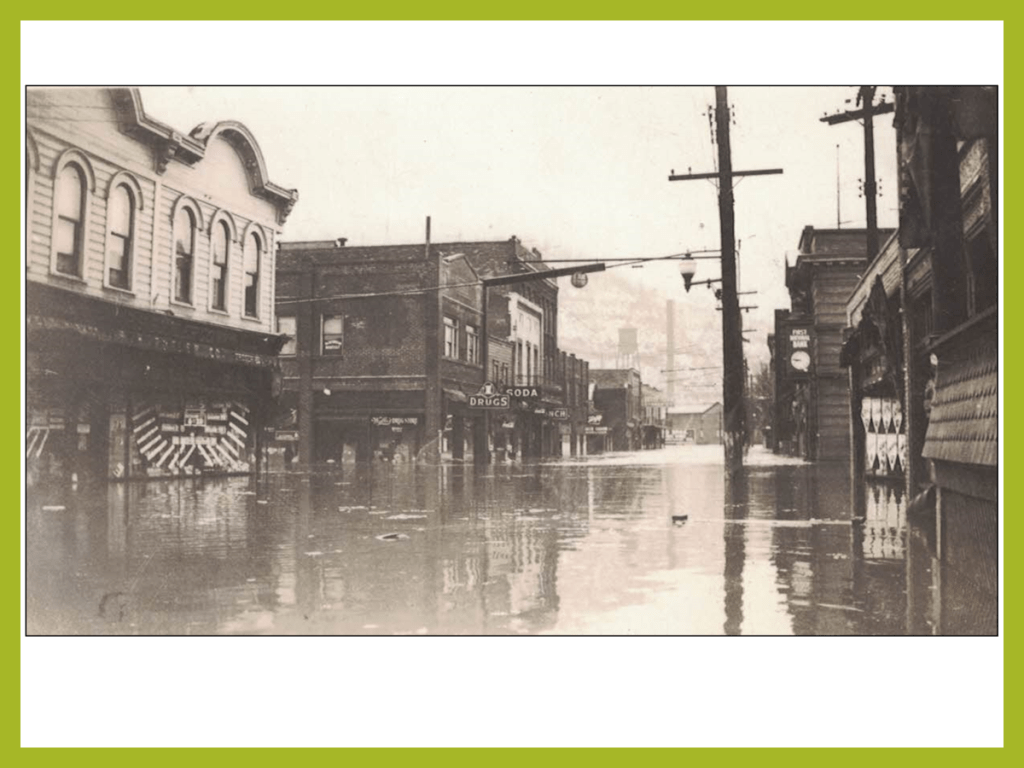
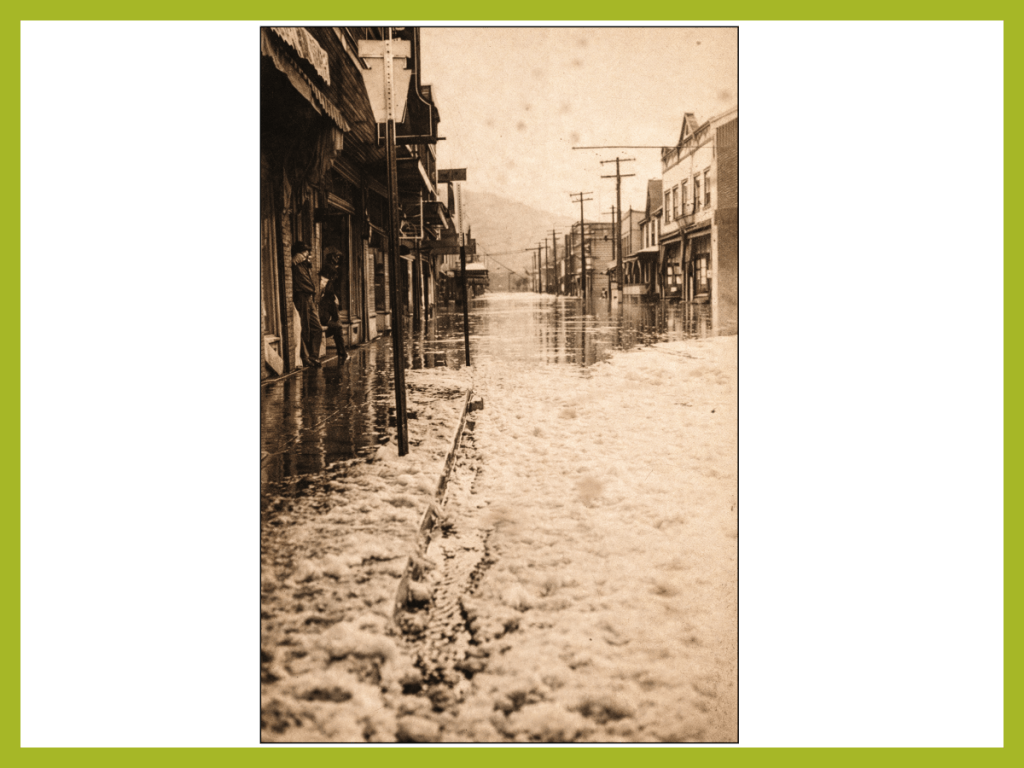
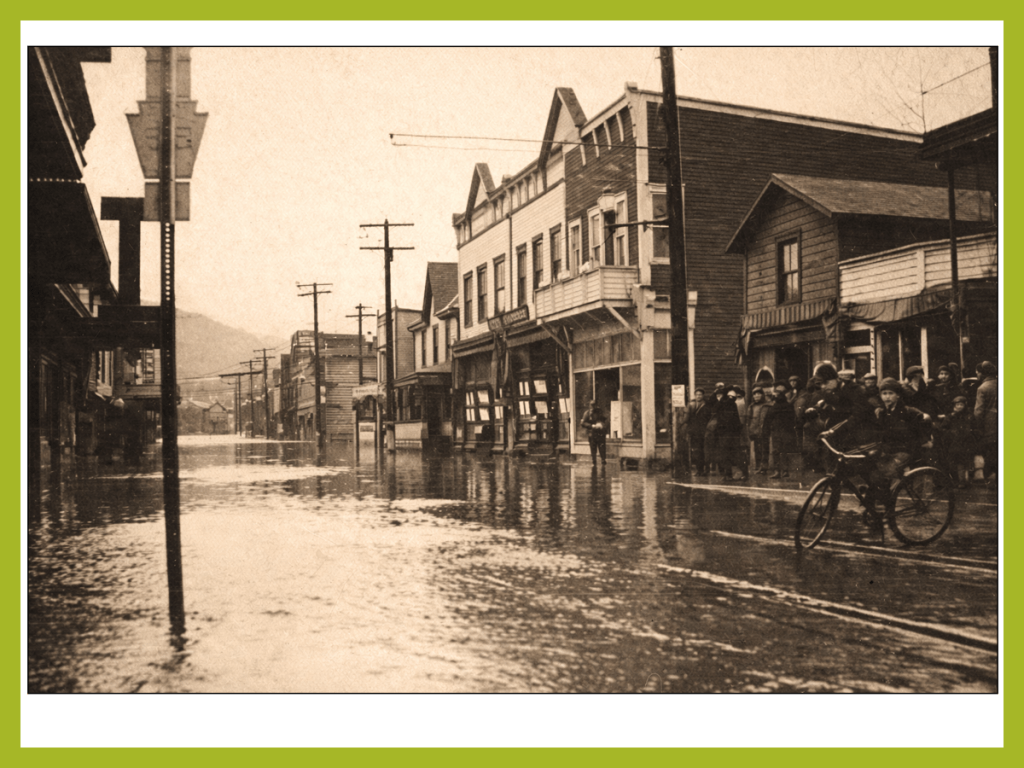
Let’s cut through the plaza and stand across from the Chambers Hotel. There was a Traffic Dummy in the middle of the road. It was a directional post that you’ll see in the one picture. The Miss Kiski rescued a lot of people around town.
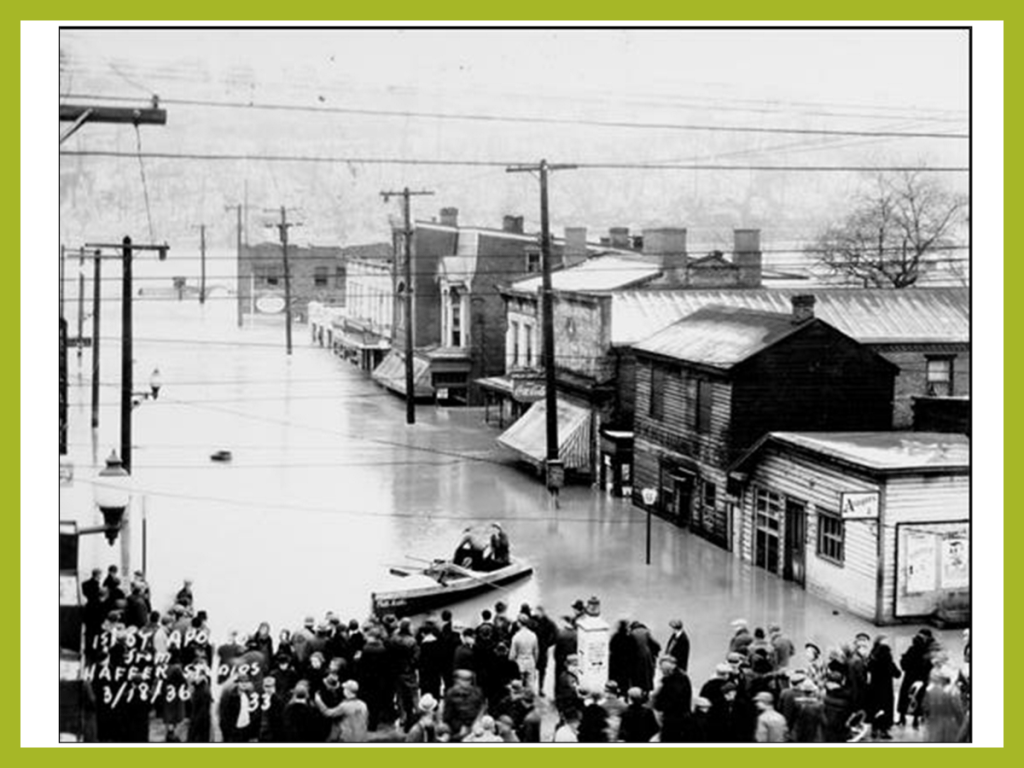
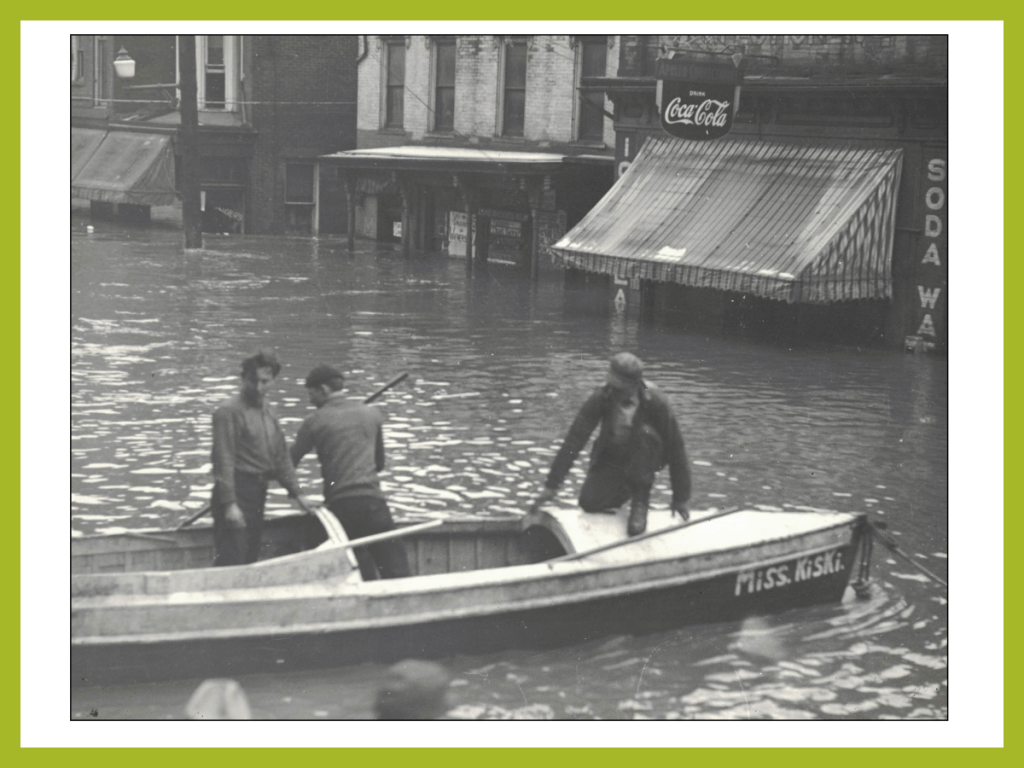
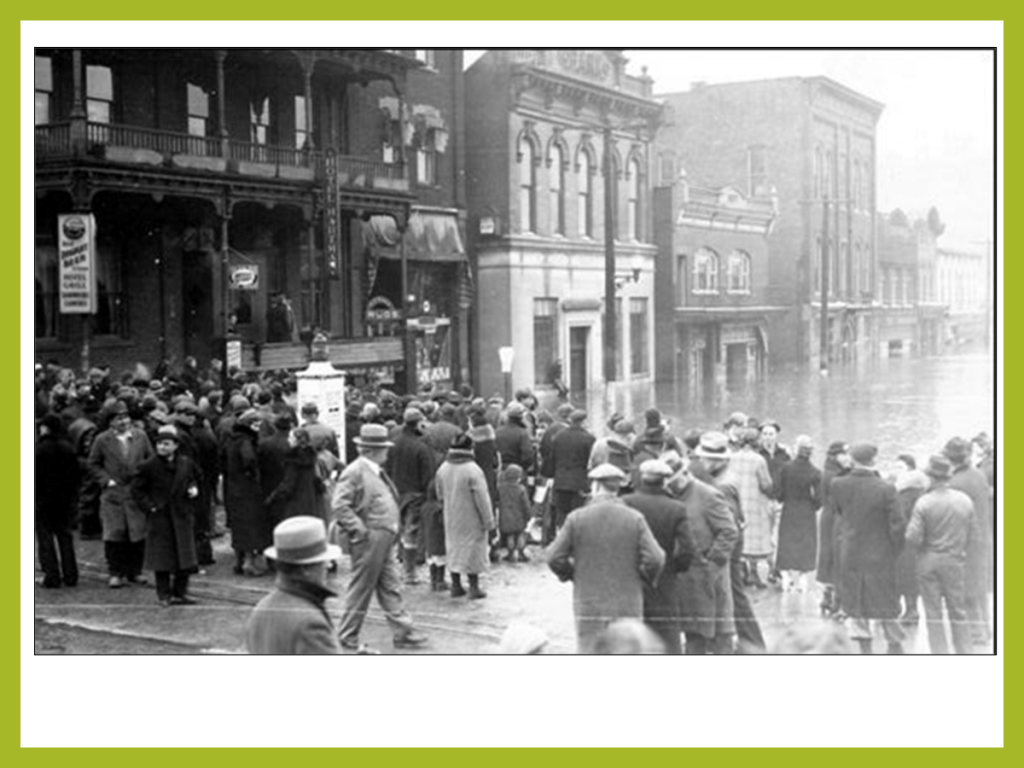
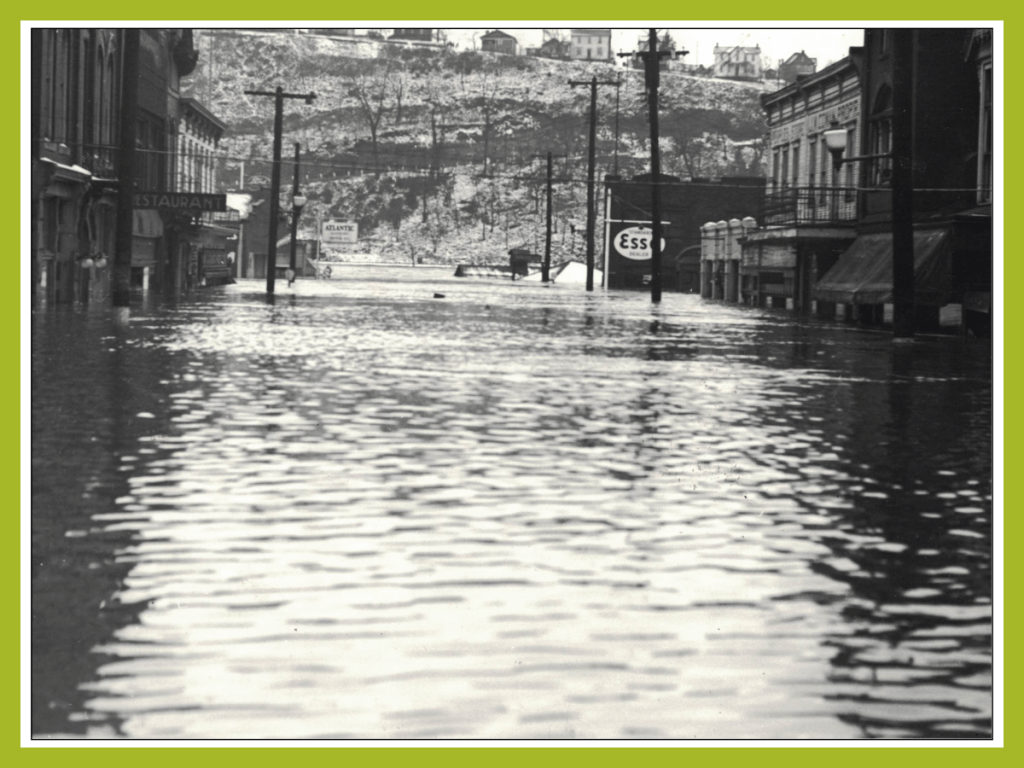
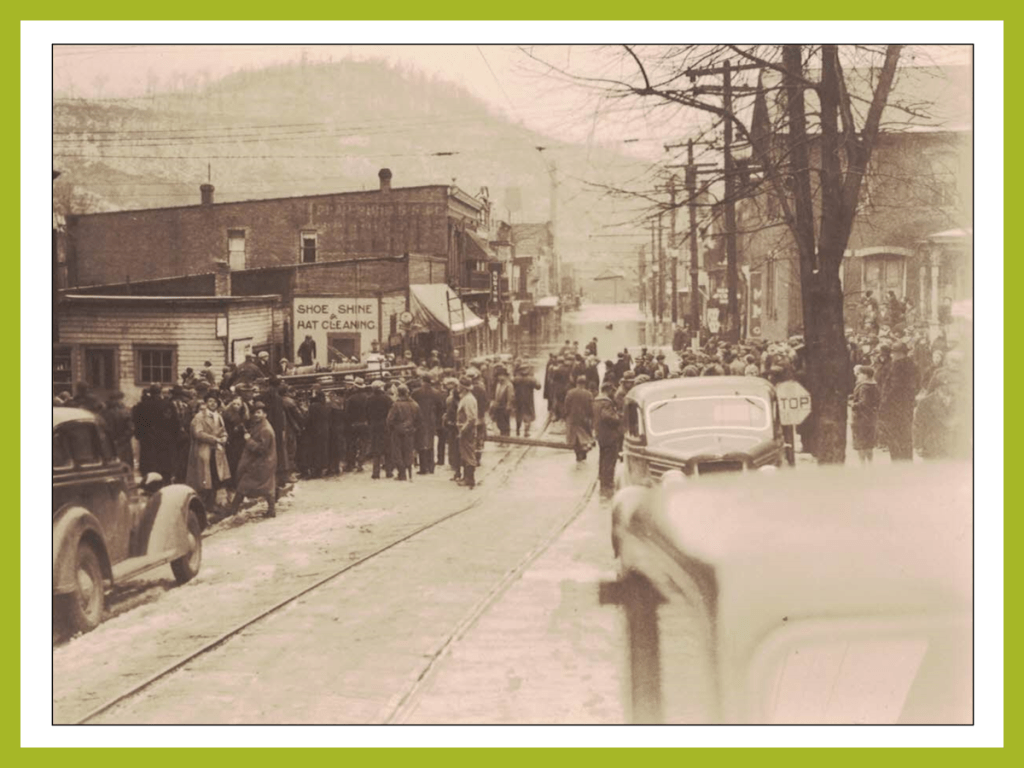
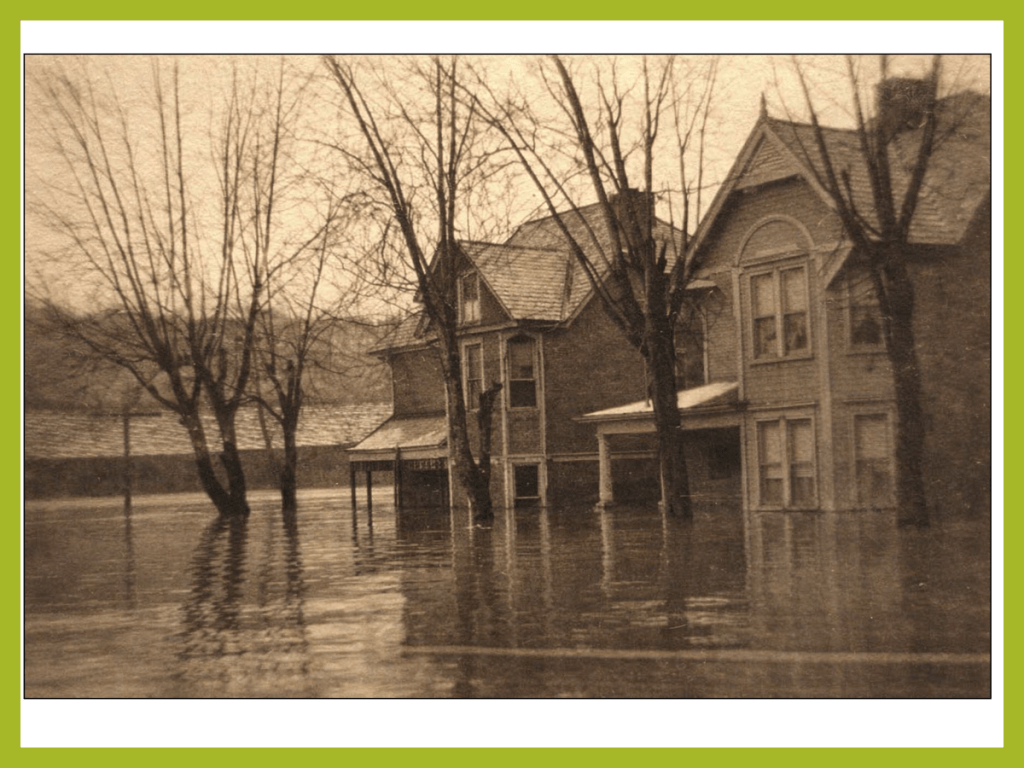
Walk down First Street towards the bridge and turn left along Kiski Avenue to South 2nd Street. We’ll see a rescue taking place with the Miss Kiski.
Family Rescued
When the river dropped back into the channel Thursday morning it was discovered that Mr. and Mrs. Park Wareham and two sons had not left their home situated near the old drum plant building. They were taken out about 9:00 o’clock Thursday morning and removed to the home of a relative in the country. The family had a harrowed experience during their 12-hour vigil. Houses were crashing all about them. The main building of the drum plant crashed and fell partly against their home. The home of George Bellas was lifted from its foundation and also lodged against the Wareham home. The house rocked and shook several times and they thought it was going to leave the foundation. The building, notwithstanding the fact that it did not move, is badly twisted and otherwise damaged.
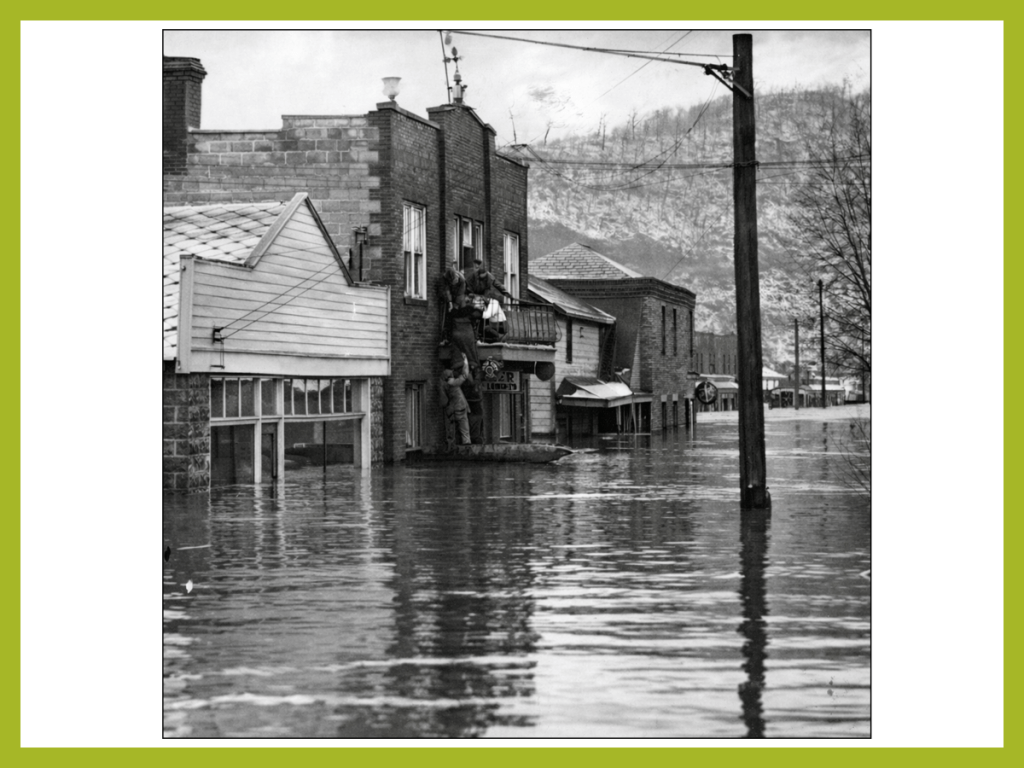
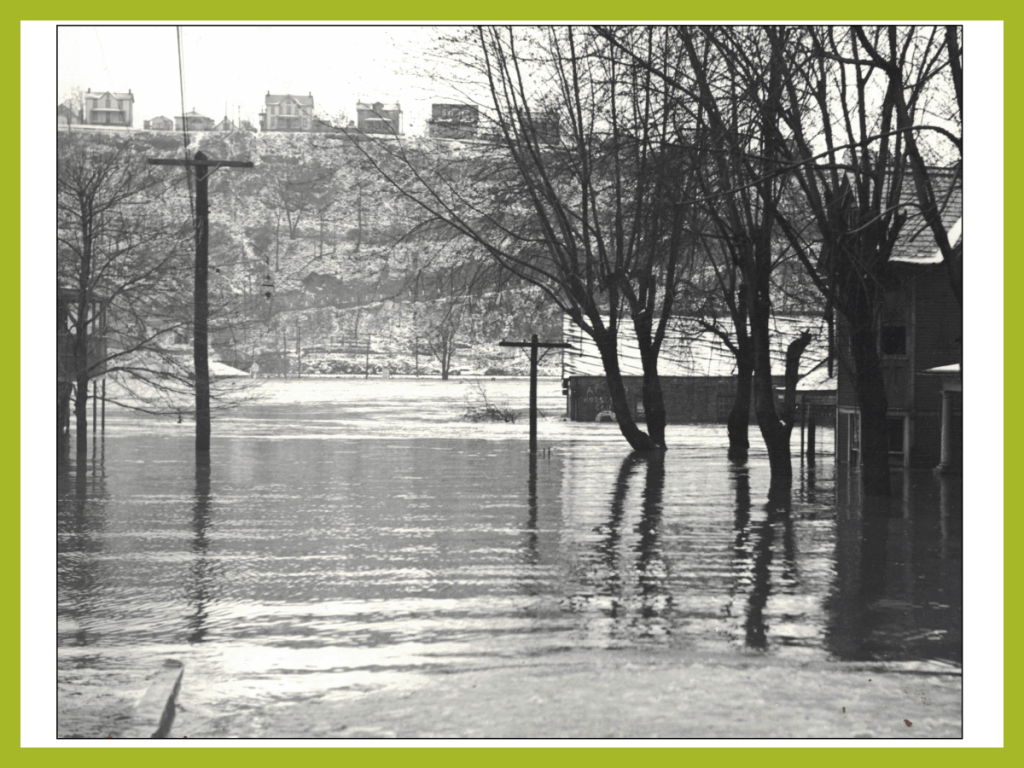
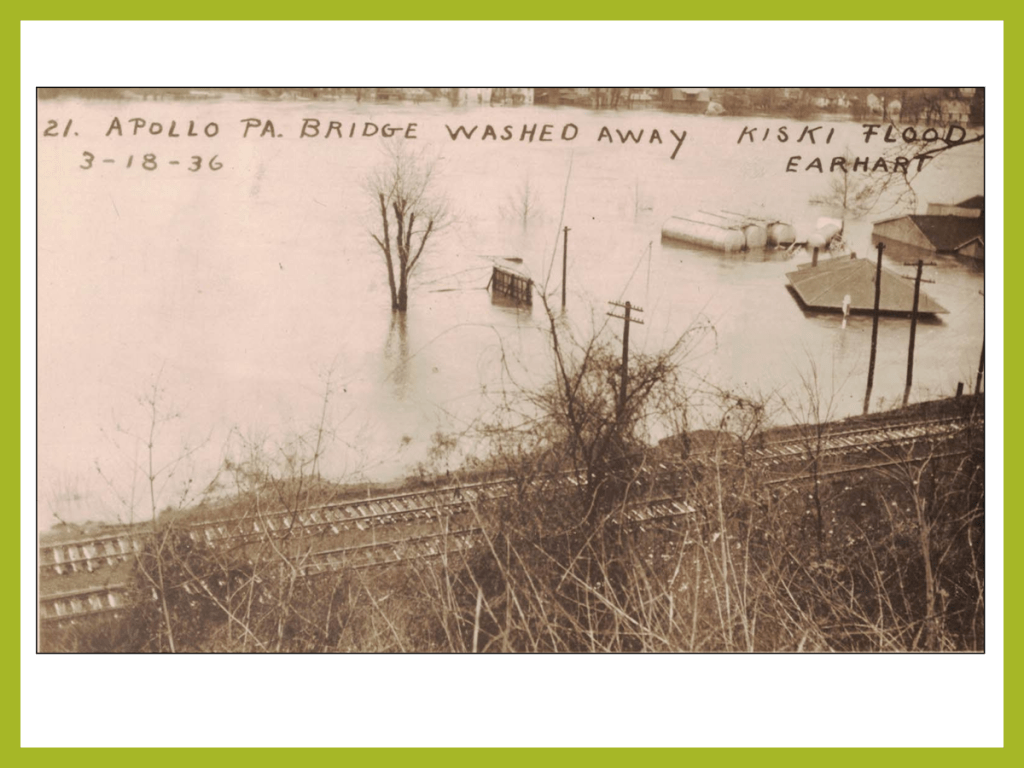
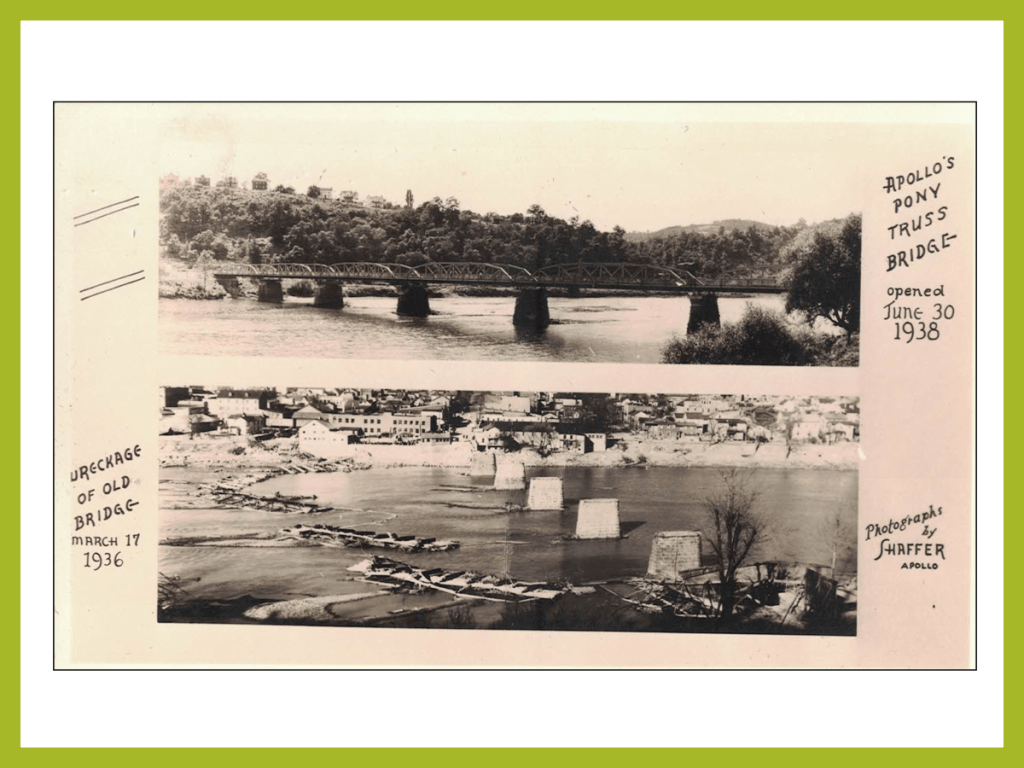
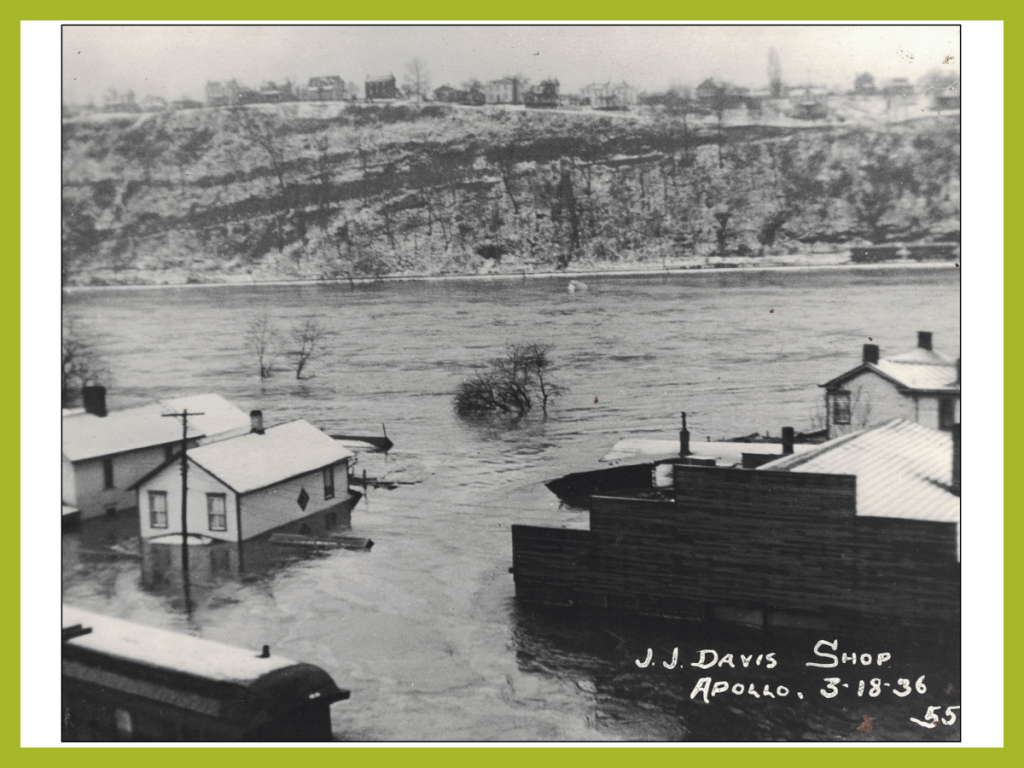
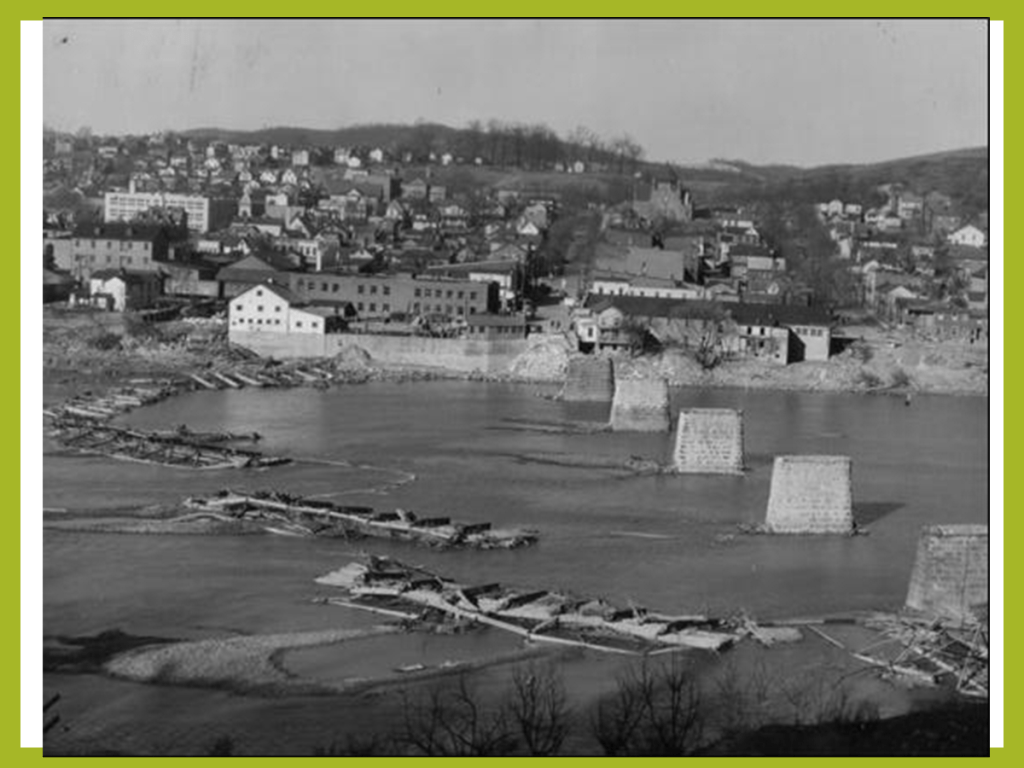
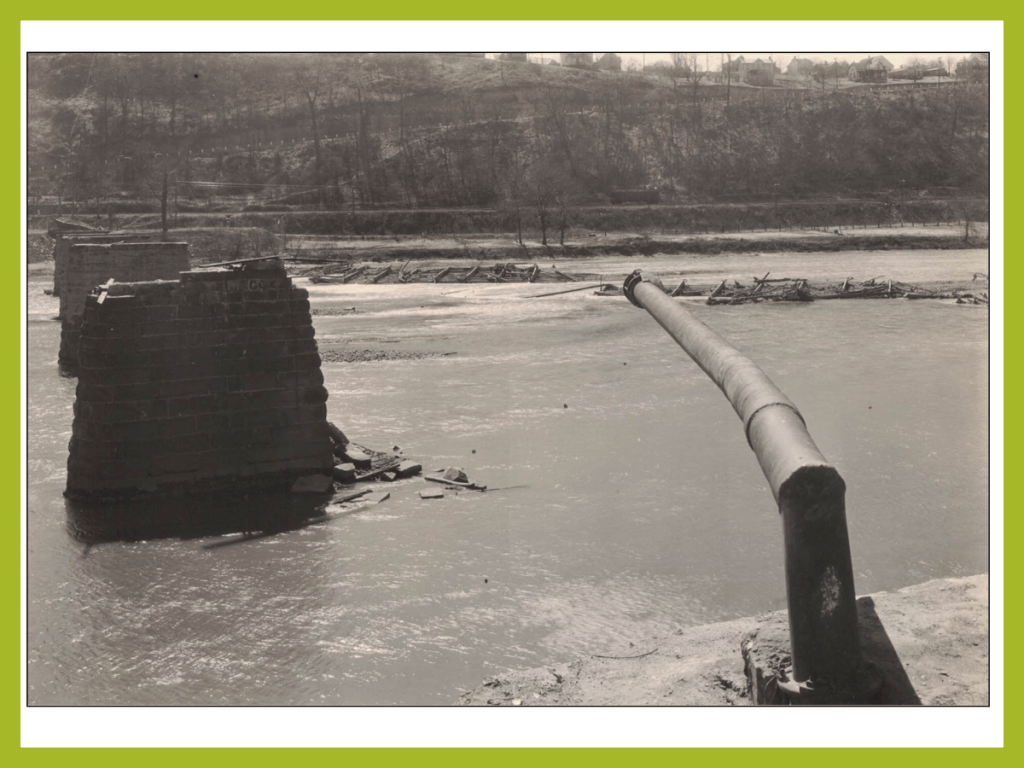
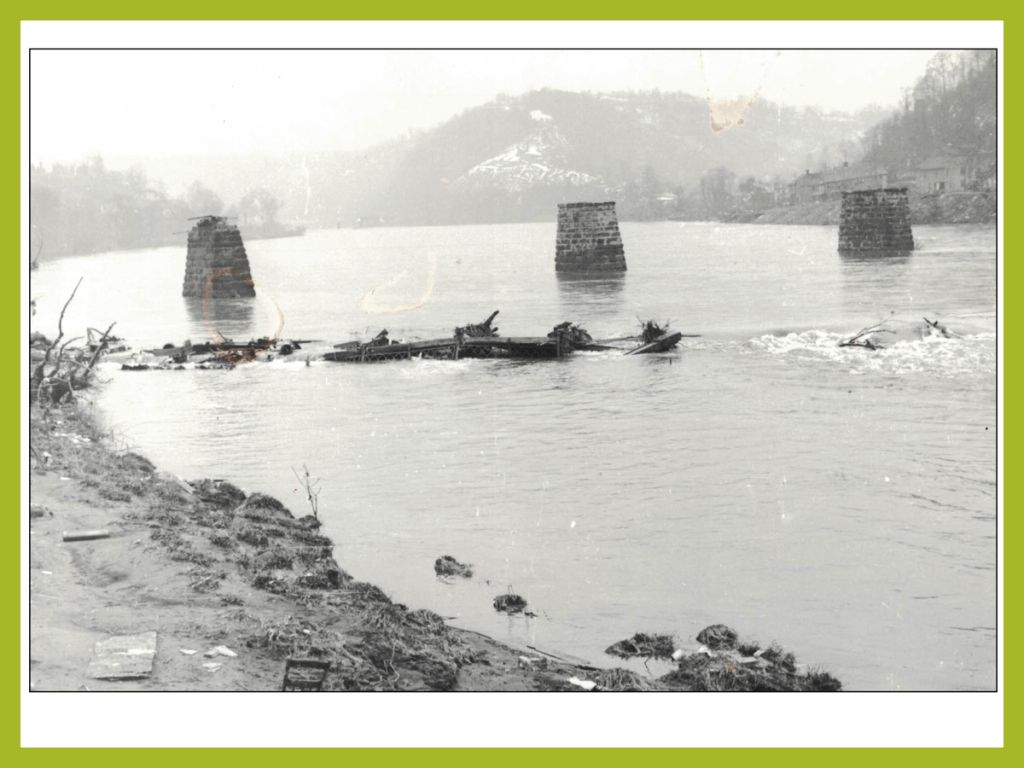
We’ll walk down First Street where the bridge is gone now. It’s been washed out due to the high waters of the flood. We’re looking towards West Apollo.
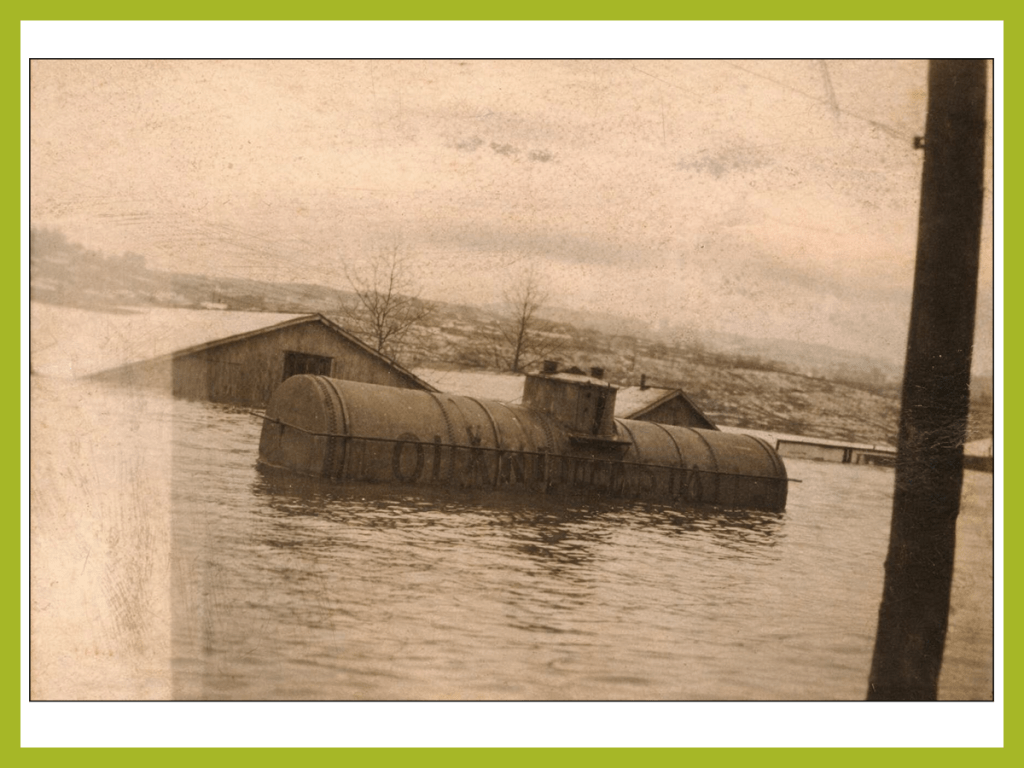
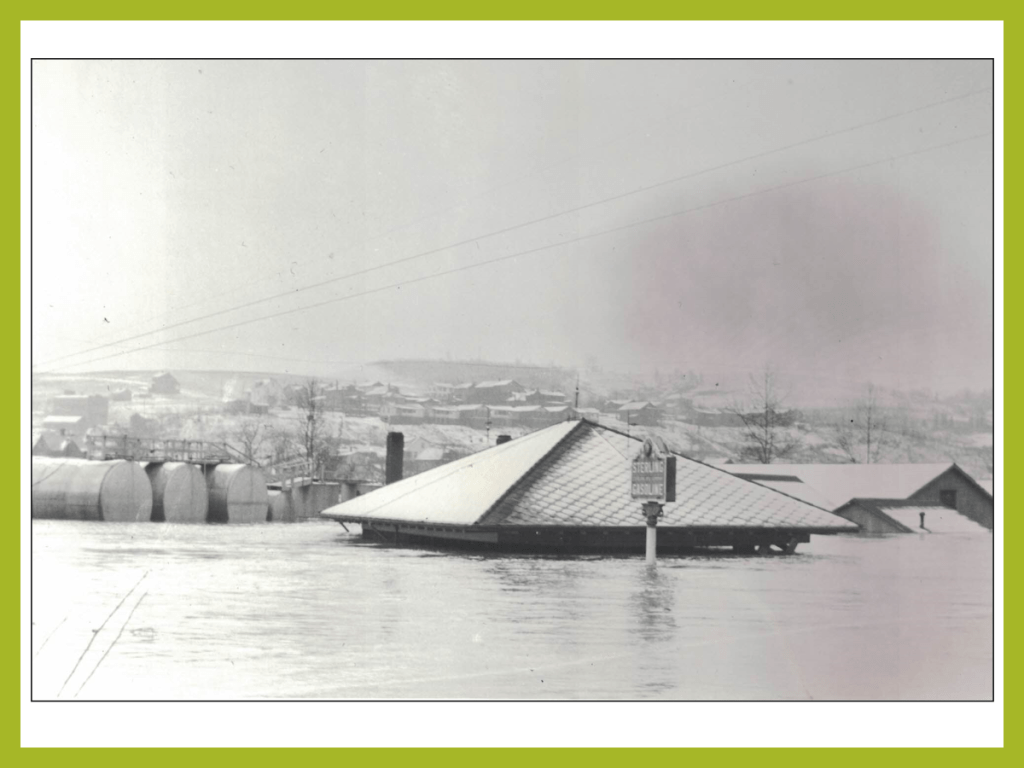
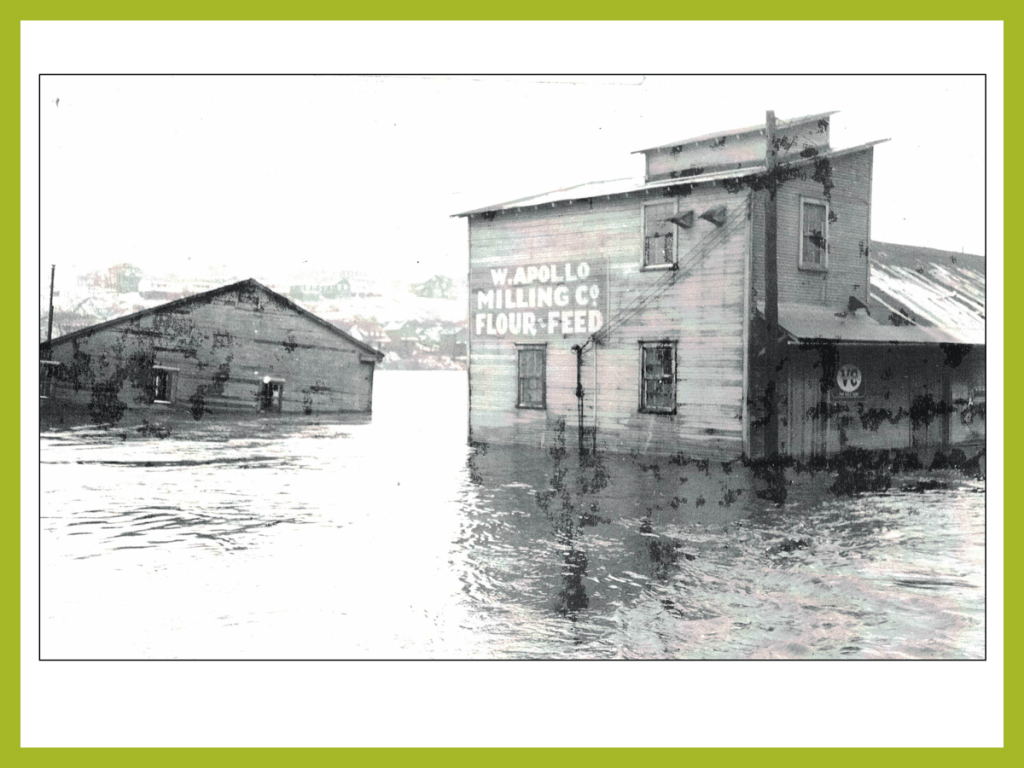
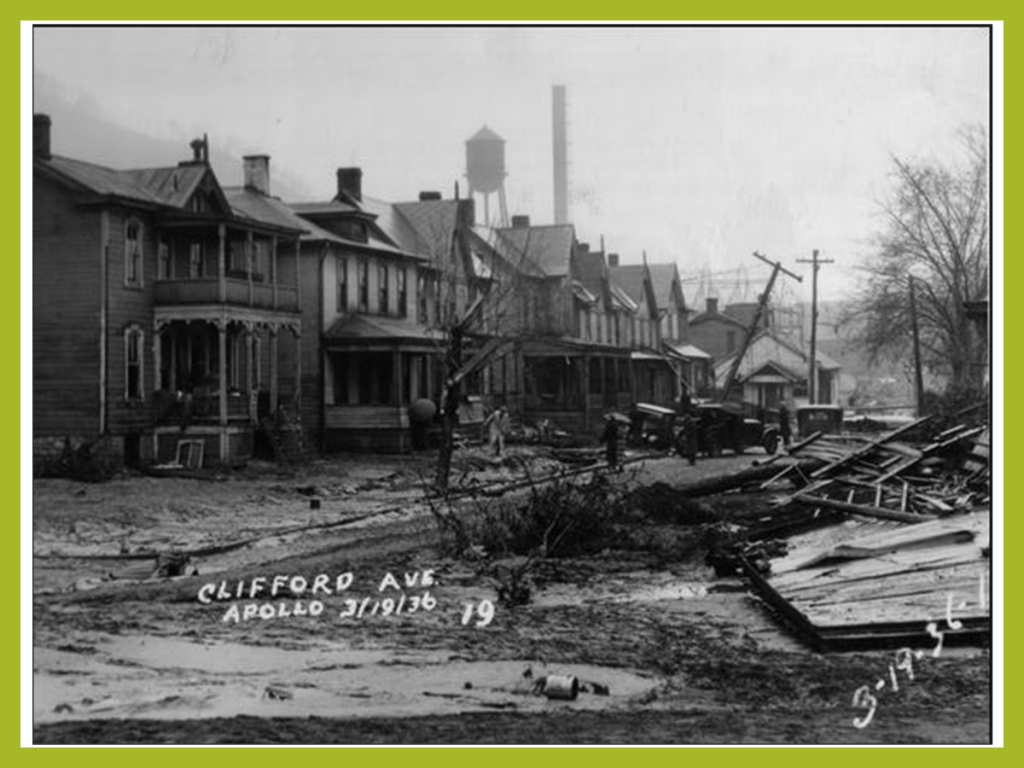
Along Railroad Avenue there is much damage. Take note of the Walker Garage. We will return to it later.
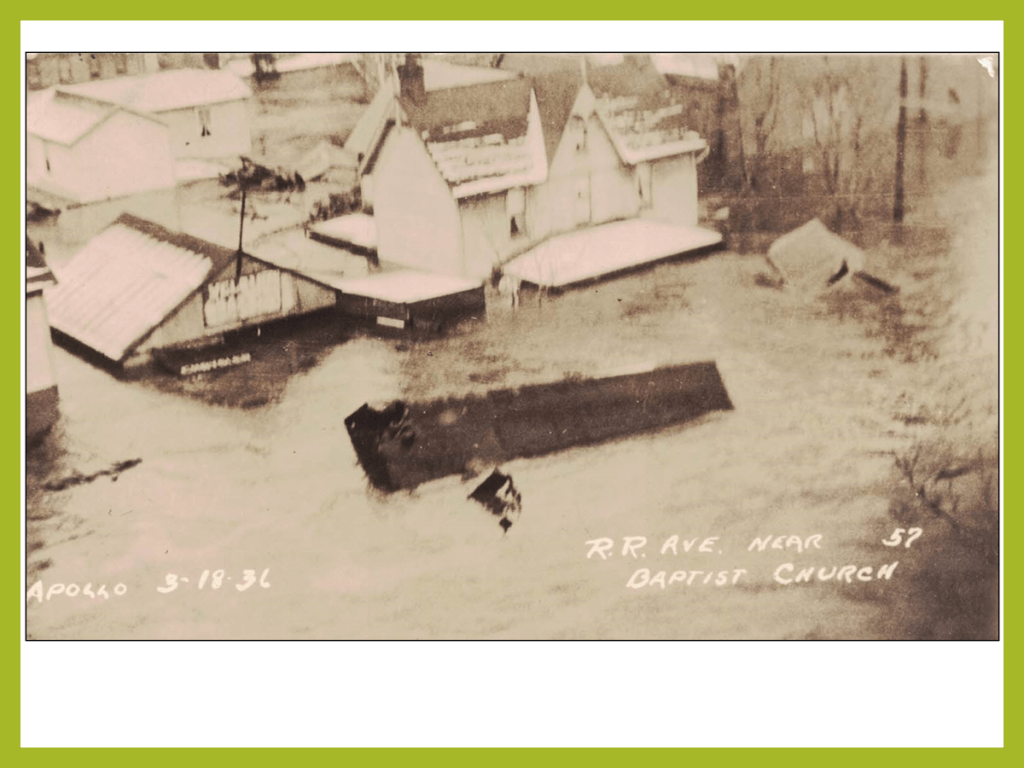
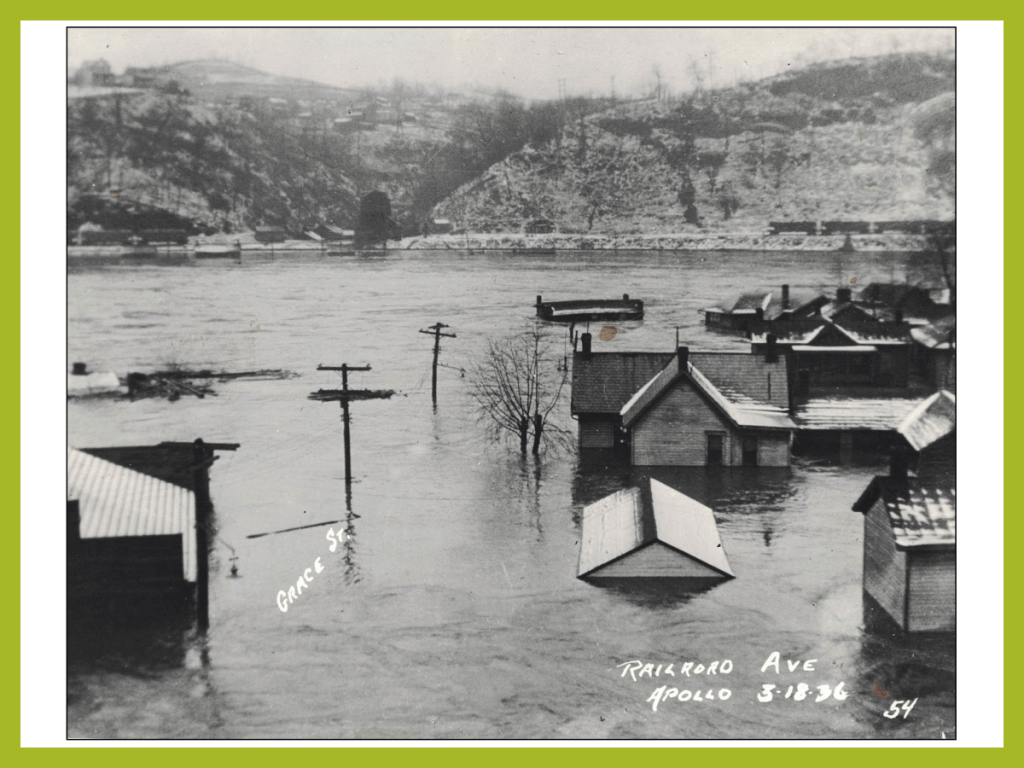
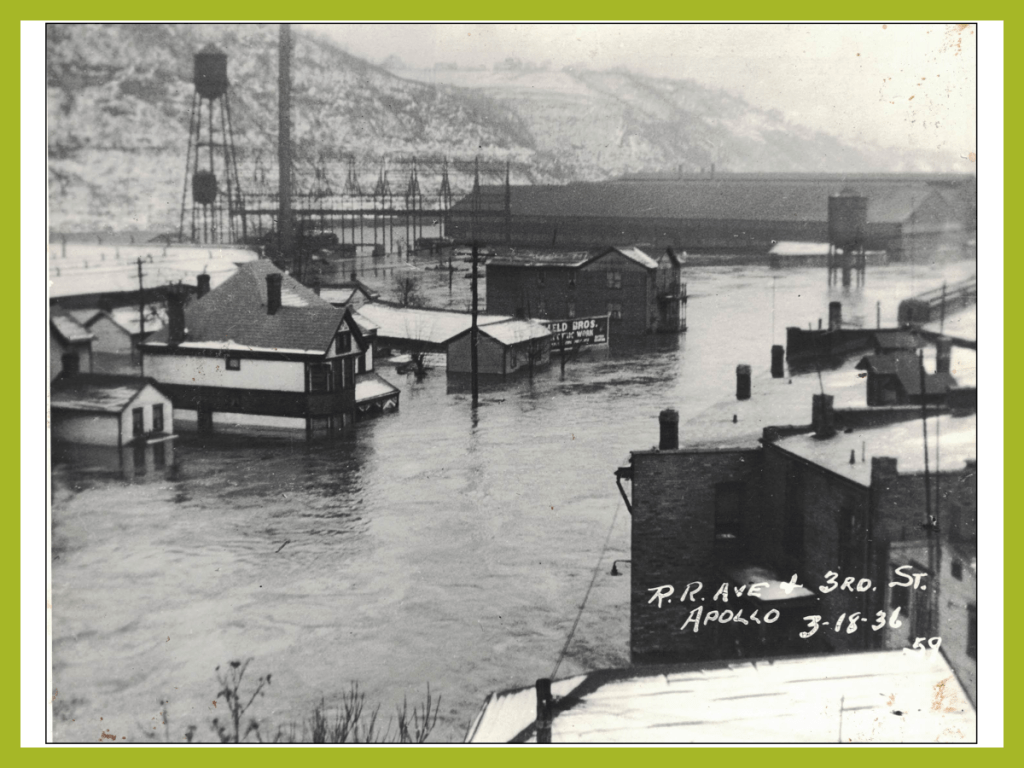
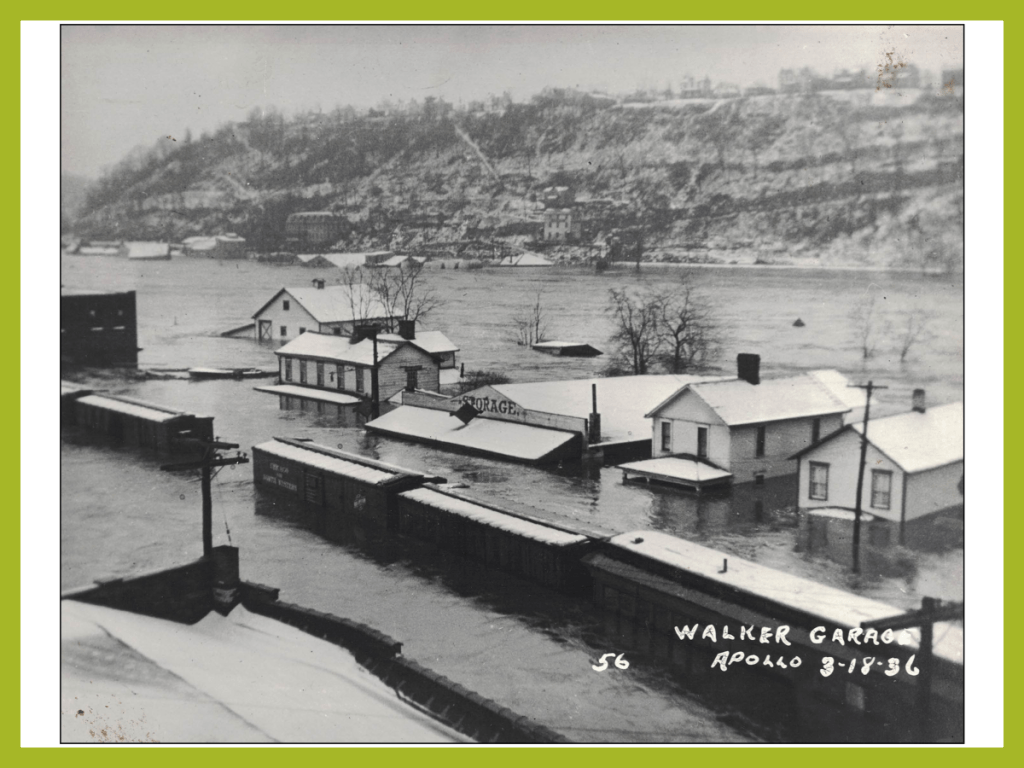
Walk now to North 3rd Street and turn right up the street. We’ll pass where West In Arms is located now. Go to the Lutheran Church then turn around and look back towards the 1st Baptist Church. The water came up pretty far into town.
False Radio Report
The citizens of the town were thrown into a high pitch of excitement when a radio message was heard stating that one of the dams at Johnstown had broken and that the people of the town and lower valley were ordered to the hills.
It was estimated that the water from the dam, which is said to be seven miles across, added to what was already in the valley, would flood the town as far up the hill as Terrace Ave. And even though the water was receding at the time the message came in, many people made hurried plans to leave their homes and make for the hills.
At about 6:00 o’clock, however, through one of the reputable Pittsburgh stations this report was denied and the announcer stated that the report had come from an amateur operator and was entirely unfounded.
State Police later made a complete survey of the dam and reported it perfectly safe. This information was received with great joy and as the river gradually receded assurance was given that the crest of the flood had passed and that work of cleaning up would shortly begin.
We’ll go to the corner of N. 3rd Street and PA Avenue and turn left continuing to N. 4th Street. We’ll pass the new Apollo Library and the old Municipal Building.
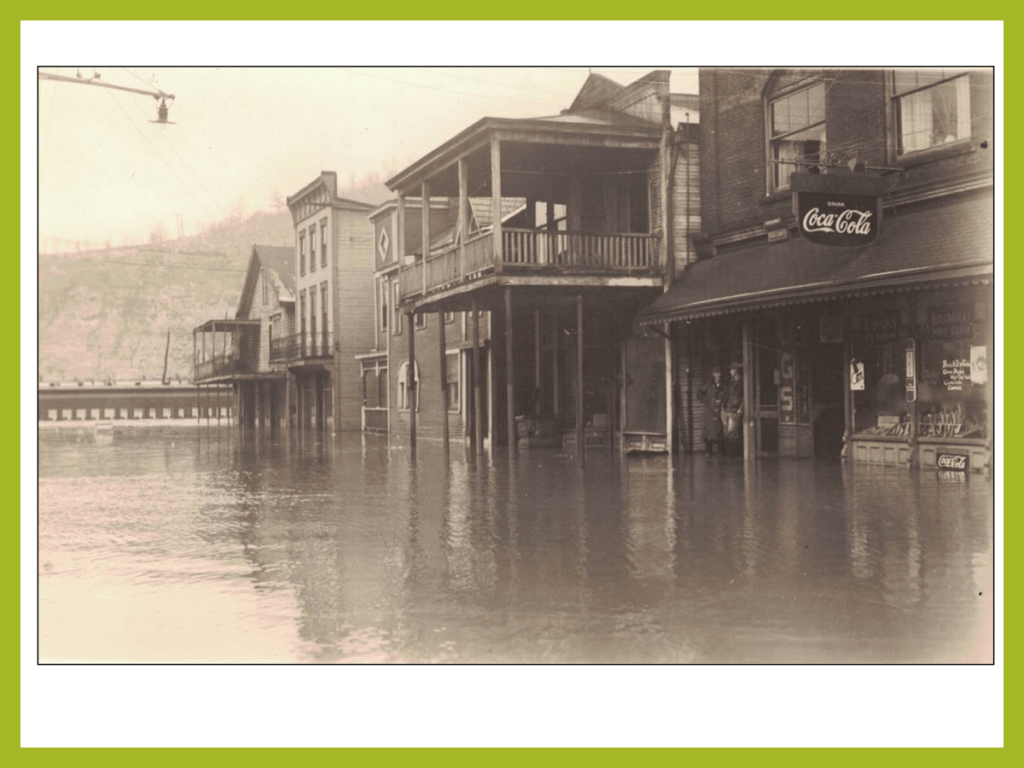
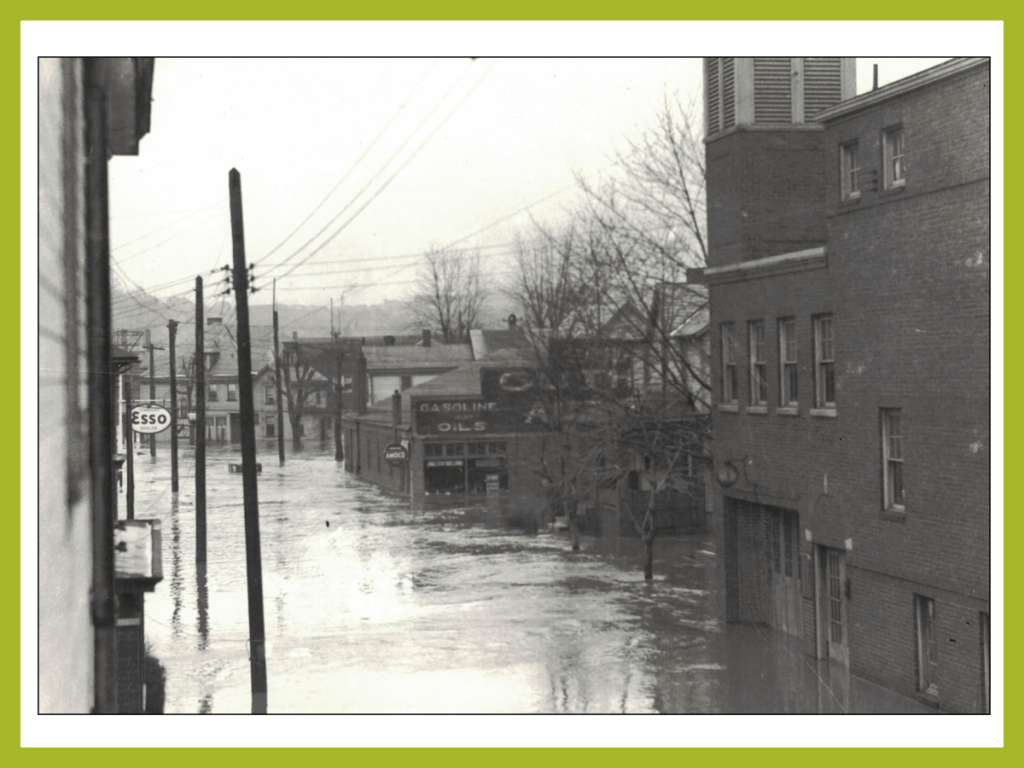
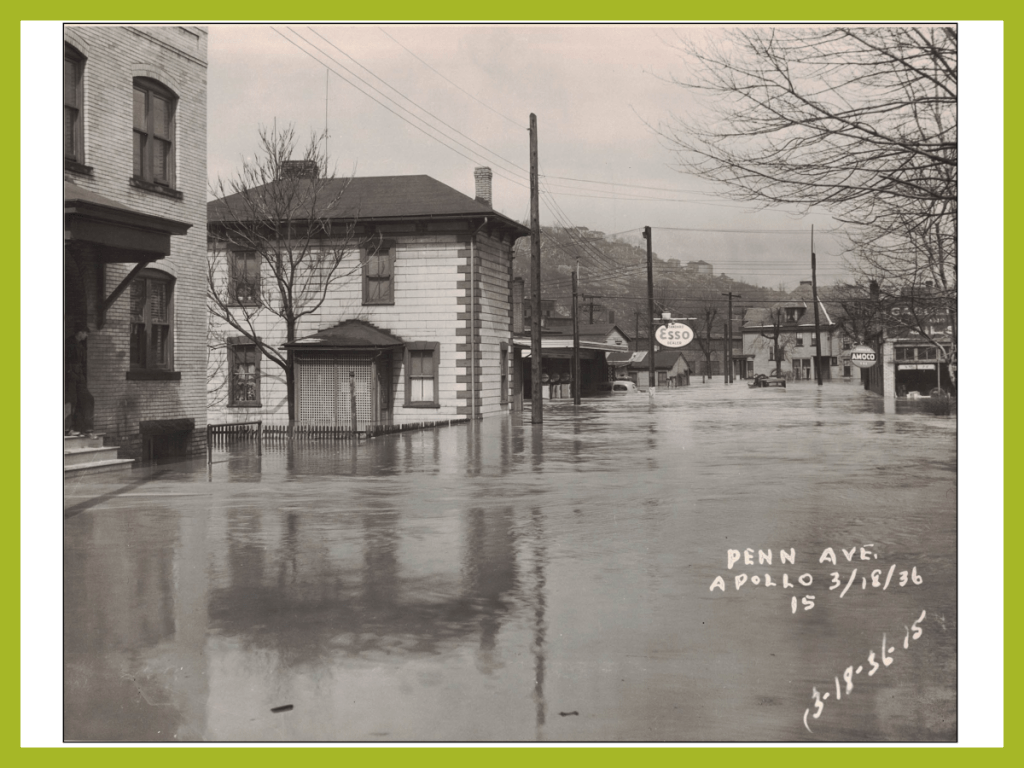
We’ve walked to N. 5th Street now. The only death attributed to the flood took place along this road. We will turn left and walk to the end of 5th Street where we can see the Apollo Steel Mill.
Dies From Shock
Mrs. Effie Jane Lauffer, aged 72 years, died suddenly Wednesday, March 18, 1936, about 5:45 a.m., as the result of shock, after leaving her home on N. Fifth St., when it became threatened by flood waters. Neighbors aroused Mrs. Lauffer about 4:00 o’clock and warned her of the approaching flood. She dressed and left her home and went to the home of Mr. and Mrs. J. F. Forbes, of N. Fifth St. At 5:45 o’clock, Mrs. Forbes became alarmed when Mrs. Lauffer failed to return from the bathroom and after futile calling, opened the door and found the unfortunate woman on the floor. Thinking that she had fainted, attempts were made to revive her, after which a doctor was summoned who pronounced her dead from heart failure. The funeral service is being held this (Friday) afternoon, at 2:00 o’clock in the Thompson Funeral Home, in Vandergrift, with interment following in the Apollo cemetery.
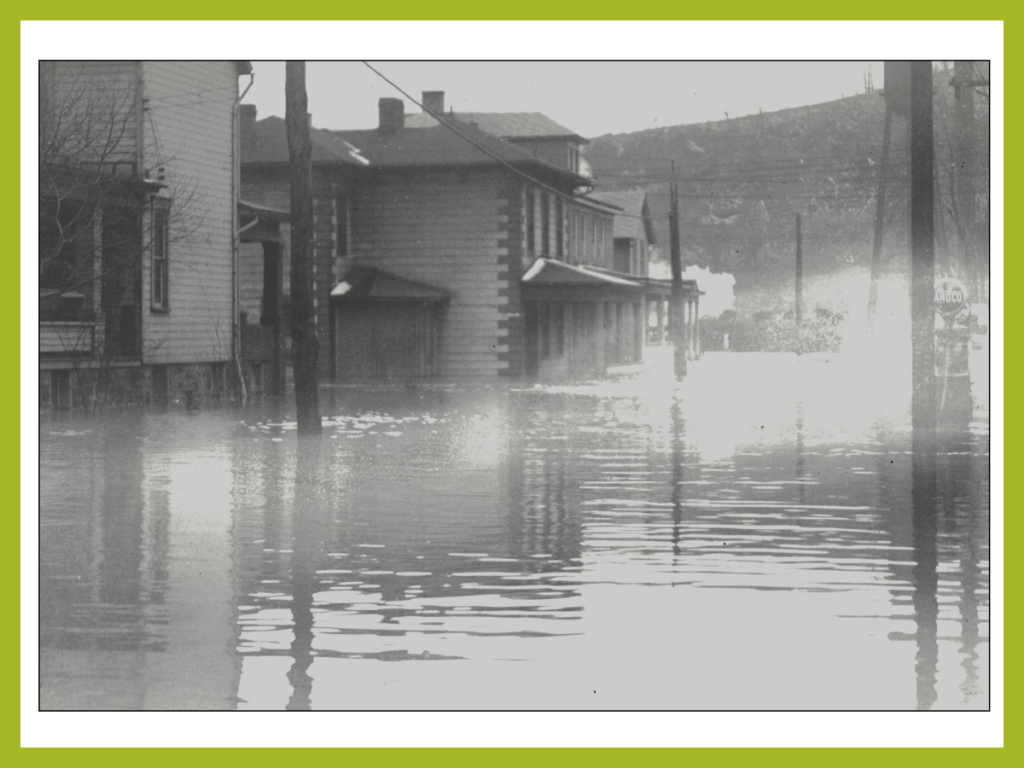
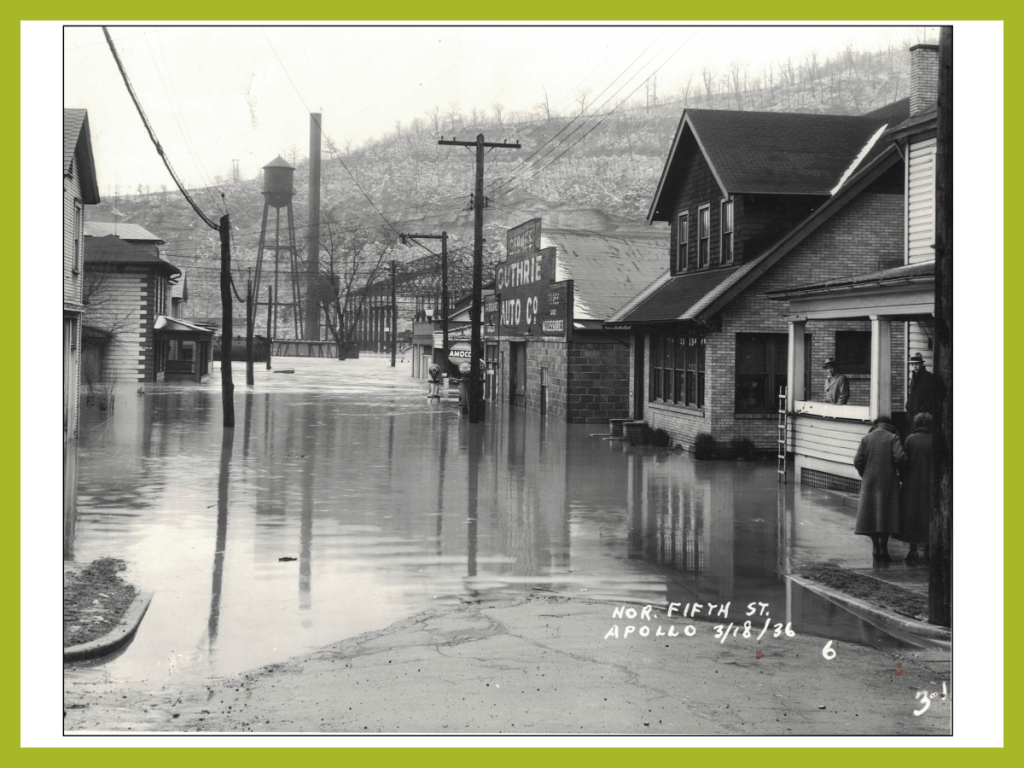
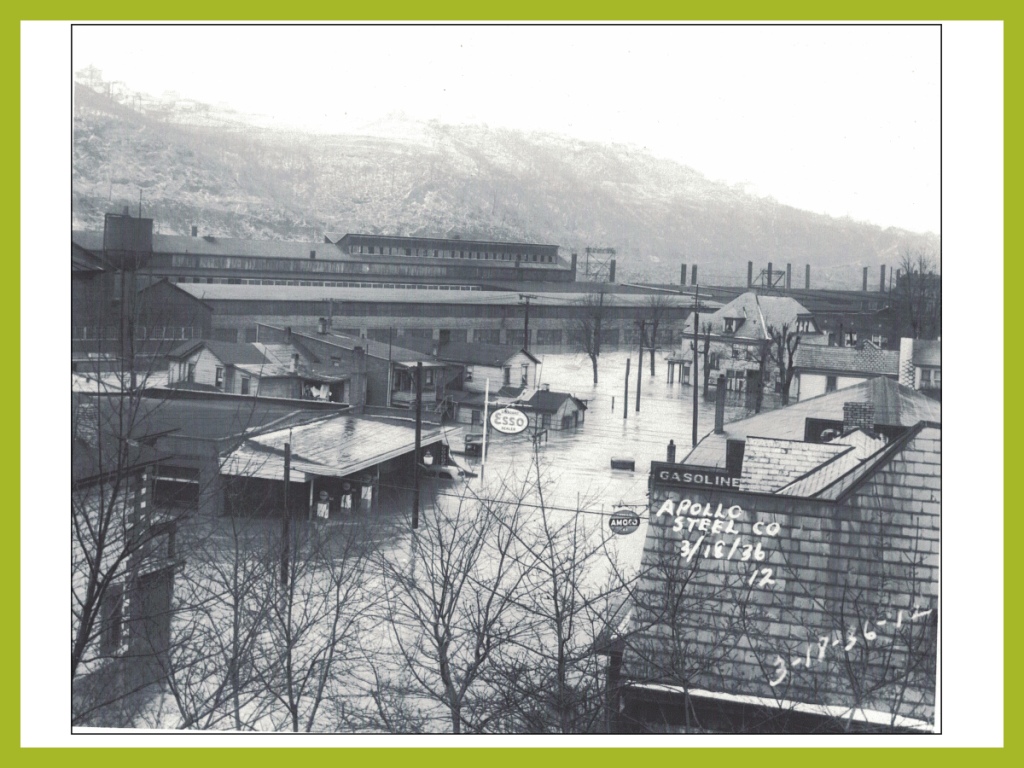
We will go right onto Warren Avenue and walk along to N. 7th and N. 8th Streets. We will pass the Whitlinger Building that was built in 1827 only 9 years before the 1936 Flood.
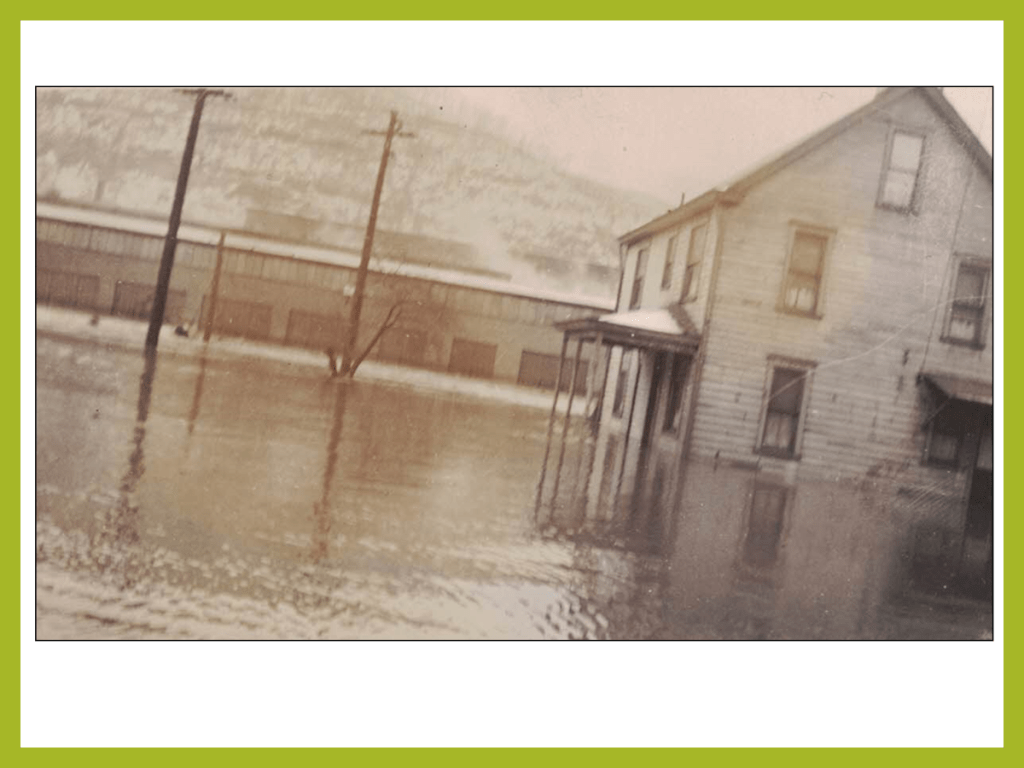
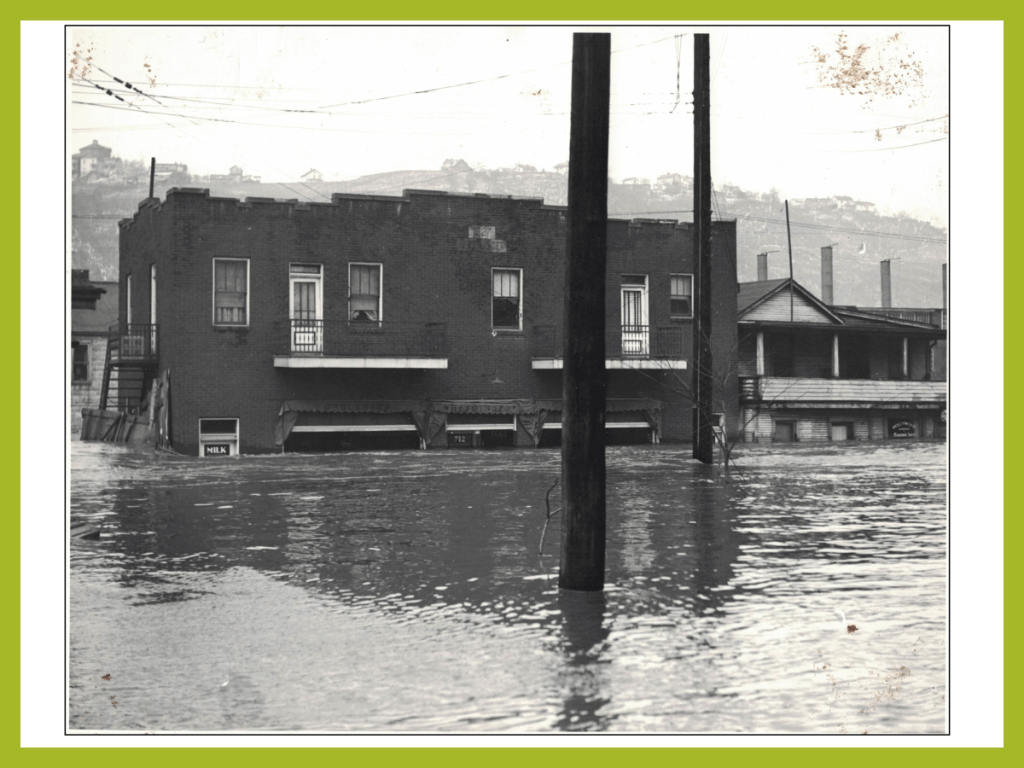
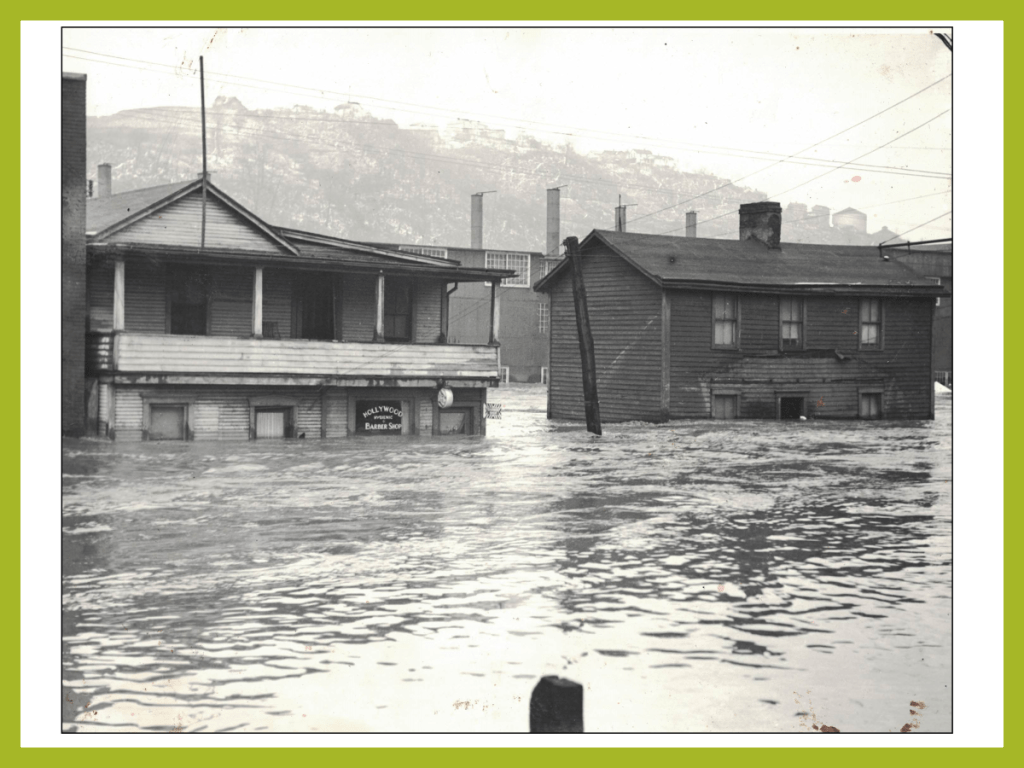
Let’s pause at N. 8th Street and look up and down Warren Avenue at the incredible amount of water!
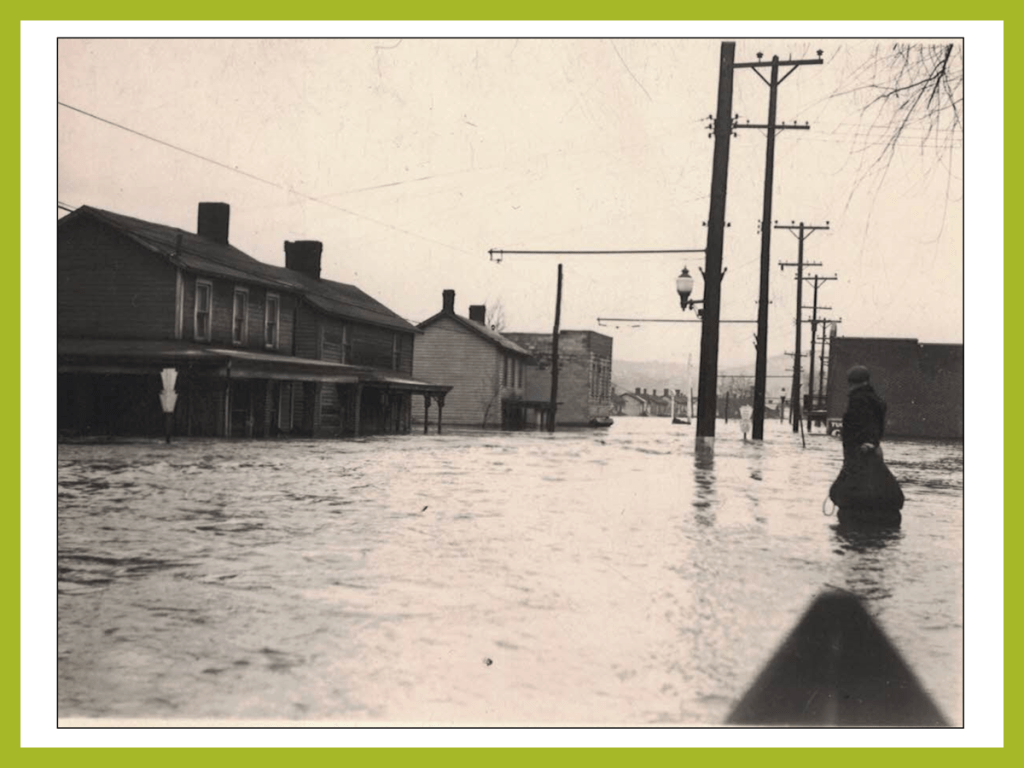
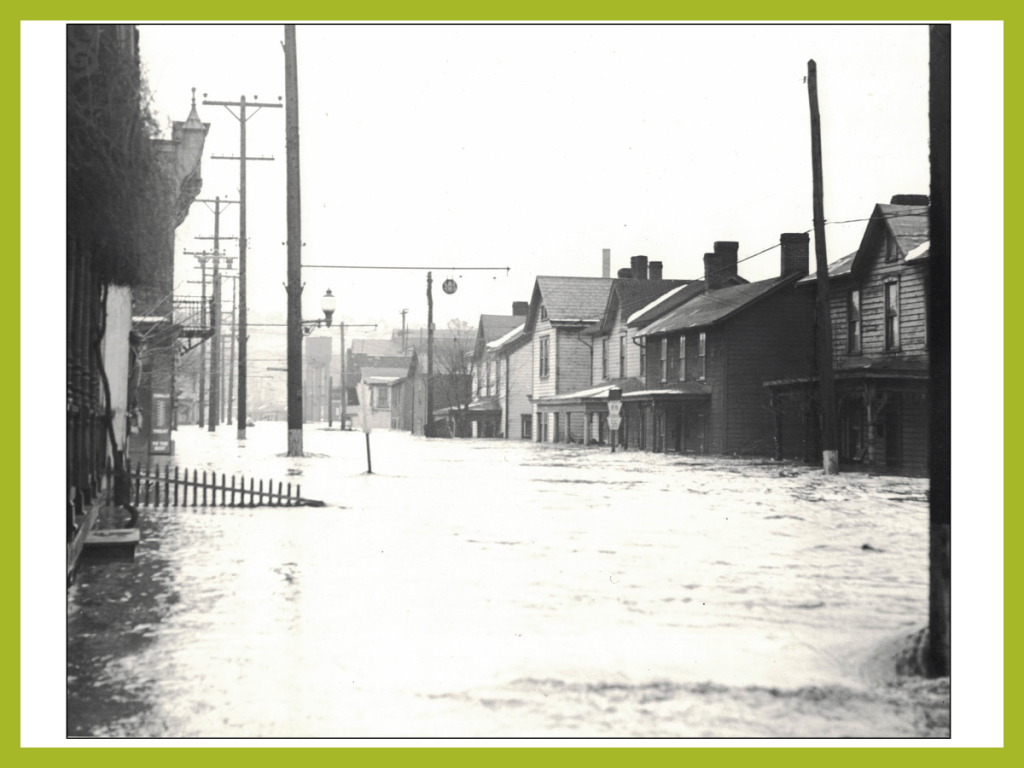
We’re still wading through water at N. 9th Street
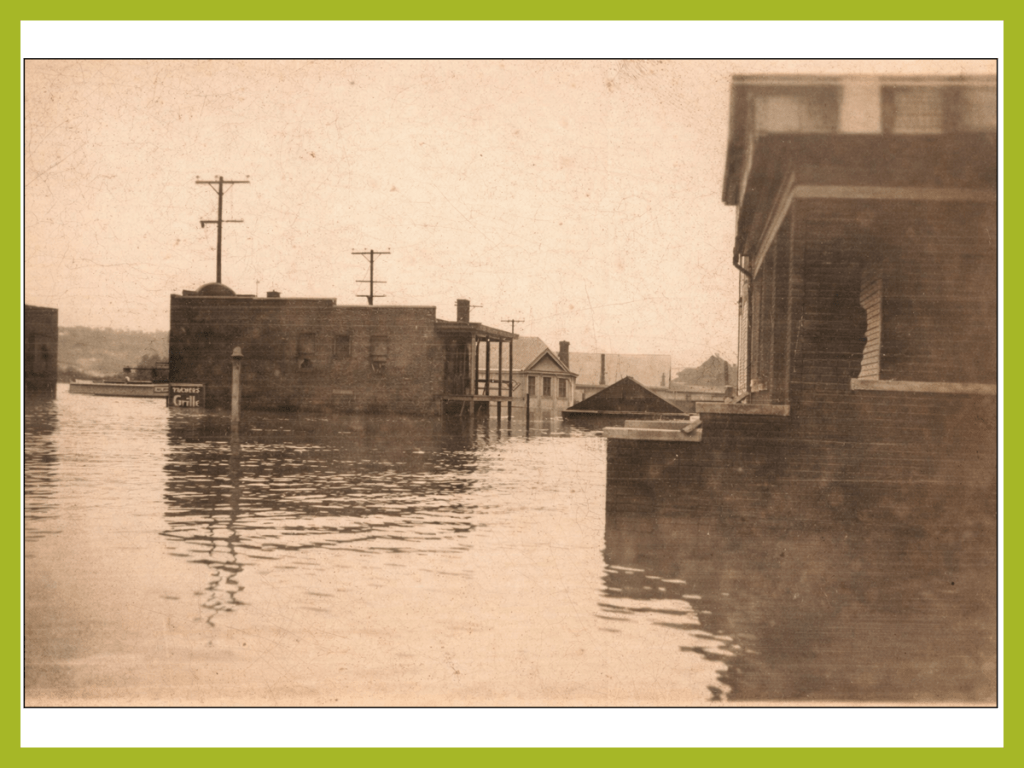
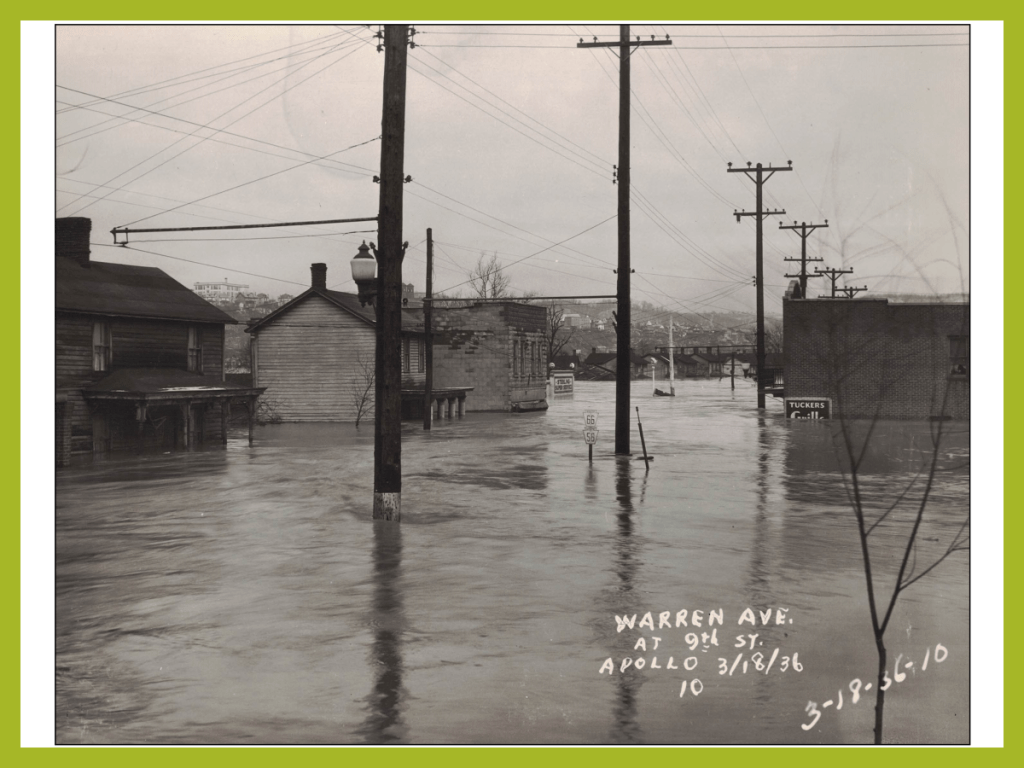
Standing at the corner of Warren and N. 10th Street we can see how the Wallace Lumber Company got hit hard.
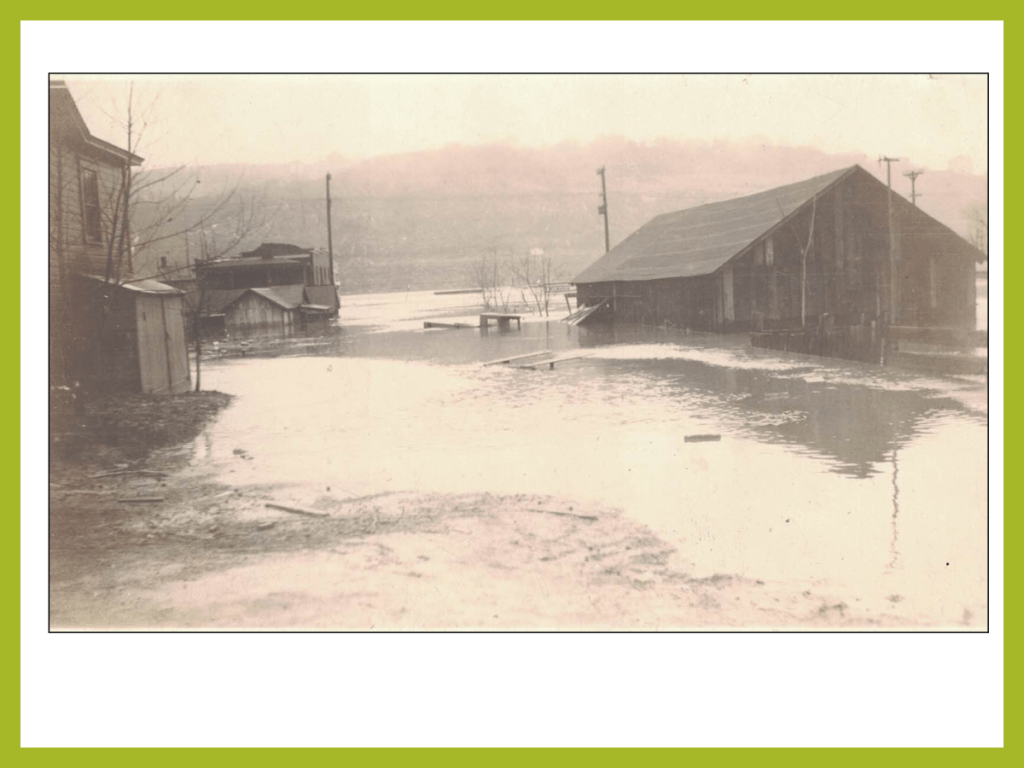
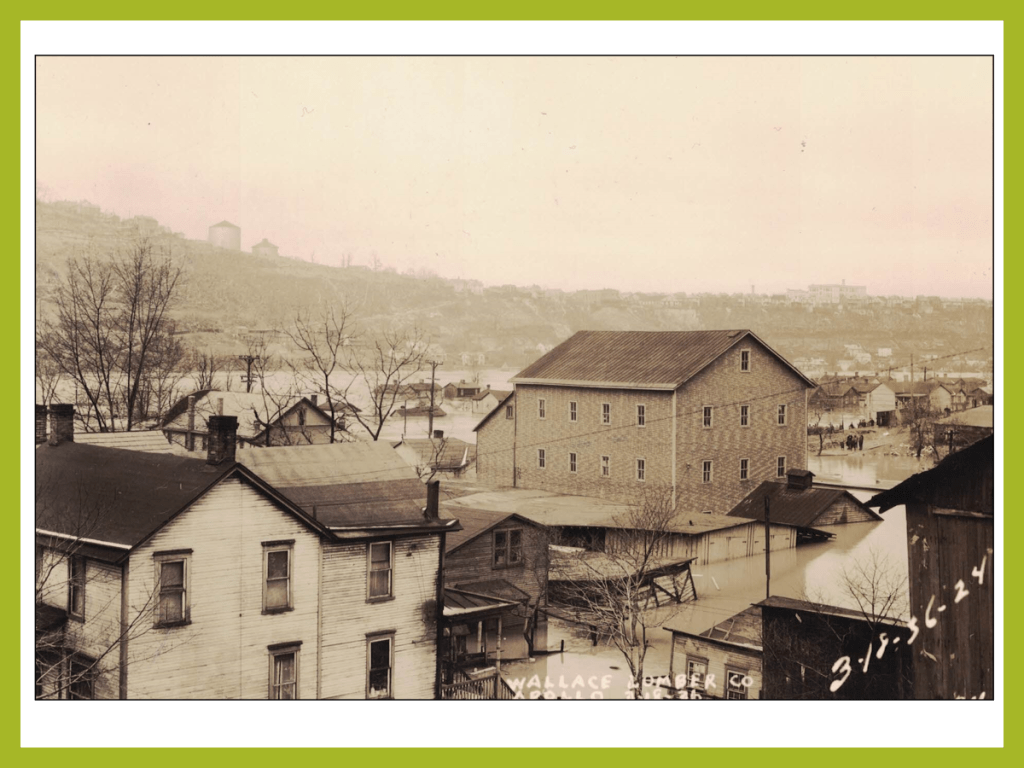
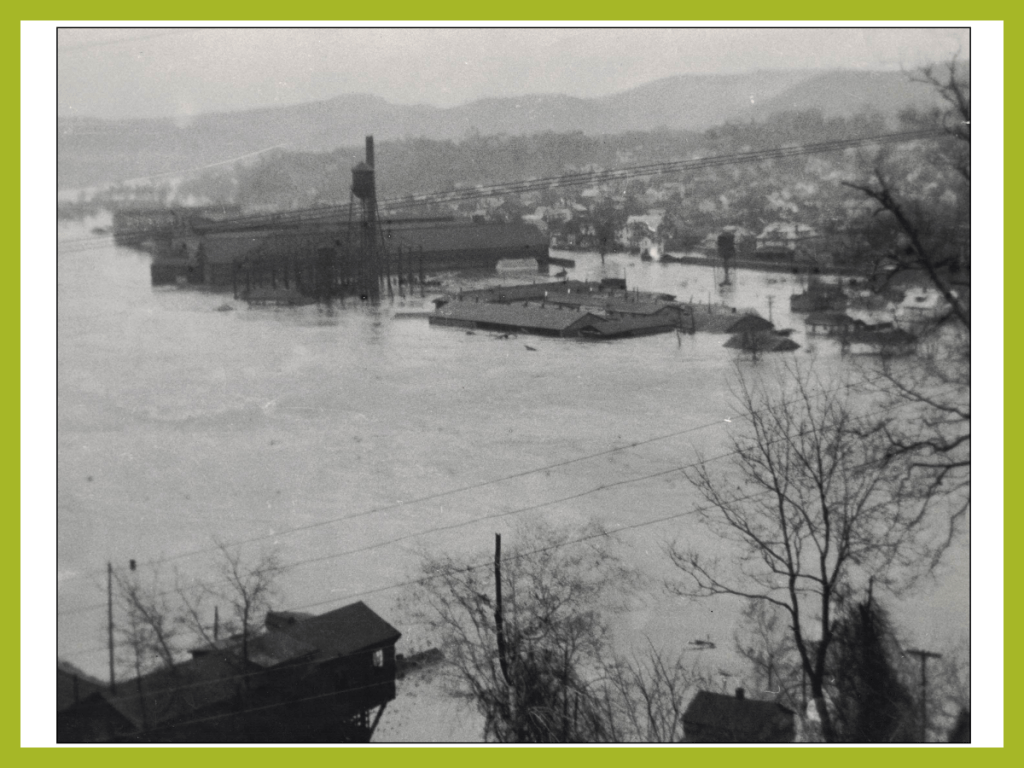
We’ll continue to N. 11th and Terrace Avenue & Clark Avenue where we’ll get a better look at the Wallace Lumber Company and the Apollo Steel Mill.
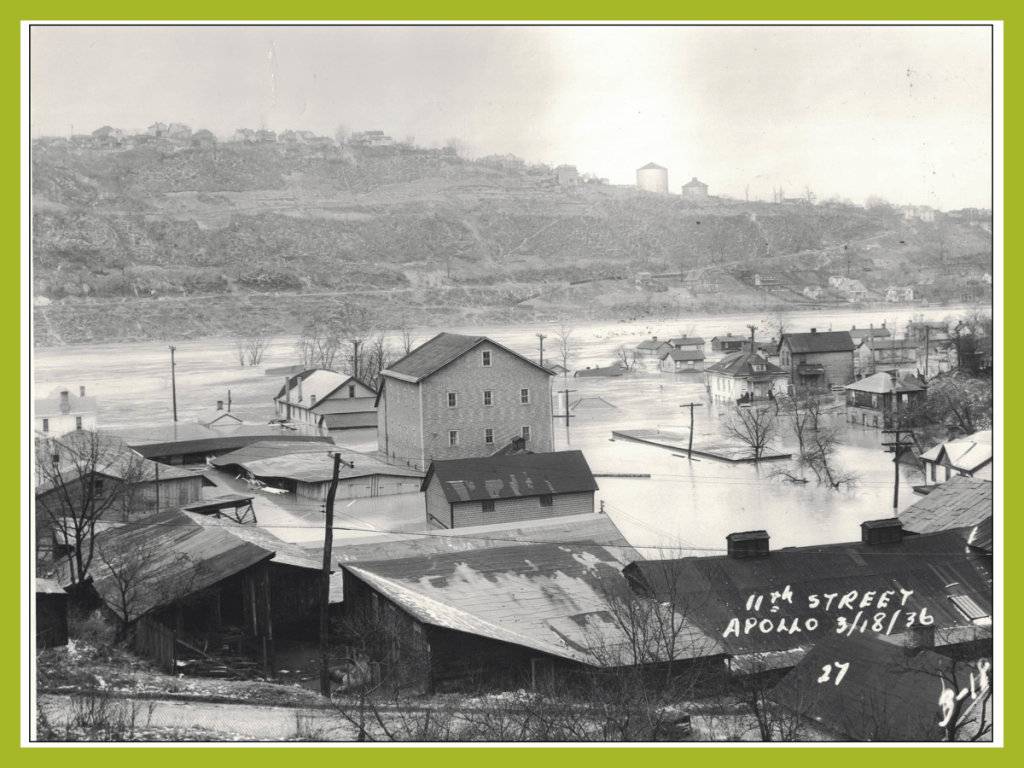
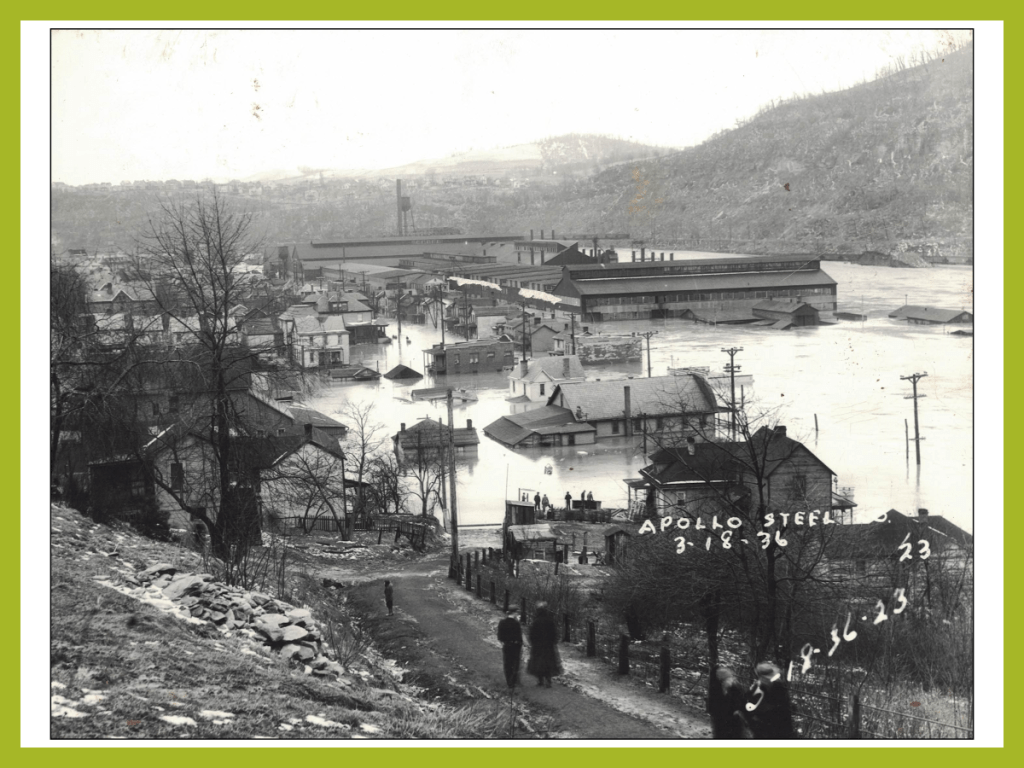
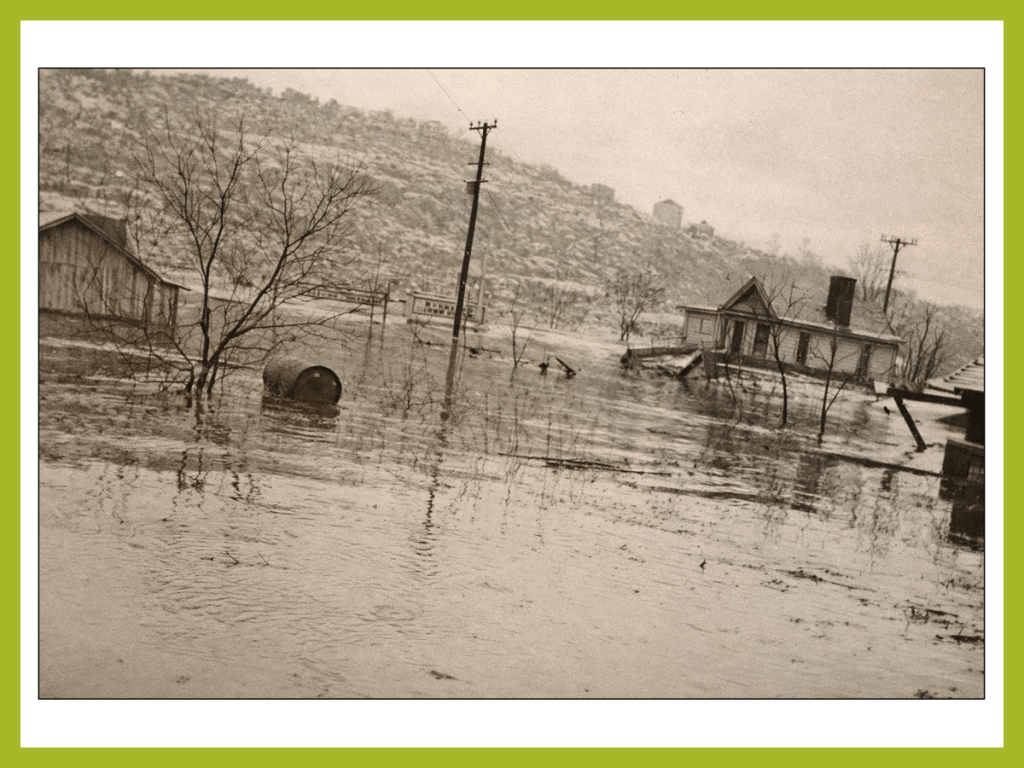
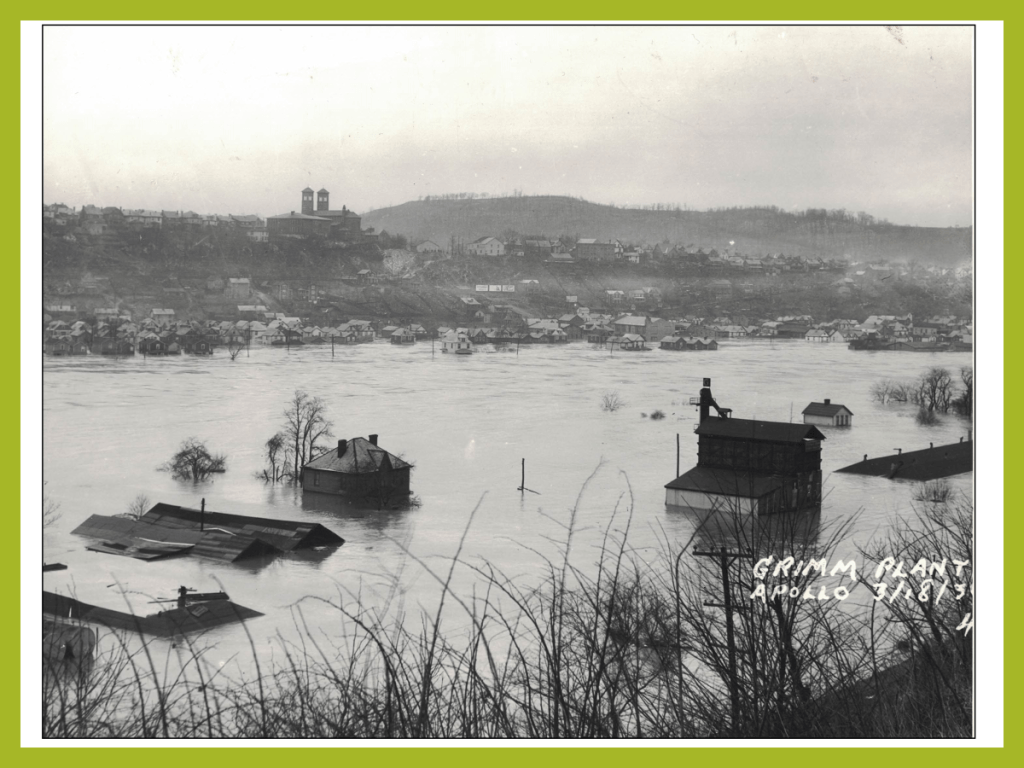
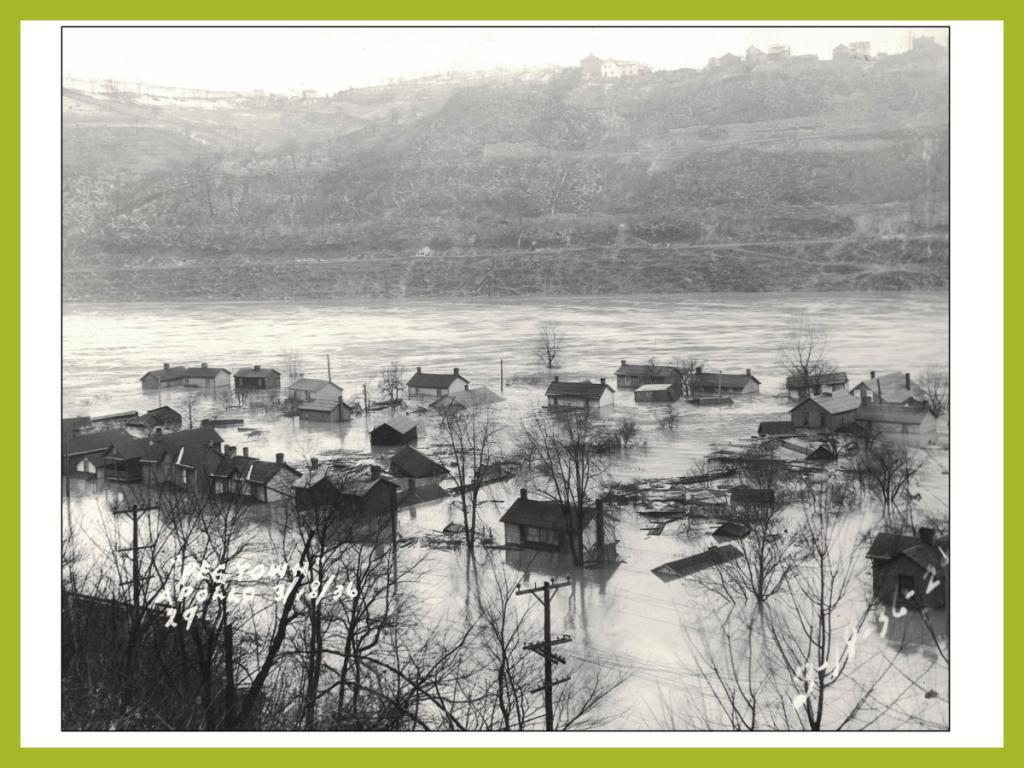
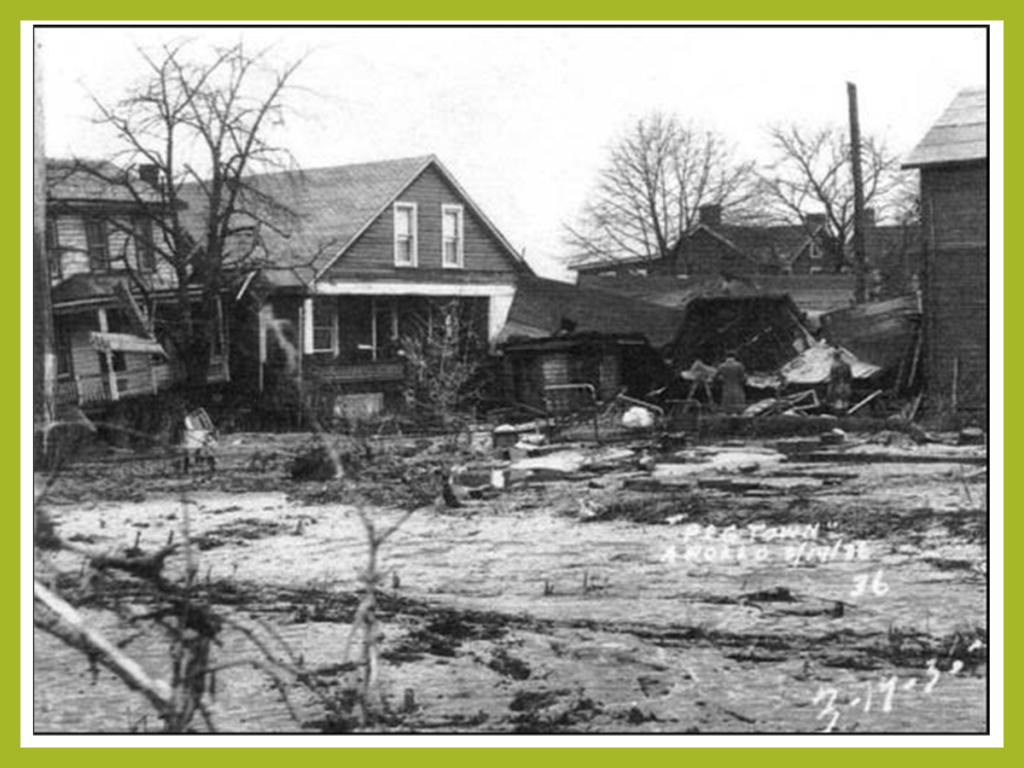
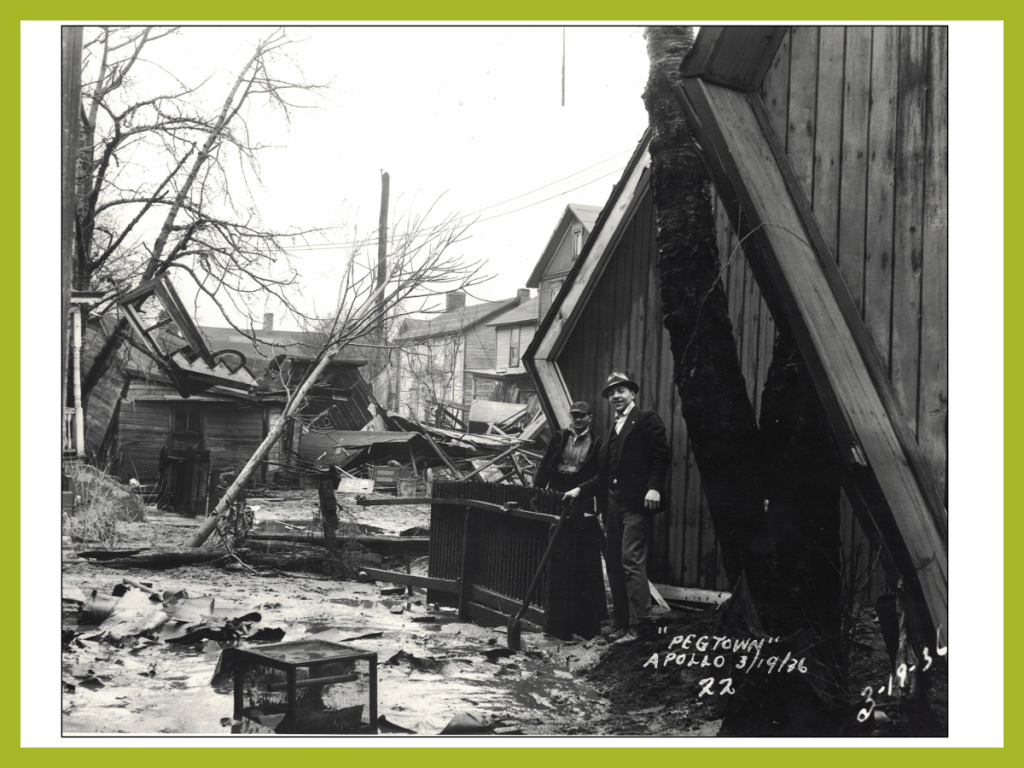
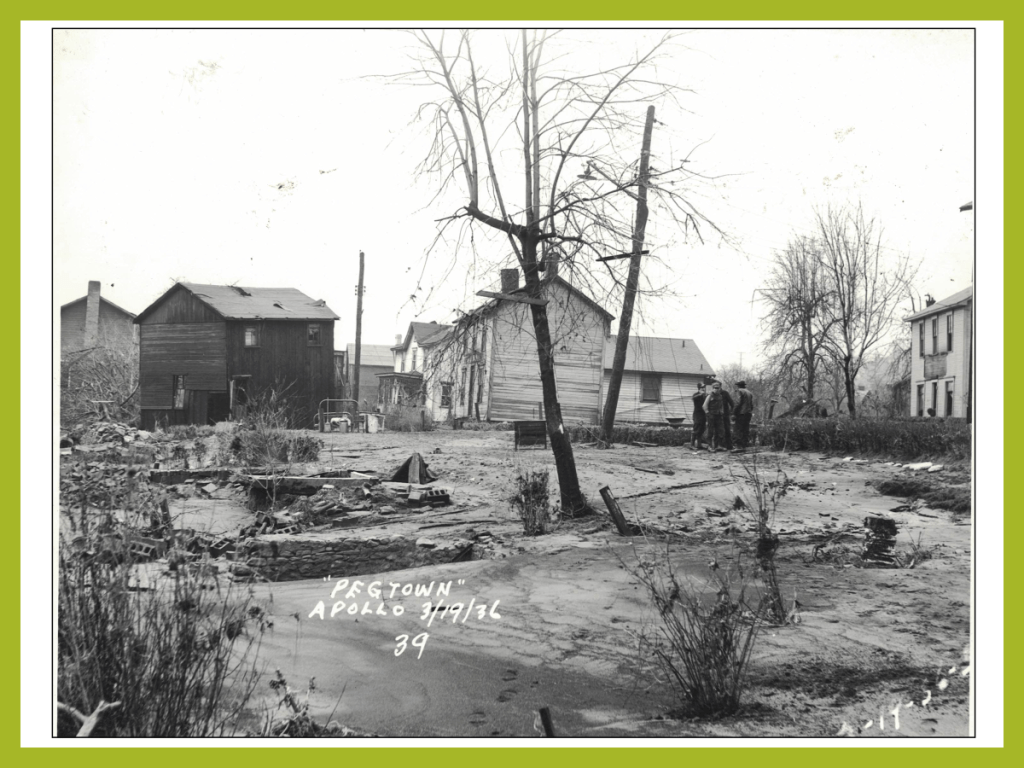
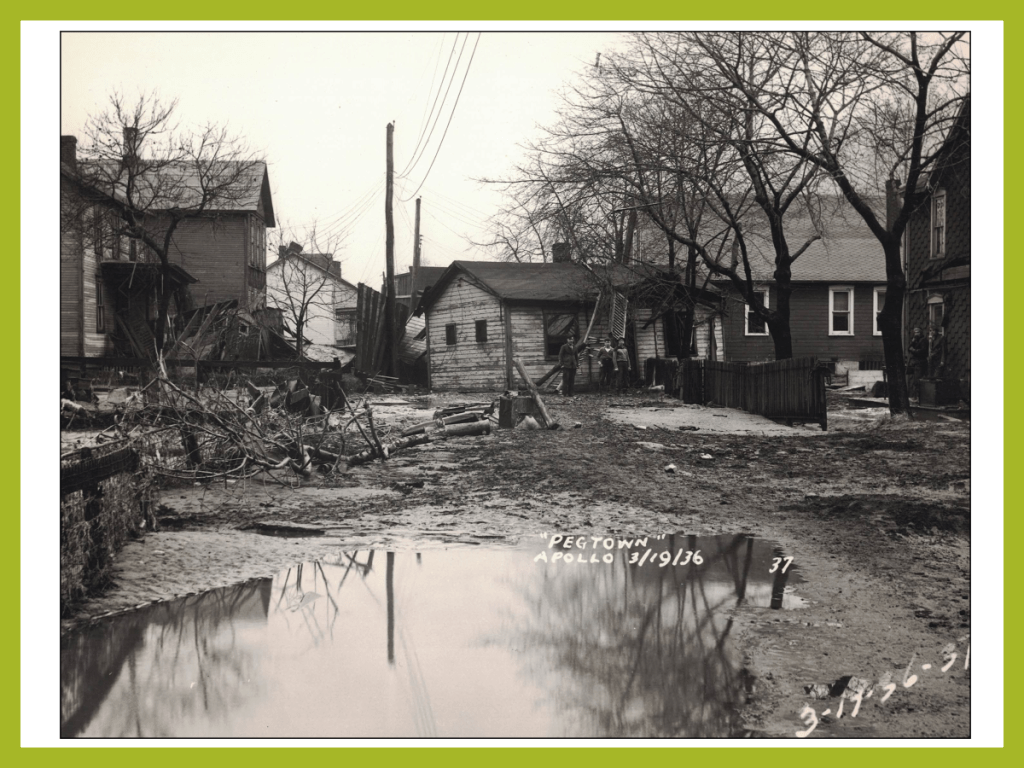
Here we’re looking at Pegtown and the Grimm Cement Plant with East Vandergrift across the river
The Apollo Steel Mill was originally thought to be completely destroyed, but it wasn’t.
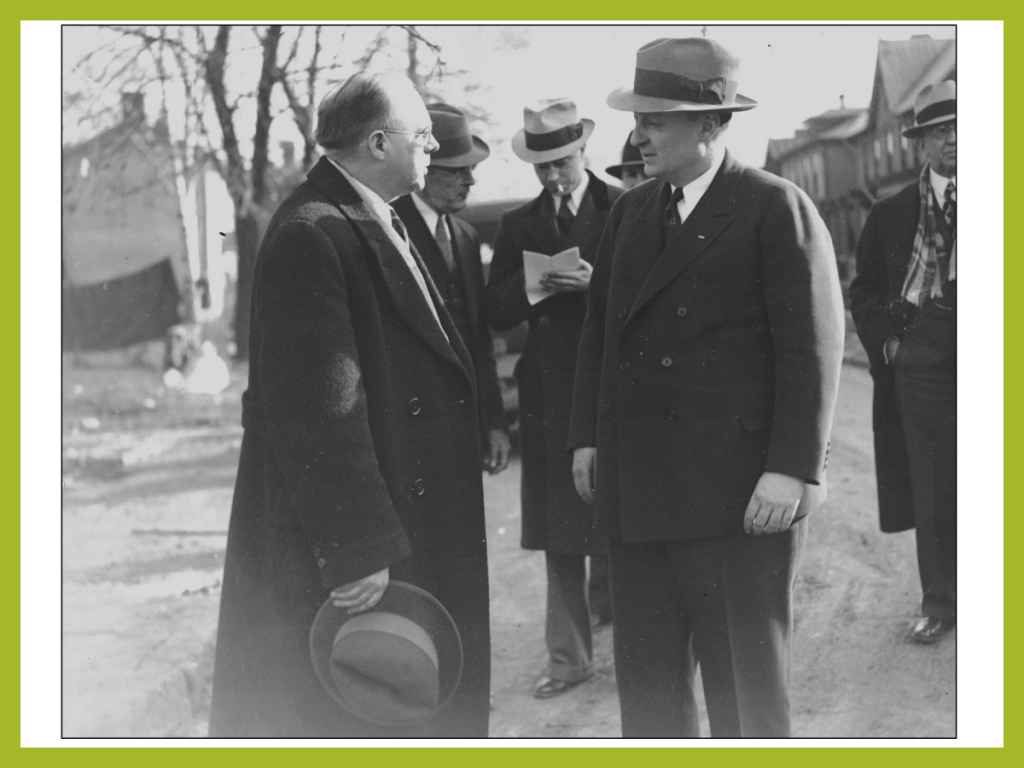
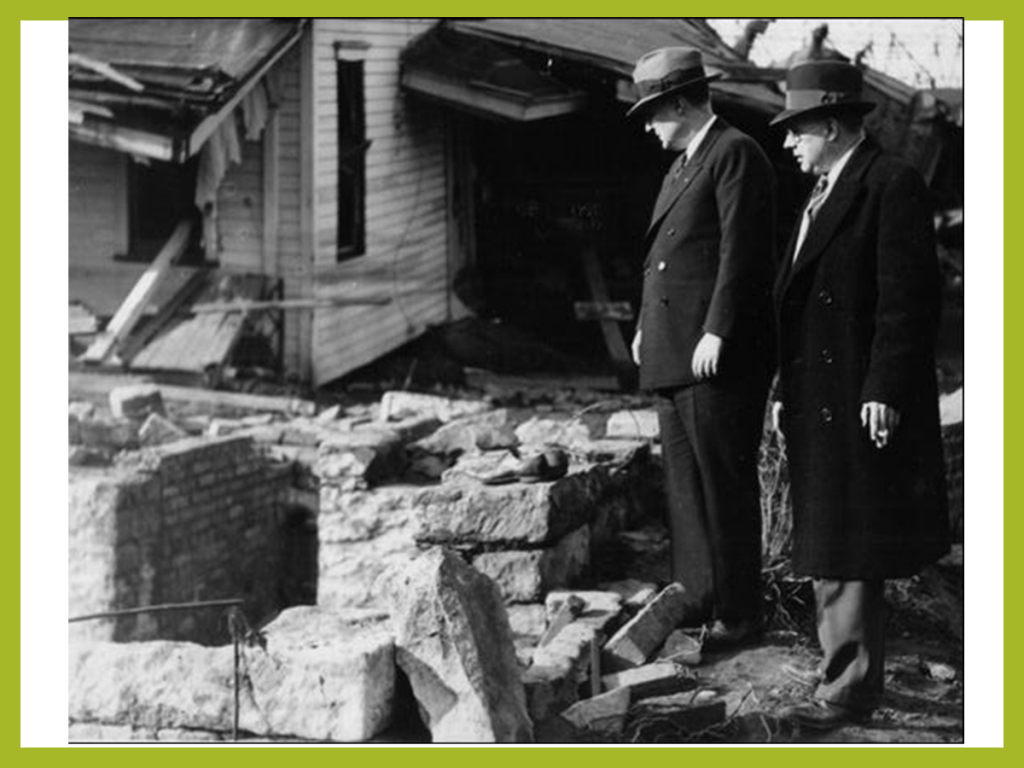
The aftermath and clean up of the 1936 St. Patrick’s Day Flood Governor George Earle is on the right with Burgess SS Baldrige on the left in the first photo. The two news articles sum up the aid that was sent into Apollo.
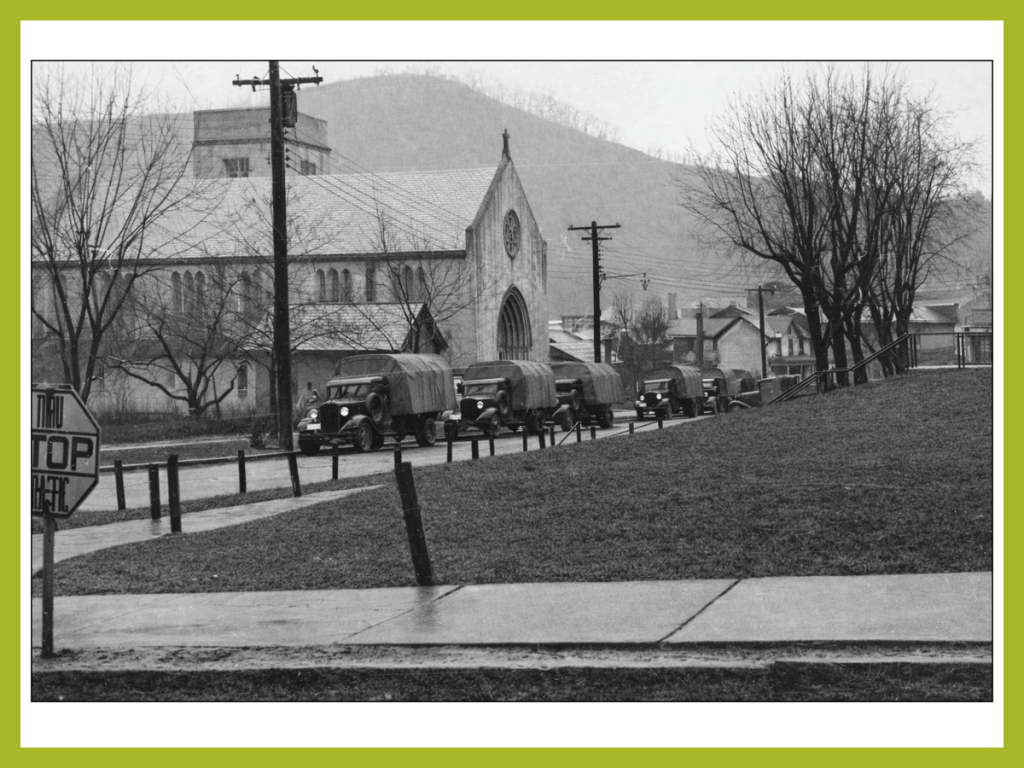
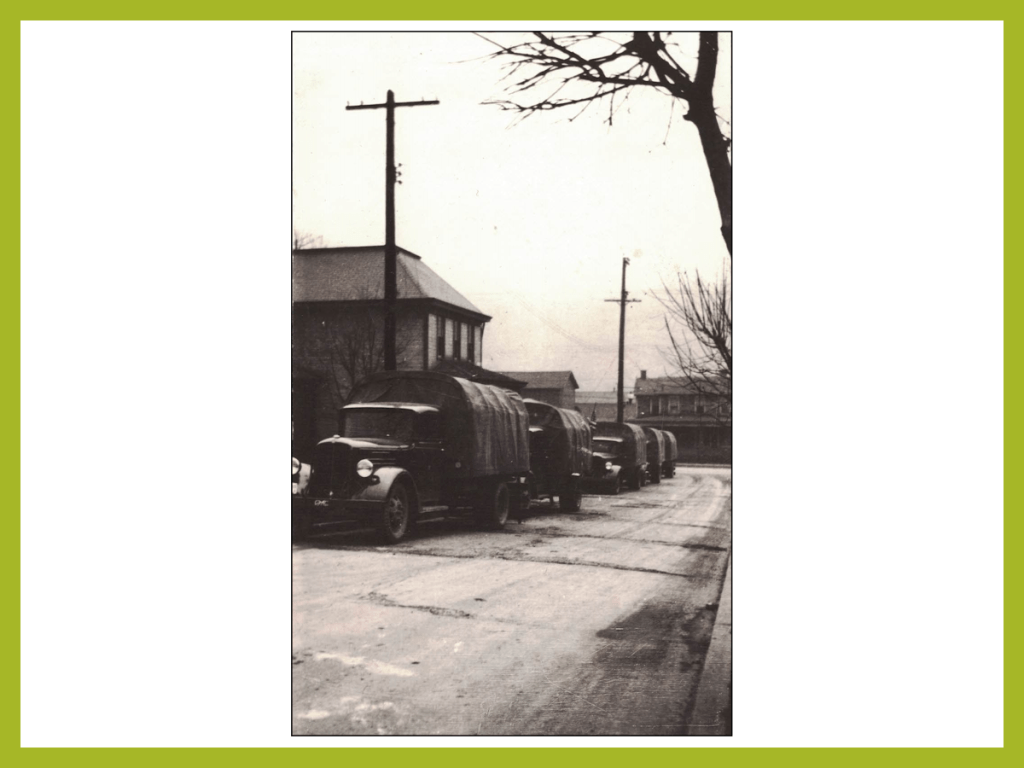
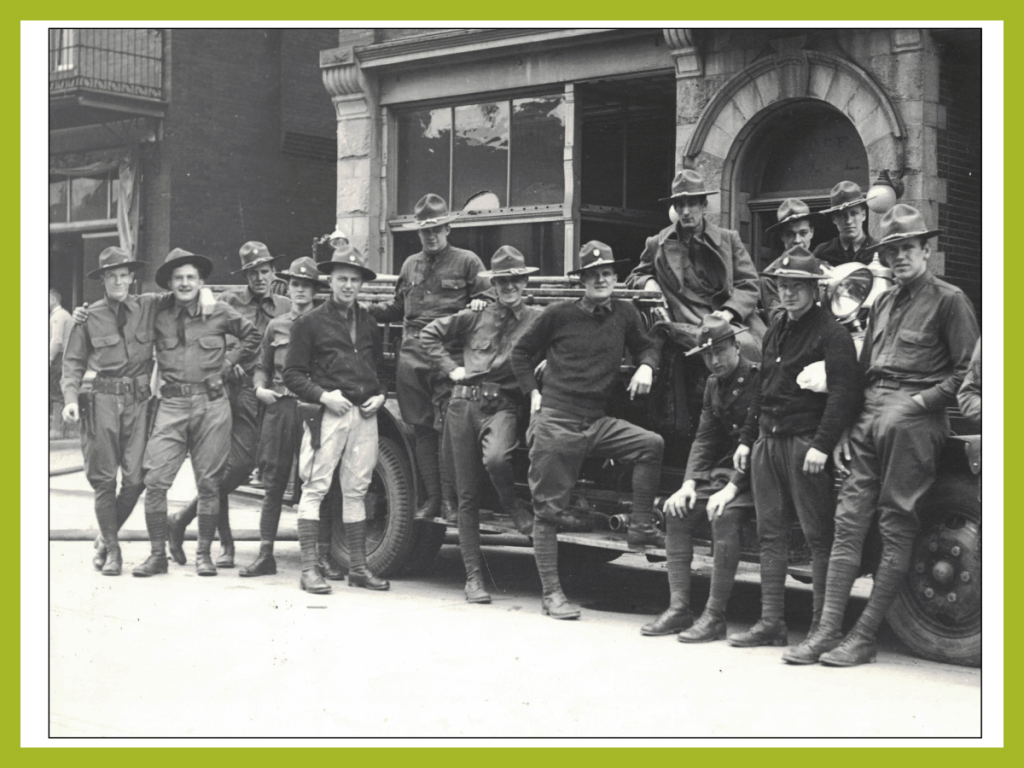
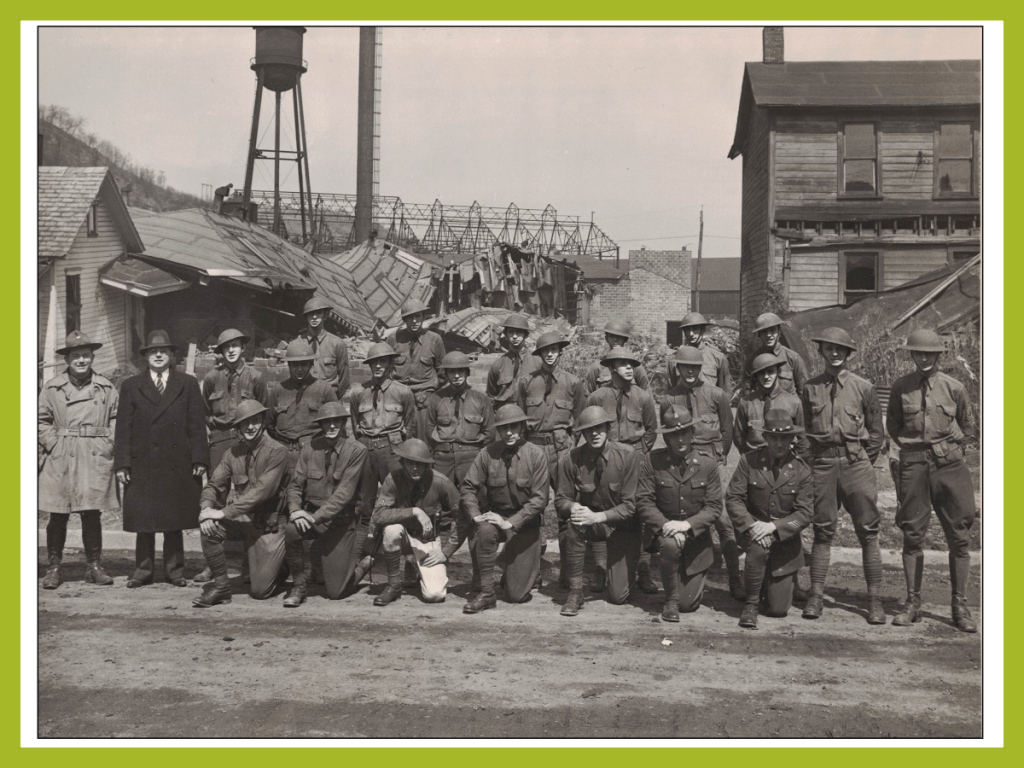
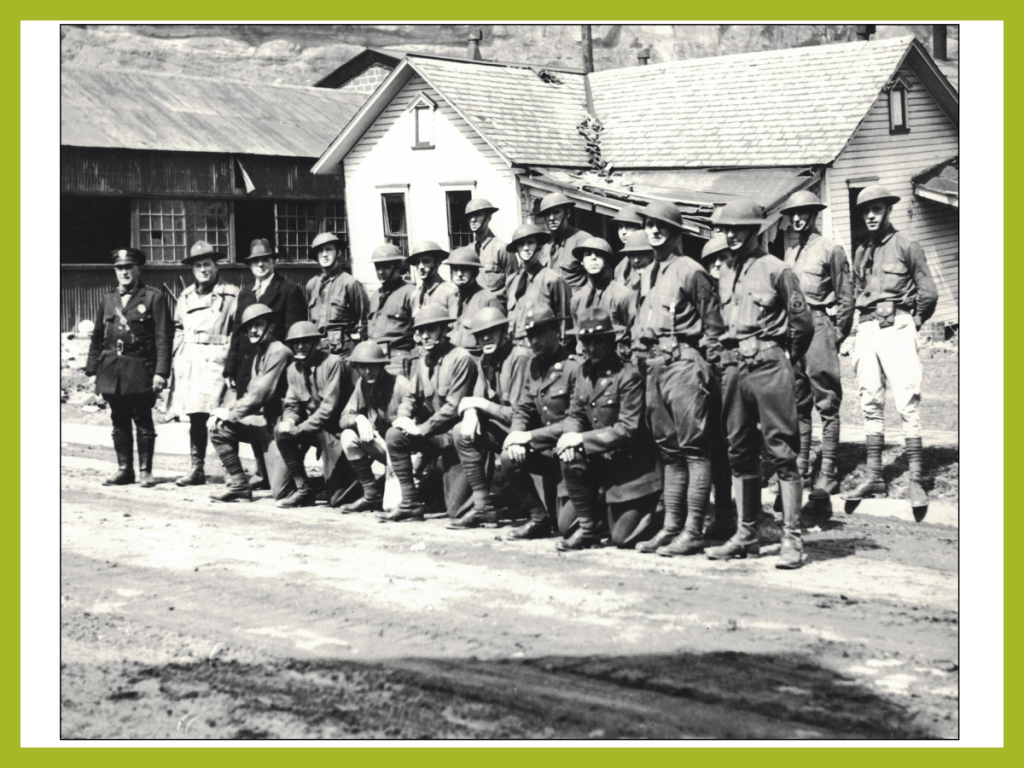
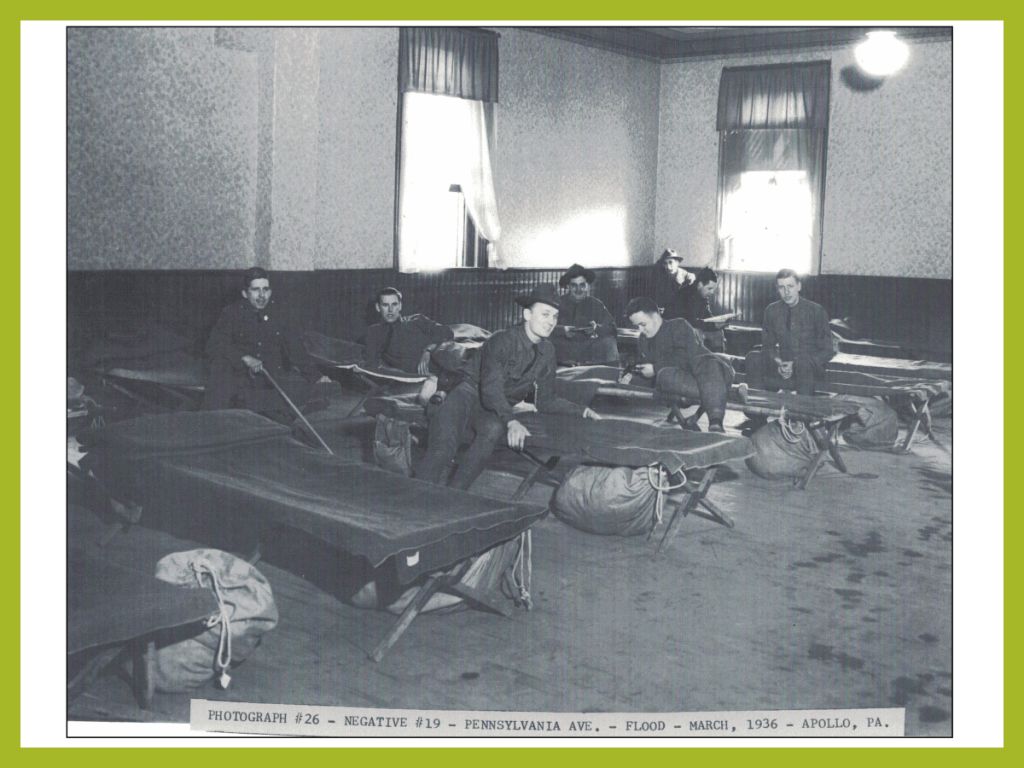
| Gov. Earle Sends Aid On Thursday morning Franklin Pauly, Post Commander, and Quentin Bellas, Adjutant of the American Legion here, were detailed by Burgess S. S. Baldrige to go to Indiana and through telephone communication with the office of Gov. George H. Earle in Harrisburg asked for National Guards, food, clothing and shelter. Within an hour of making the request, a detail of National Guards were on the way in trucks, truck loads of food and blankets were started and clothing and cots promised. Other details of National Guards arrived later in the evening and a detail of American Legion members from the Indiana Post arrived and volunteered their services. Headquarters were established in the Municipal building and the stricken district put under close guard, thereby relieving the local firemen and volunteers who had valiantly worked long hours to save what they could. Second to none was the heroic work done by these local men, risking life and limb to save others and the astounding fact that through this disaster not a life was lost, is sufficient proof of their successful efforts. Remarkable rescues were made and it is certain that without the ability of some of the men several lives would have been lost. Flood Aftermath and Cleanup in Apollo The floodwaters that overtook the town on March 17 was only the beginning of the problems for Apollo. Massive clean-up lay ahead after the waters receded the next day. Gov. George Earle was contacted the next day and 27 members of Company 2, 110th Infantry National Guard were sent that evening. Their barracks were located in the I.O.O.F. (Independent Order of Odd Fellows) Building on First Street (where the Subway is now) and a mess hall was set up in the municipal building on N. 4th Street. The guardsmen worked in conjunction with 50 special police from the fire departments to prevent looting and keep peace in the town. Clean up of the town would have been nearly impossible without the help of the CCC, the Civilian Conservation Corps, and the WPA, Works Progress Administration. The flood happened in the middle of the Great Depression and both of these programs put millions of unemployed Americans to work. Mud was six inches deep on the streets and in basements of homes and businesses. Hundreds of truckloads of dirt and mud were hauled away as were tons of refuse, furniture, debris, and wreckage. The WPA had its headquarters in the front rooms of the Municipal Building. The 225 men worked 15 hour days and before entering the mess hall in the Malta Building on N. 4th Street, they had to ‘wash their boots with water pressure and their hands with an antiseptic solution.’ The CCC was headquartered in the Lutheran Church on Pennsylvania Avenue, as was their commissary. The 315 workers were brought in every day by truck and fed a hot meal at noon. The workers came from camps in Shelocta, Home, Slickville, and Punxsutawney. Many others from the surrounding areas came to help also, such as South Greensburg Borough and members of the American Legion Post in Indiana, PA. From the Apollo News-Record Friday, March 20, 1936 |
The National Guard shows up Some of the men were billeted in the IOOF (International Order of Odd Fellows) building where the Subway Shop used to be.

Here are some samples of the various signs around town promoting aid and safety warnings.
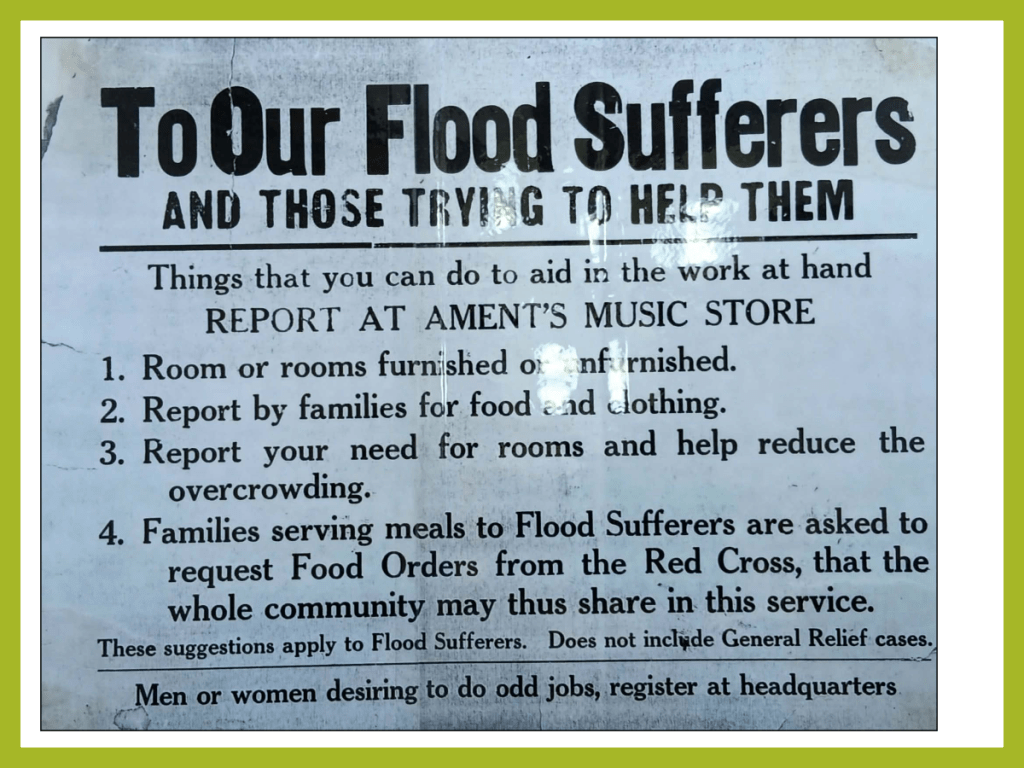
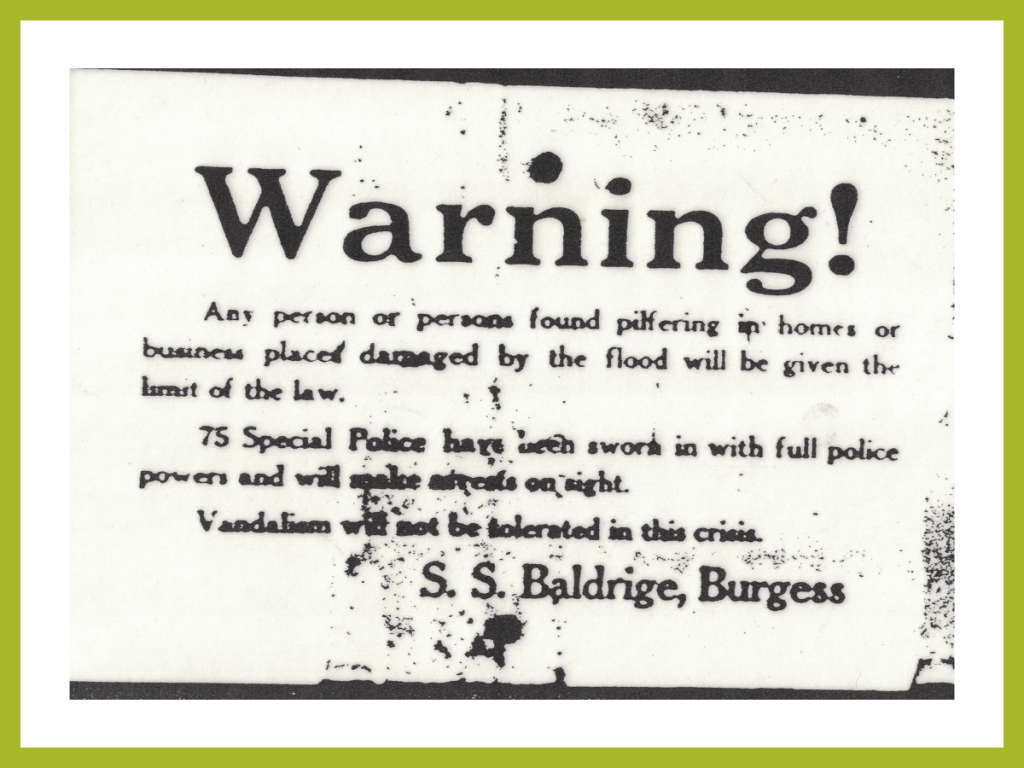
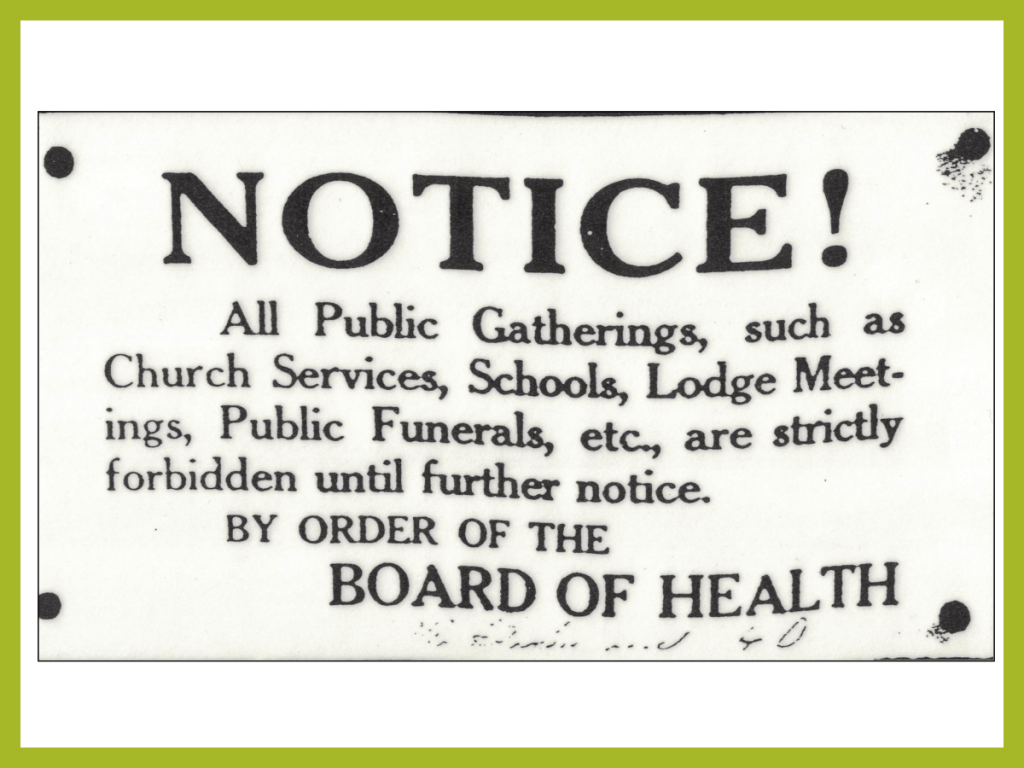

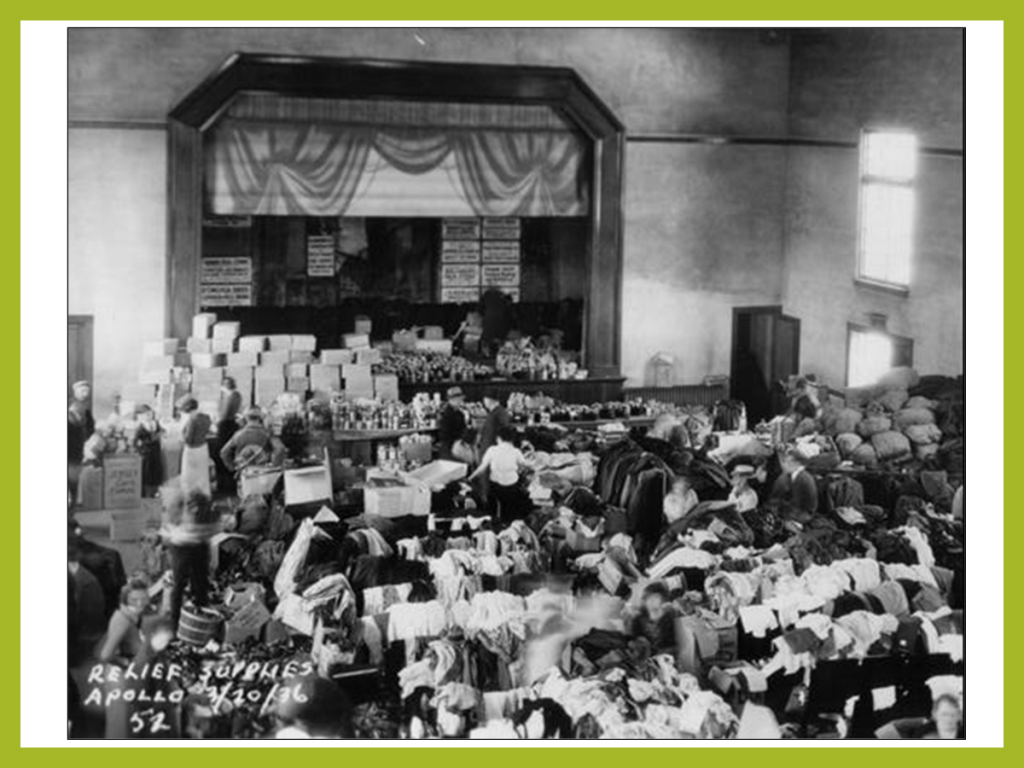
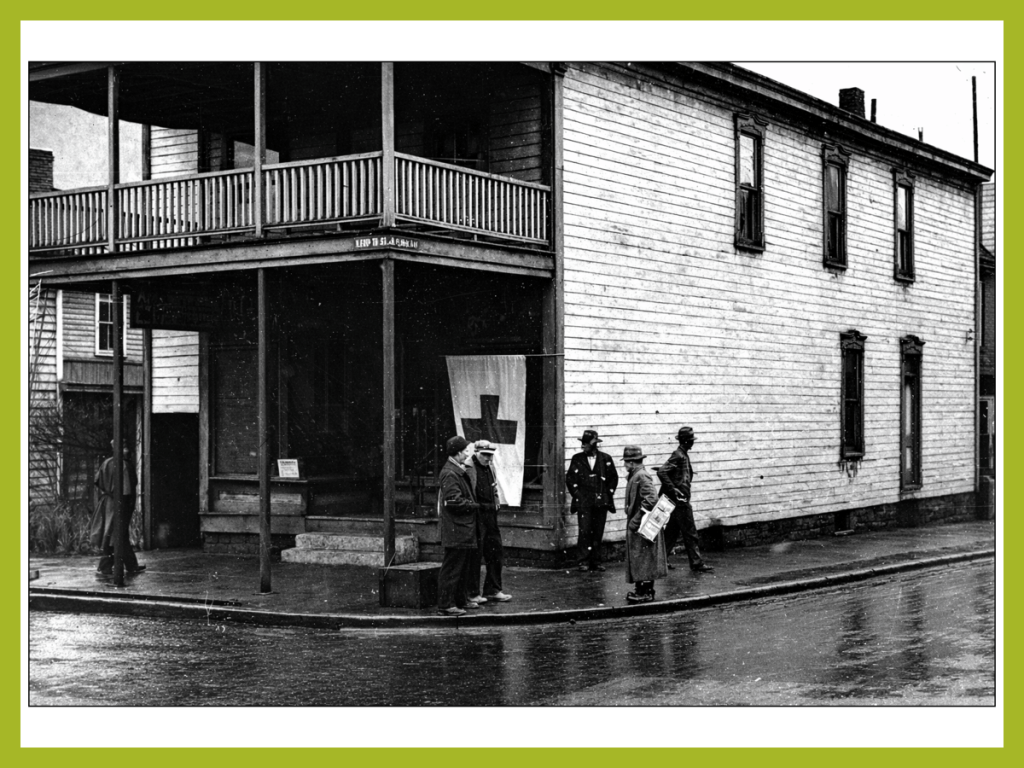
Supplies were available in the Municipal Building. The Red Cross was headquartered in the Ament building. We passed both of those buildings on Pennsylvania Avenue.
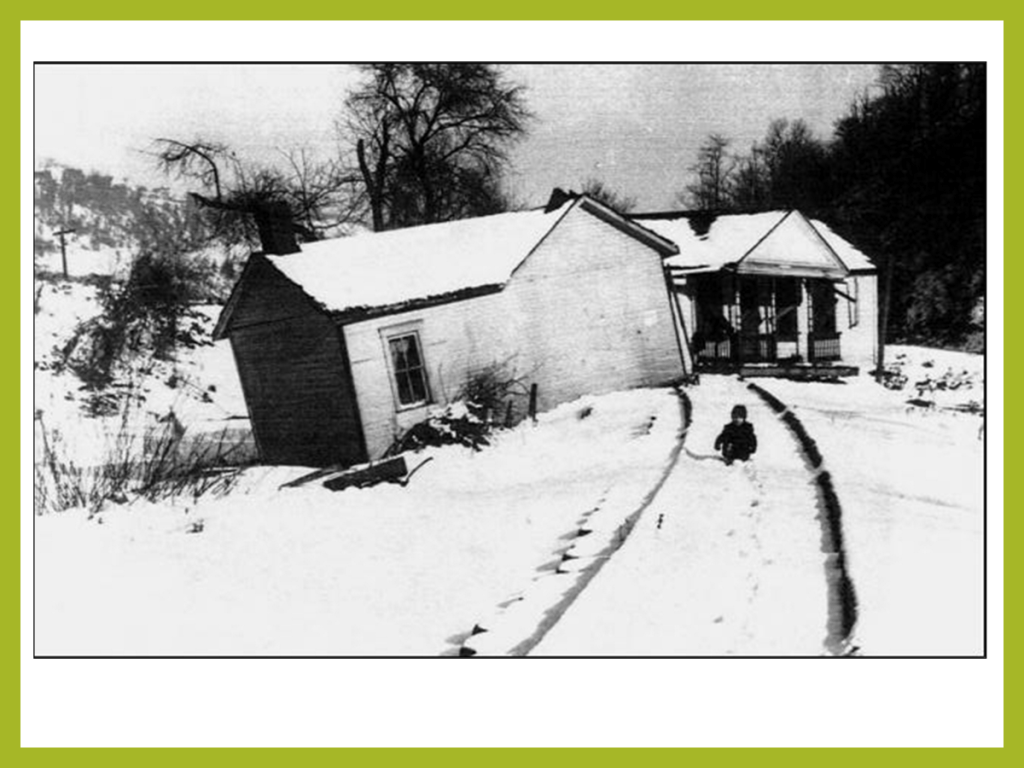
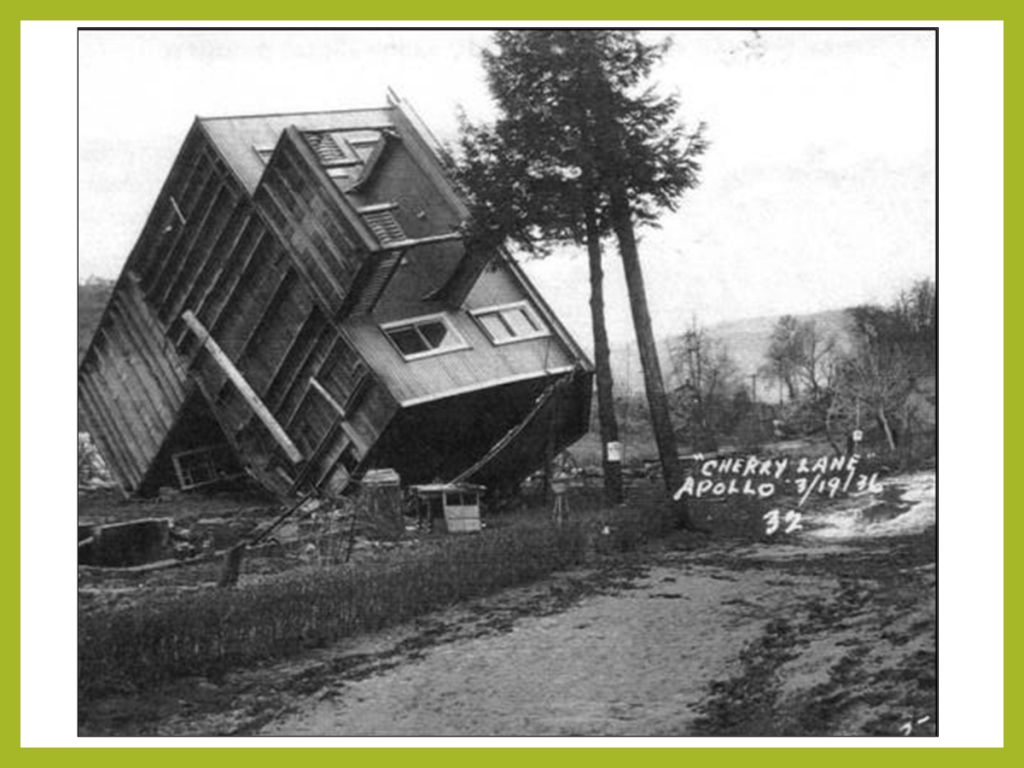
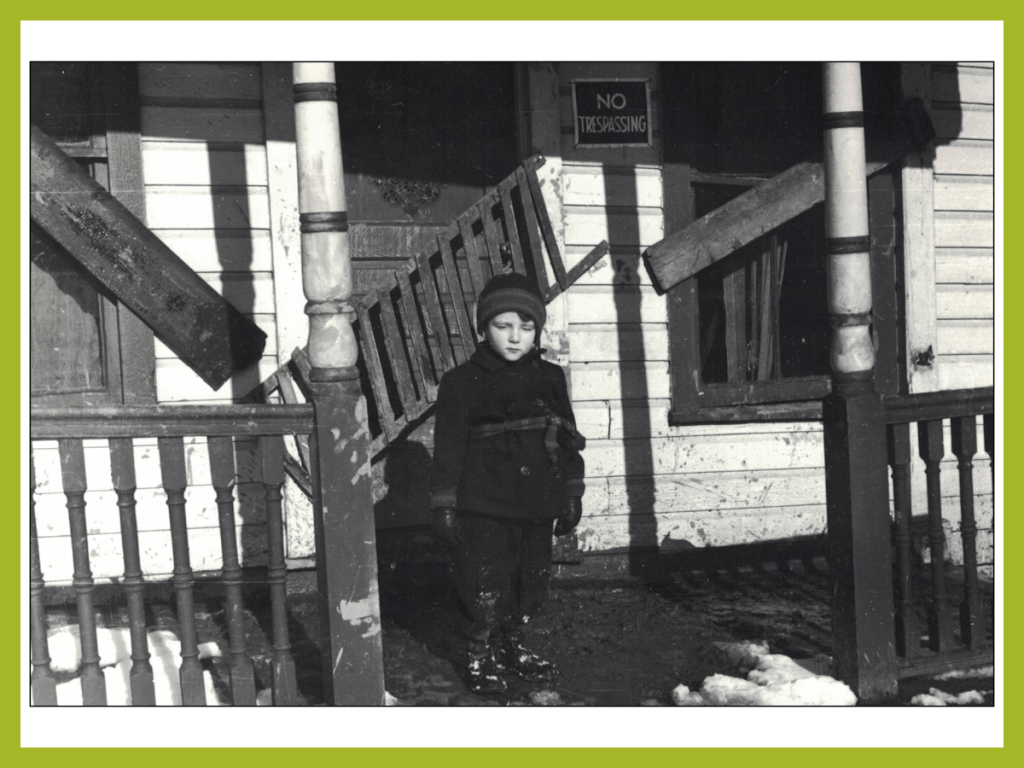
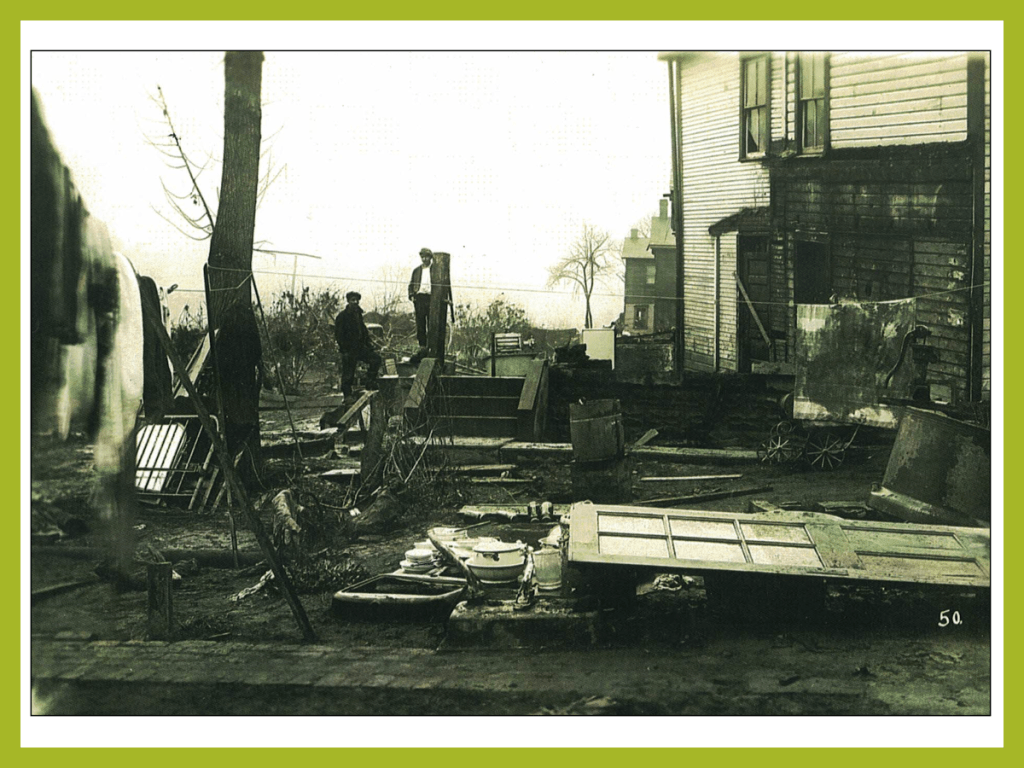
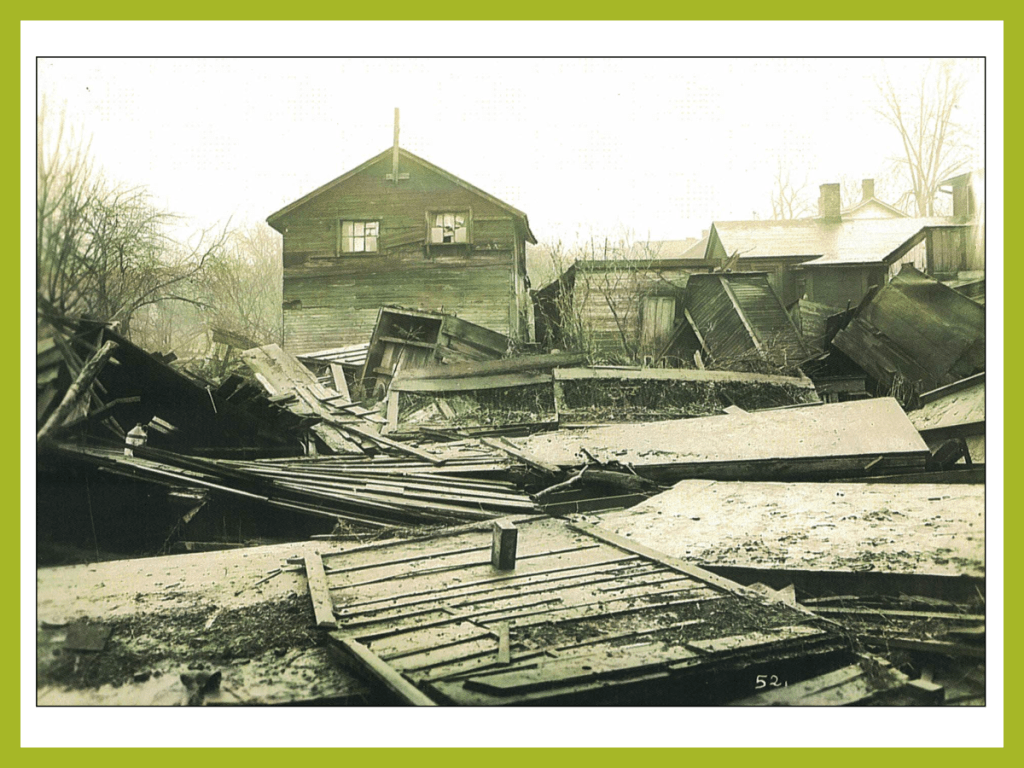
There were many houses that were knocked off their foundations by the rushing water and actually upended! Homes Destroyed It is not definitely known how many homes were entirely washed away or damaged beyond repair. In the section below the railroad at least 15 houses are missing and a score or more have been twisted or shifted from their foundations.
The settlement up the river near where the railroad bridge crossed was practically demolished. Only parts of three houses are reported standing. In the lower section of North Apollo many houses have been completely destroyed.
North Vandergrift was another section that has been nearly wiped off the map. Several deaths were reported from this section but none could be confirmed.
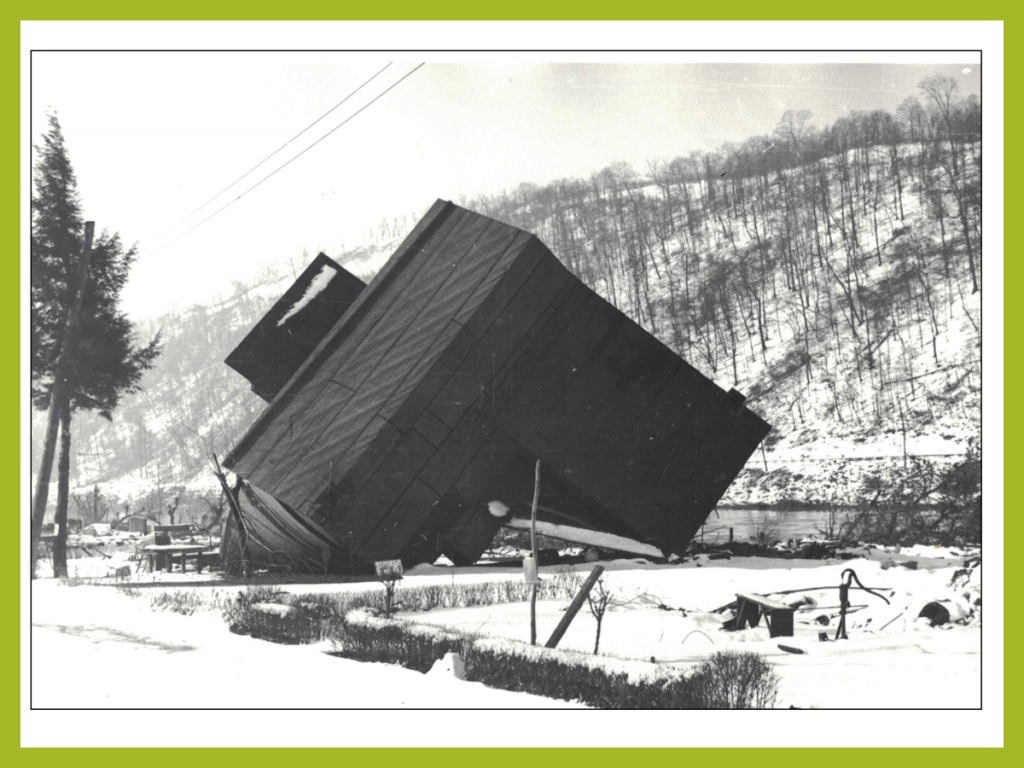

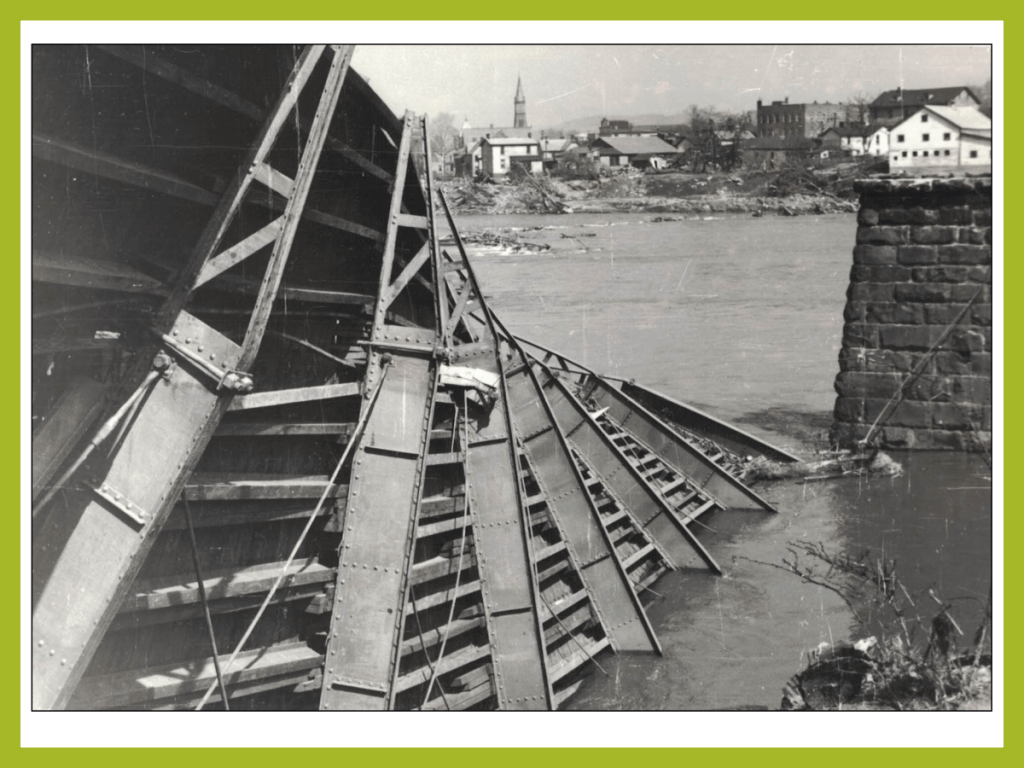
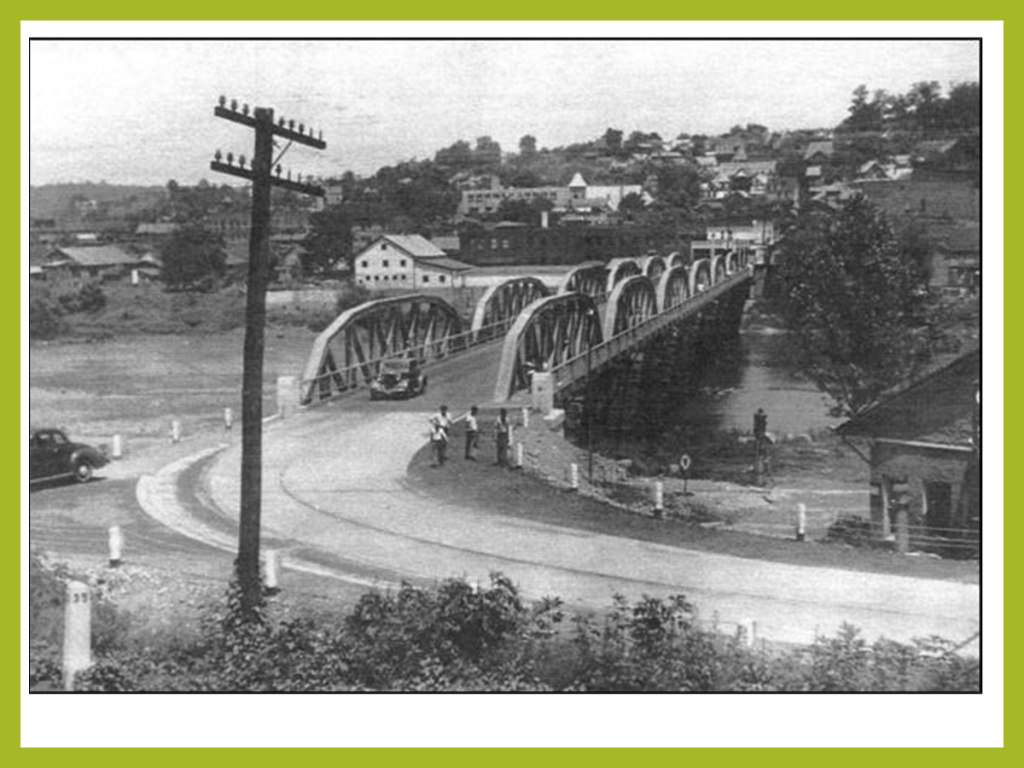
The Railroad bridge was taken out by the flood, but was rebuilt quickly. Apollo’s railroad bridge was rebuilt in just over a month by the American Bridge Co. of Ambridge, PA. Its quick construction was due to the fact that it was a private bridge owned by the railroad. Our highway bridge was a different matter. A state highway bridge meant that the government was involved. And the bridge crossed a county line which meant both Armstrong and Westmoreland counties were involved. By the time all was said and done, it took more than 2 years to open the new bridge. July 1938.
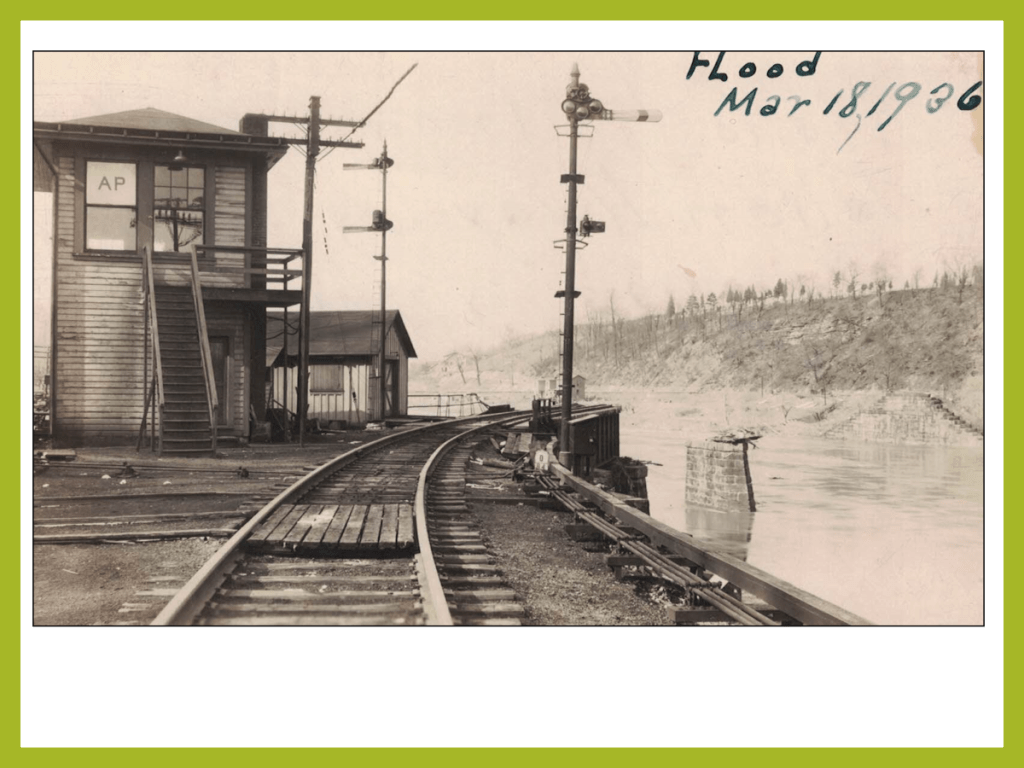
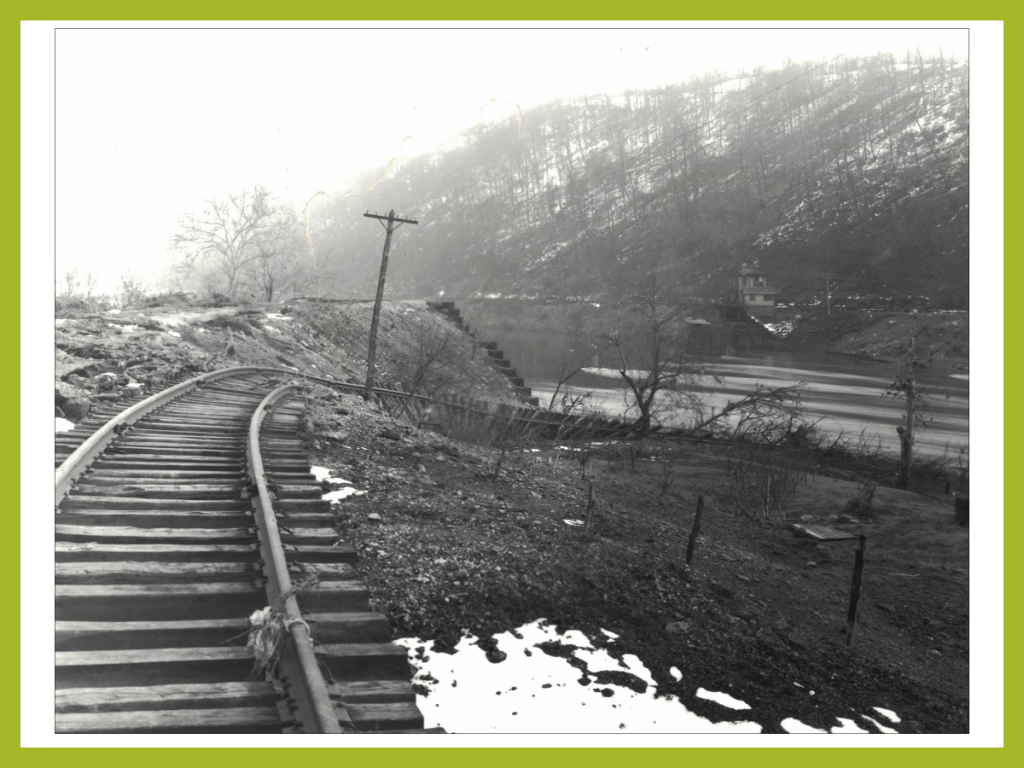
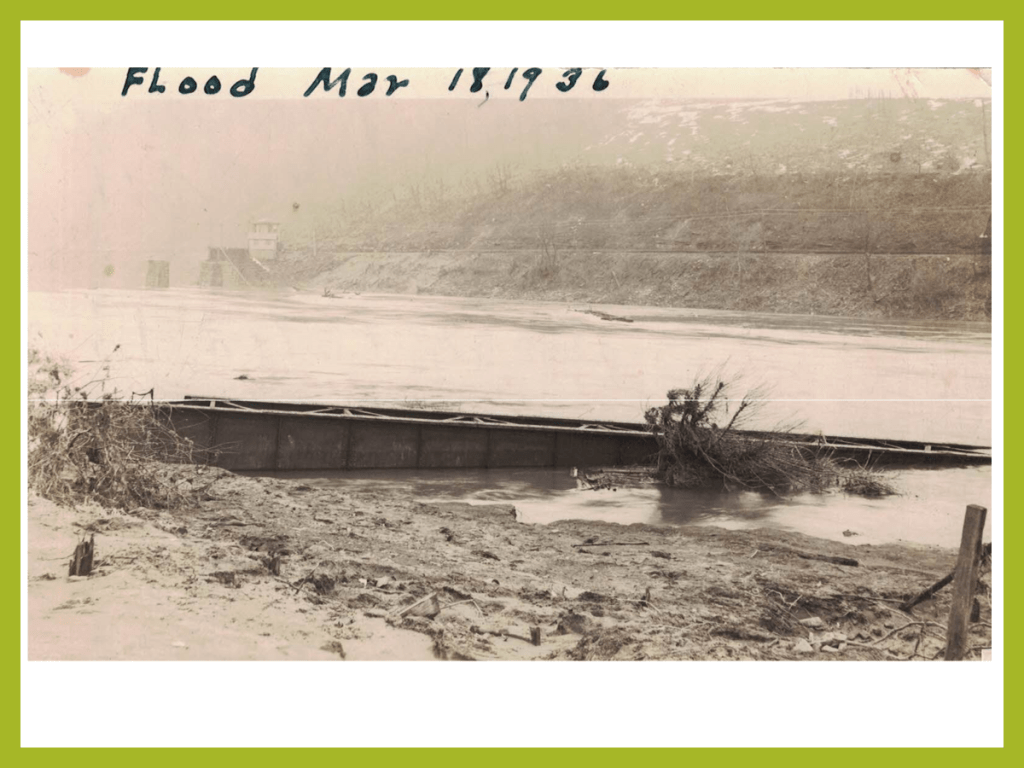
| Bridges Out The highway bridge at Apollo left its piers at 4:25 a.m. Wednesday when snapped under the terrific onrush of rapidly mounting water filled with hundreds of homes, heavy timber and other debris.The railroad bridge south of Apollo, held together by heavier timber and steel rails, finally let go a few hours later when it left its piers at 7:00 a.m.The Apollo bridge is reported to have been built here and opened on March 17, 1882, and it was 54 years later, with the exception of a few hours, that the sturdy construction was swept off its piers.The Avonmore highway bridge, the Hyde Park footbridge and the bridge at West Leechburg also were swept away early Wednesday. Bridges at Vandergrift, Leechburg and Saltsburg were somewhat but not seriously damaged and were opened to restricted traffic only. Guards at the Vandergrift bridge did not allow any persons from this side of the river to enter Vandergrift. Only those who had passes from Vandergrift authorities could re-cross the bridge.The Salina bridge was the only undamaged bridge along the Kiski and served as the only connecting link to this side of the flood-stricken area.From the Apollo News-Record Friday, March 20, 1936 |

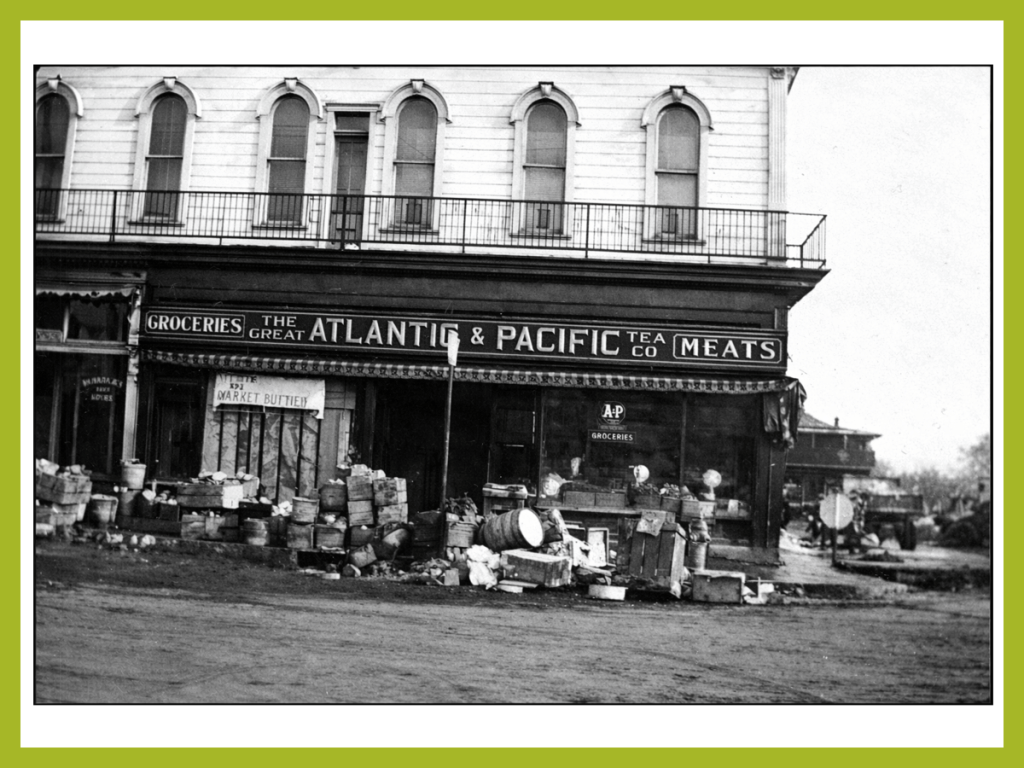
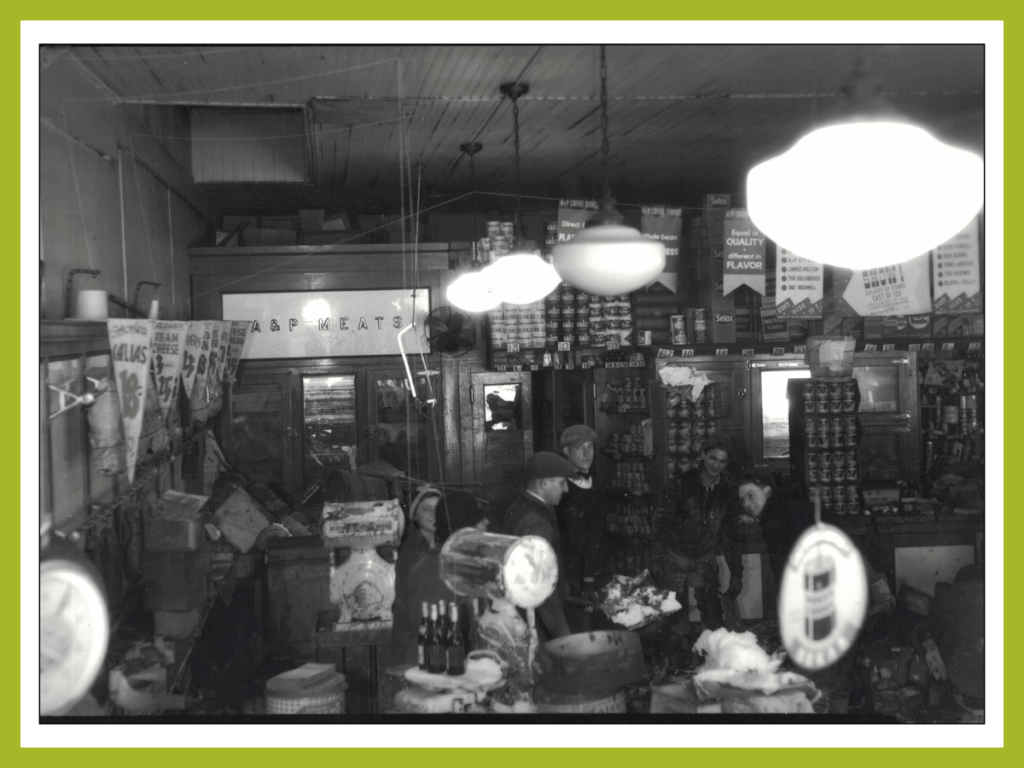
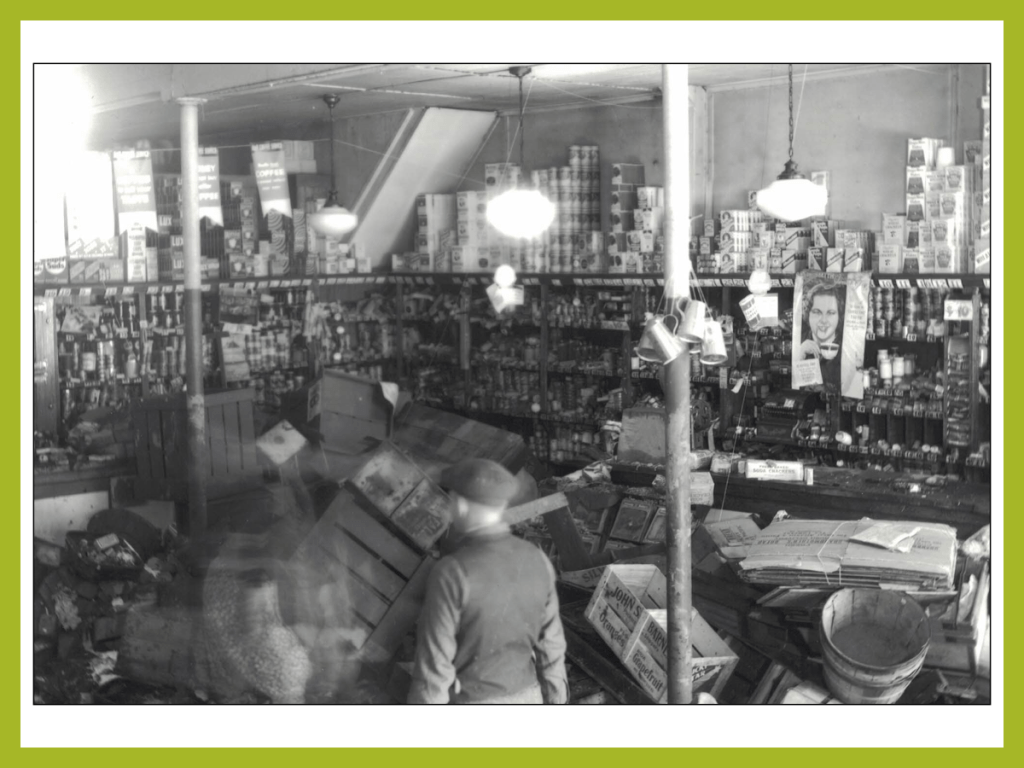
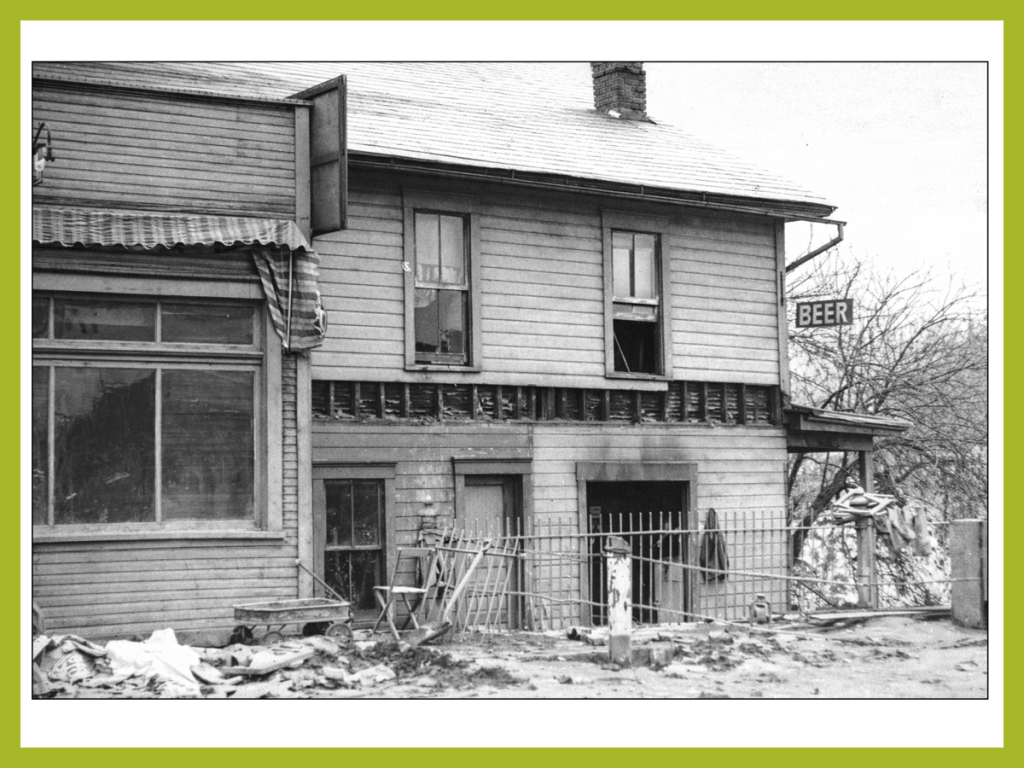
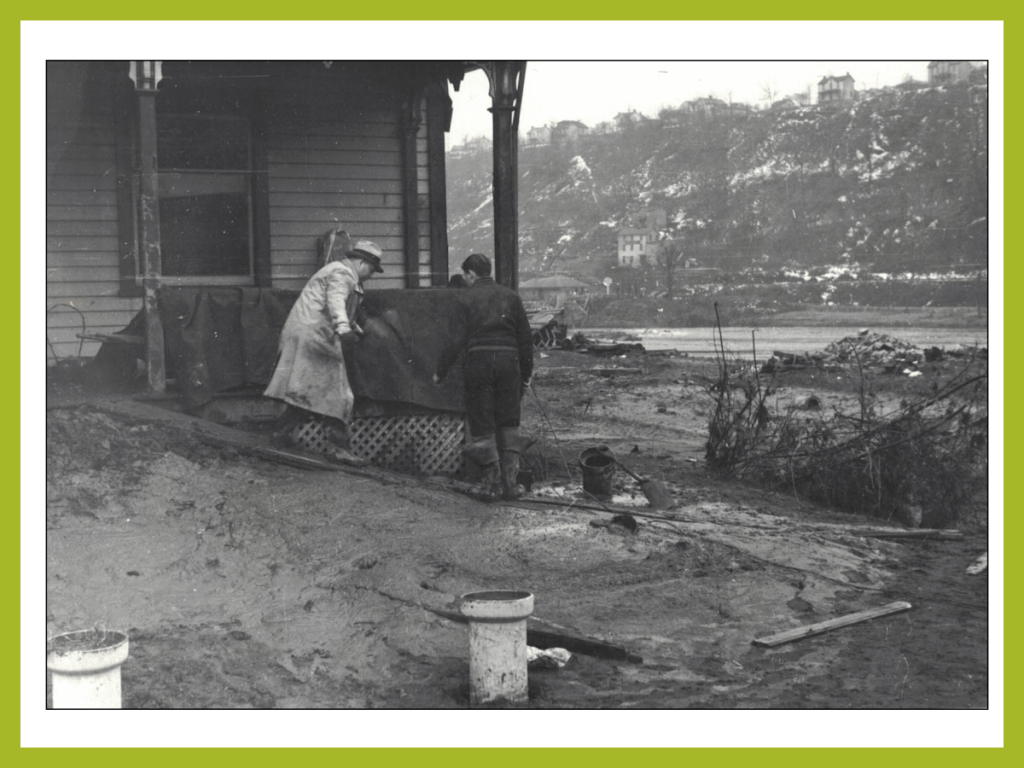
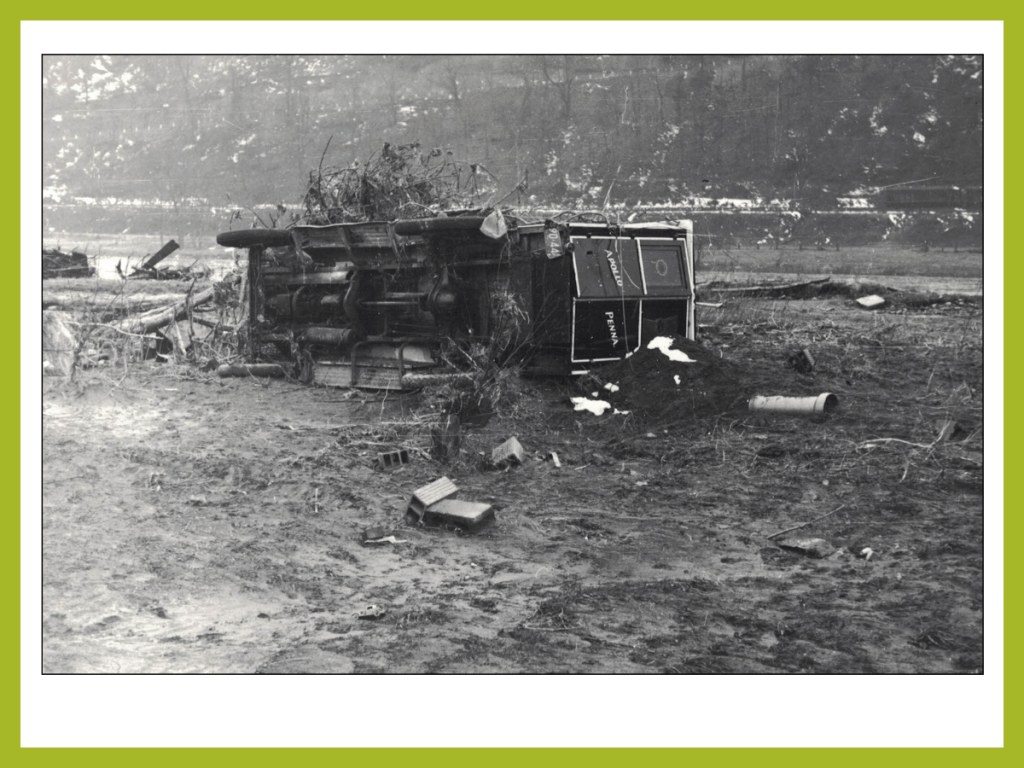
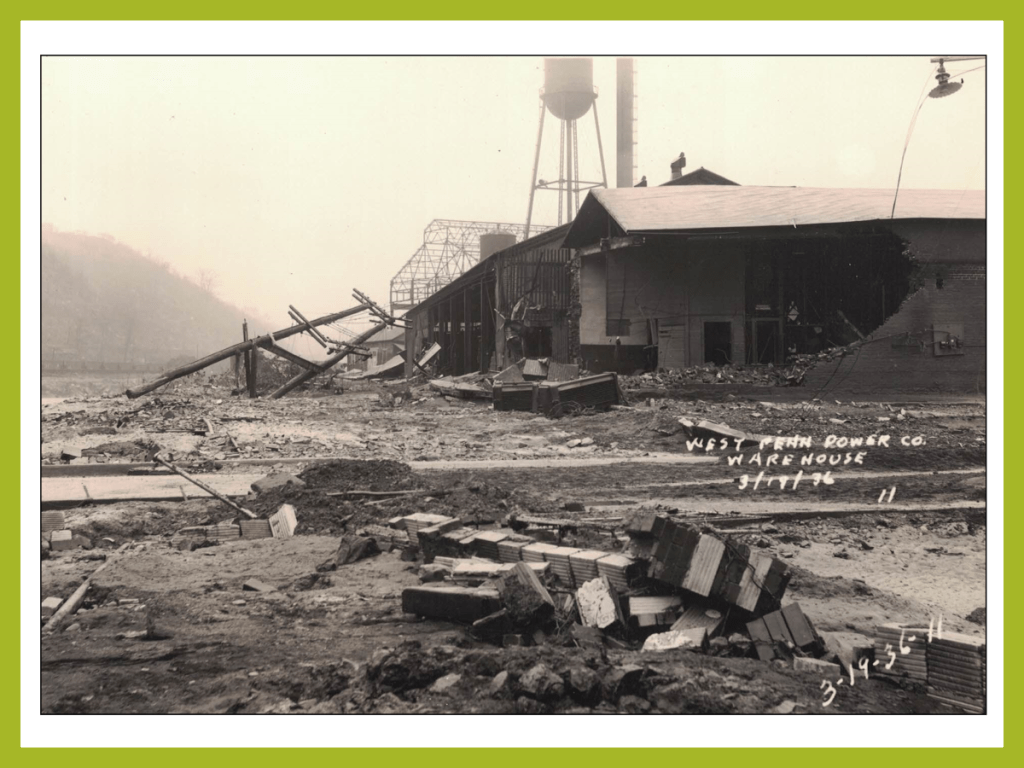
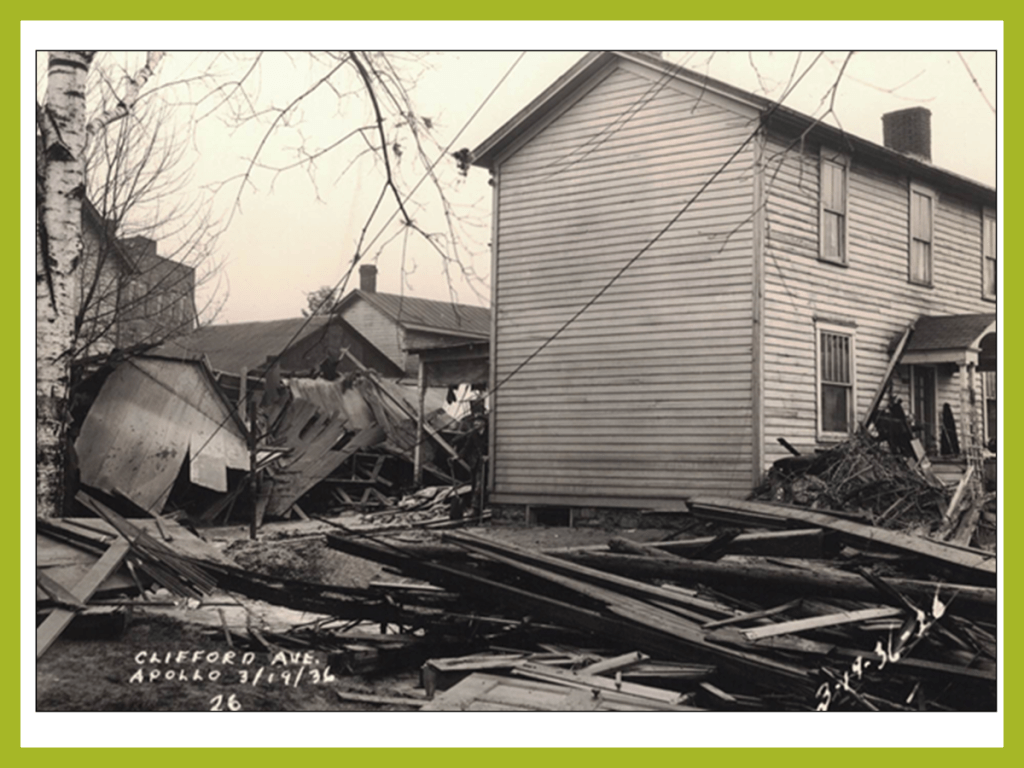
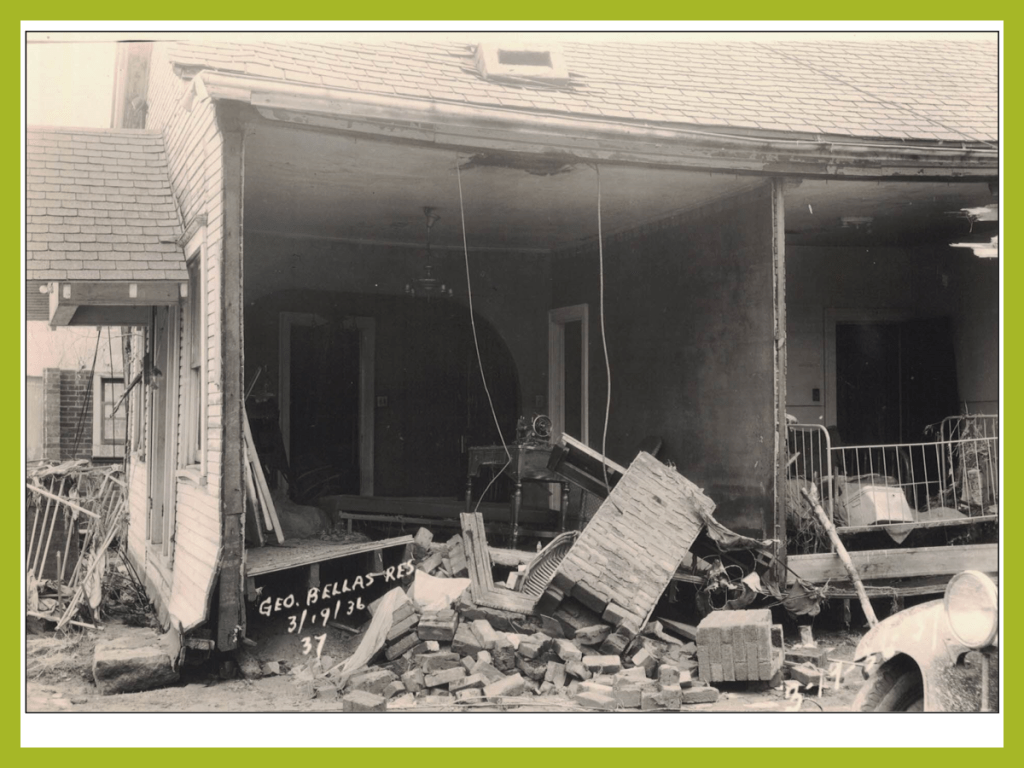
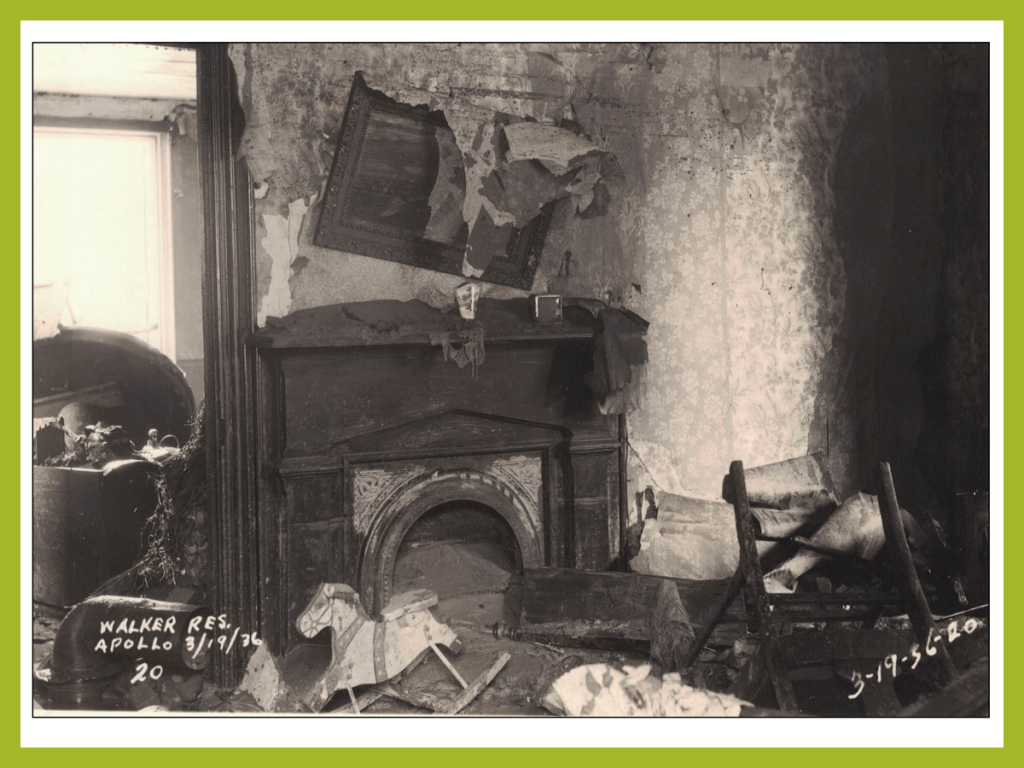
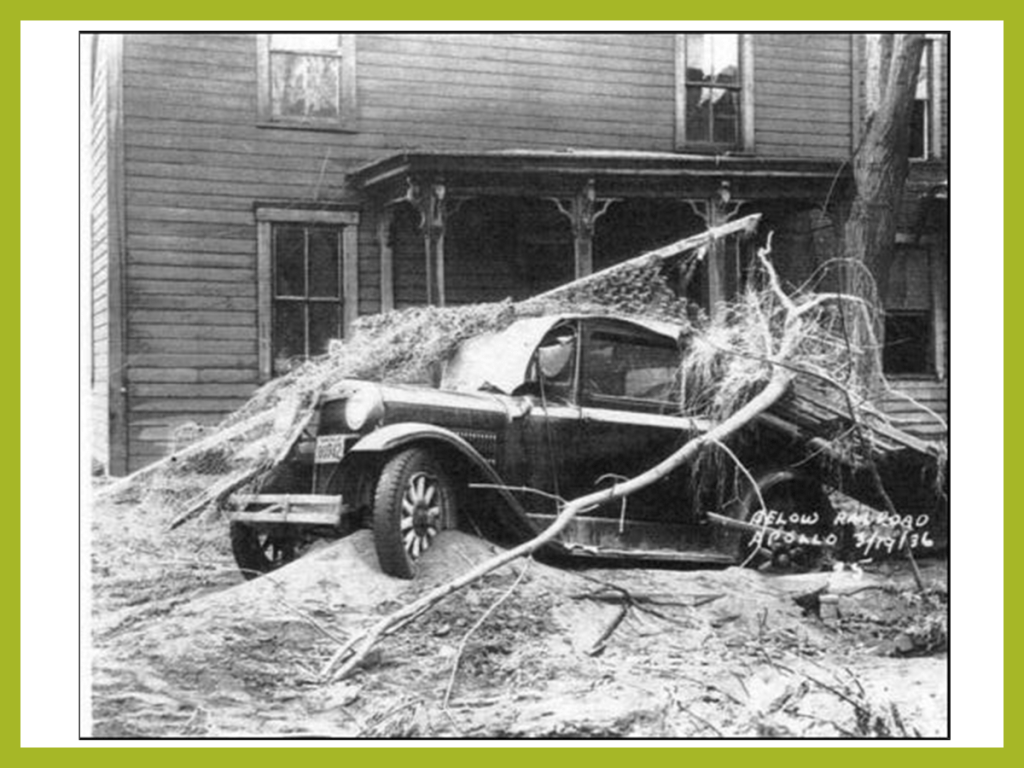
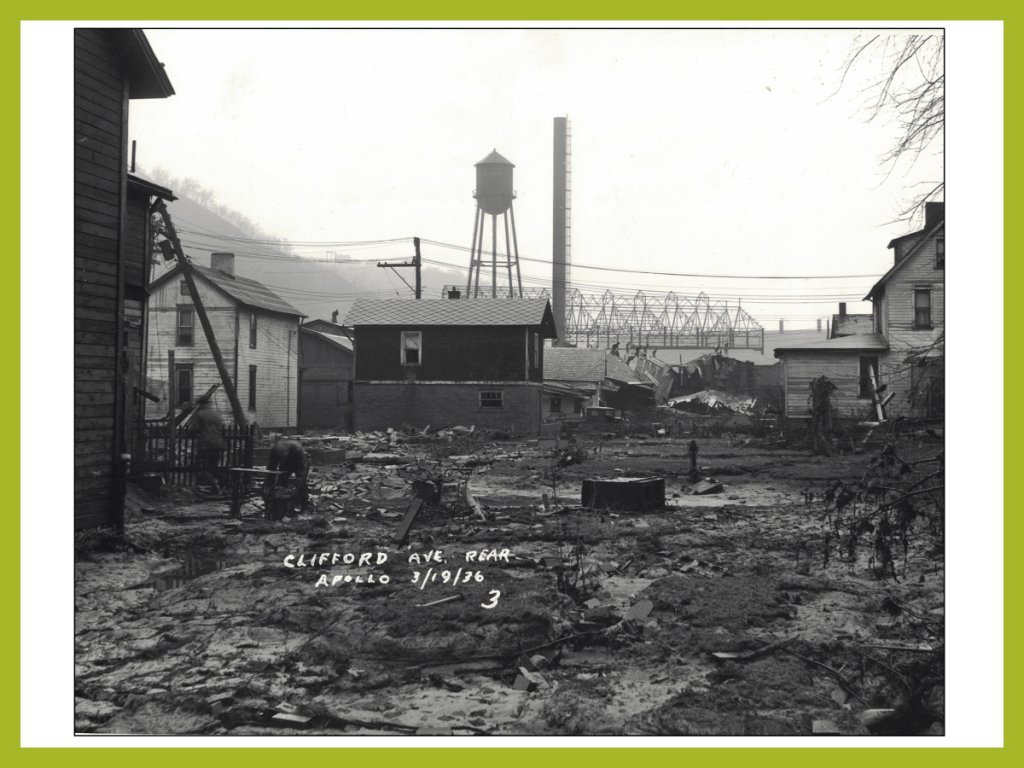
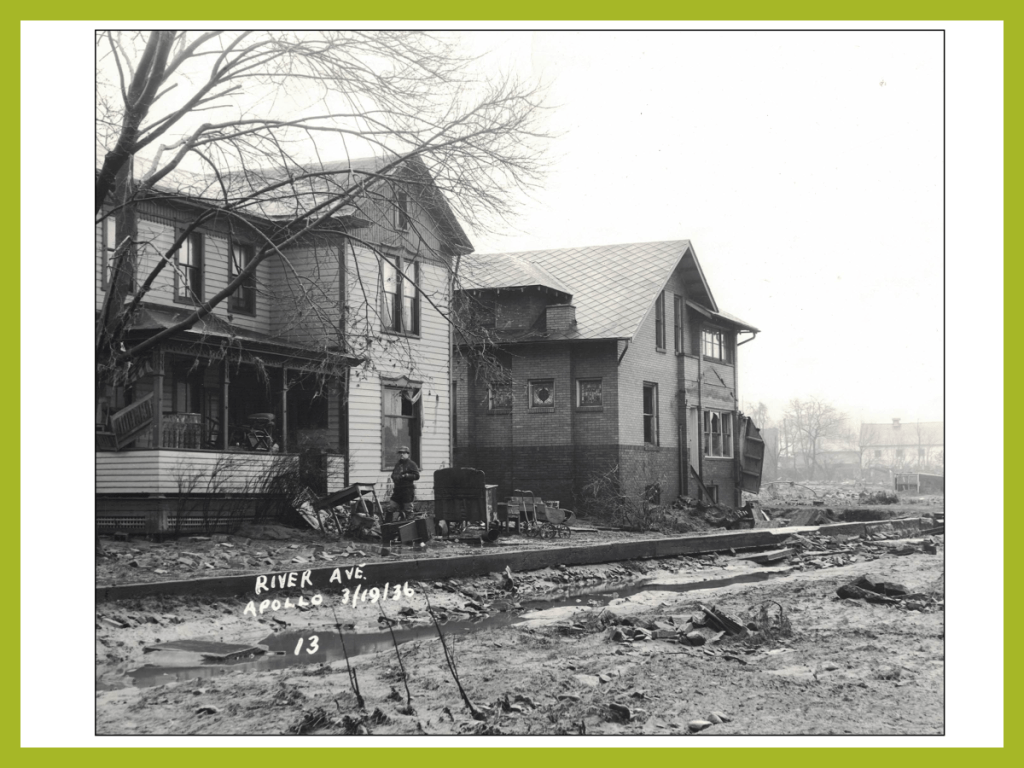
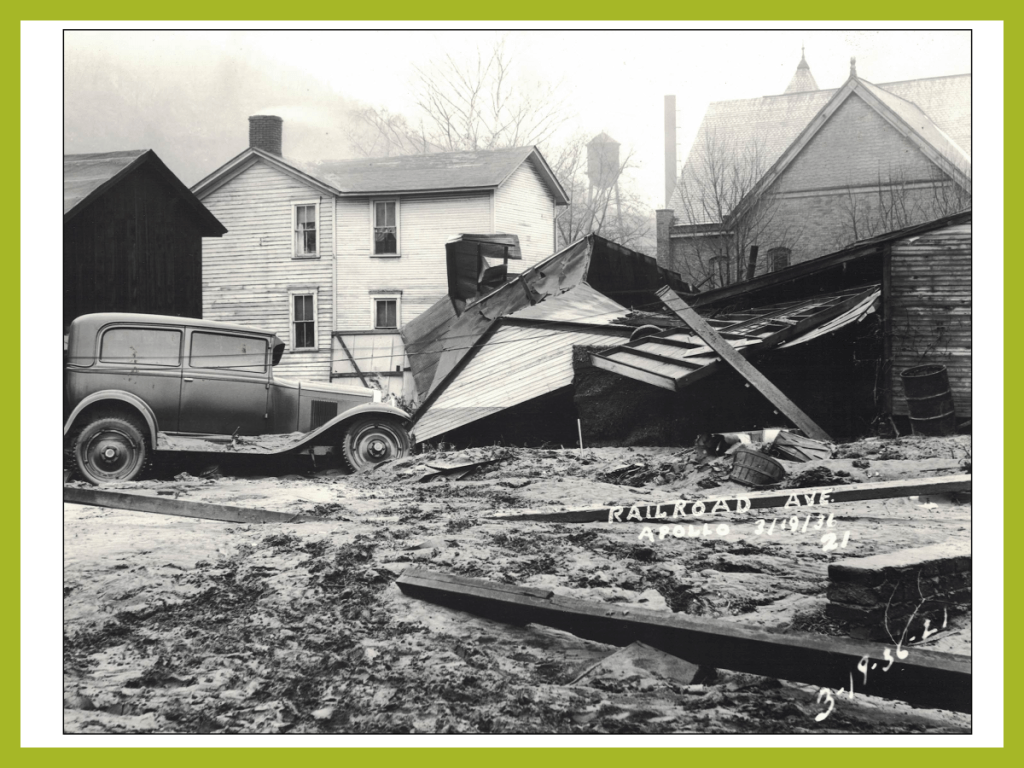
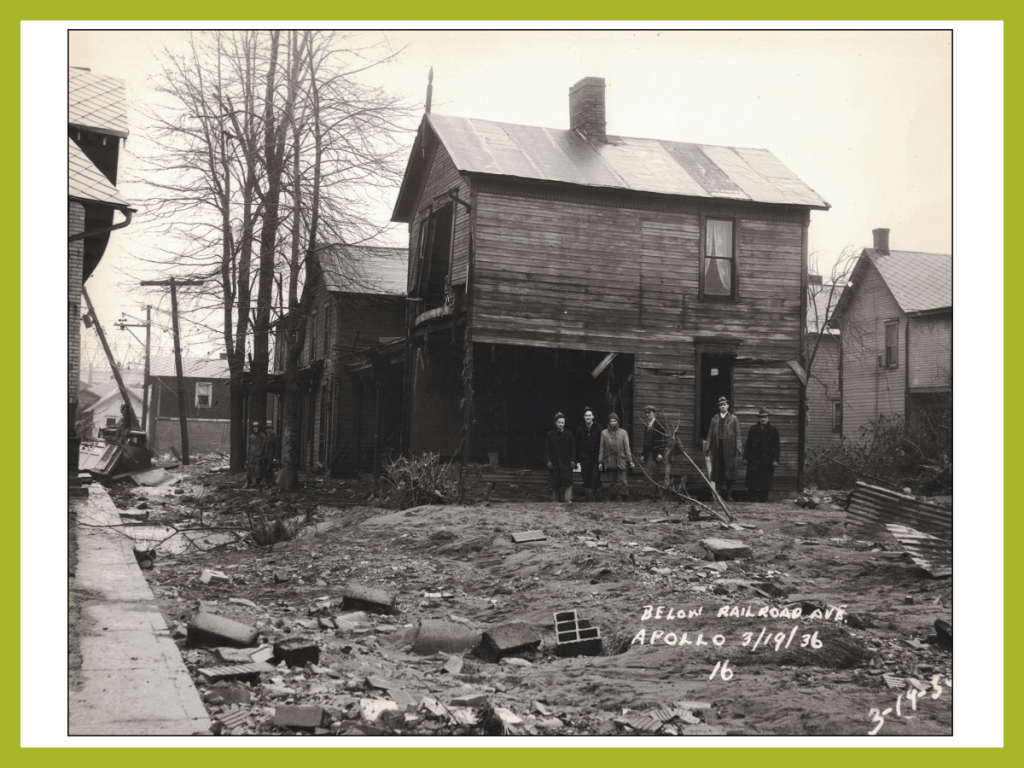
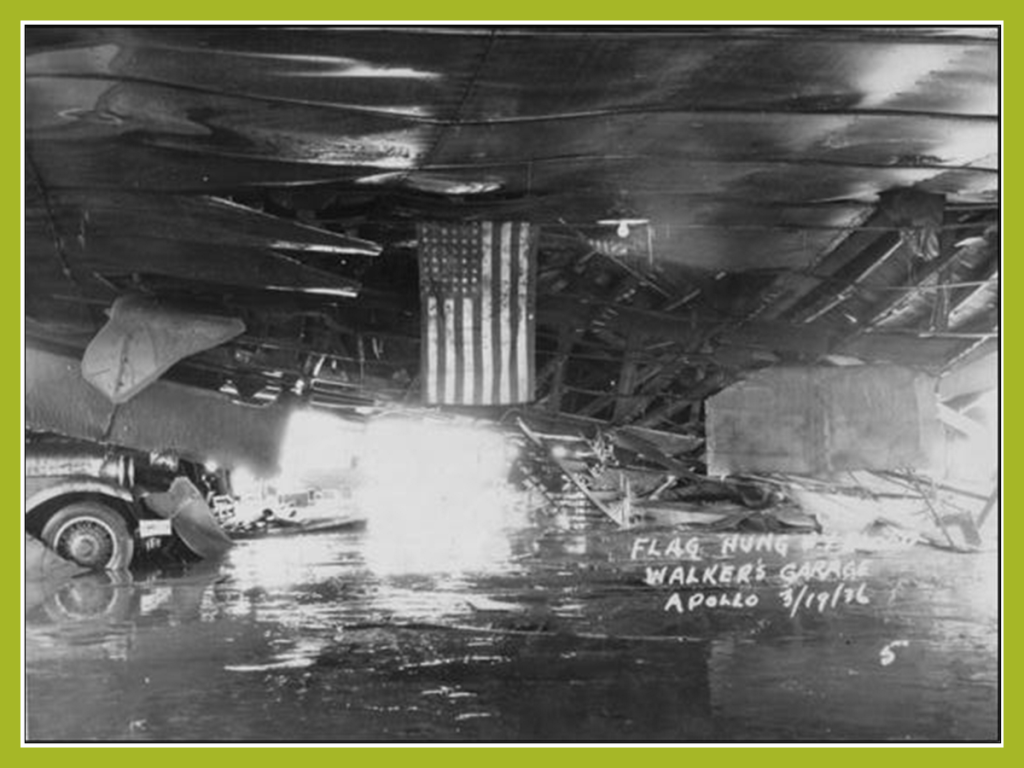
One For Ripley! One of the freaks of the flood was found in the Walker Garage on Railroad Avenue. When Mr. Walker opened the door of his garage on Thursday morning, he found, suspended from the ceiling, a five foot American Flag. It was hung perfectly straight in the center of the garage with the blue field in the proper corner. Human hands could not have been more precise. Believe it or not!

Cleaning ApolloSteel
Work towards the cleaning of the plant of the Apollo Steel Company was started vigorously on Friday morning when as many men as possible were put on the job. Hundreds of employees volunteered their services in removing the mud and debris deposited when water to a depth of seven feet or more swept through the plant. Scarcity of tools and wheelbarrows prevented larger numbers of men from being put to work. George Haynes, superintendent, stated that notices would be posted on the bulletin board when more men could be used. Although Ideal Steel Company officials did not know how soon the mill could be ready for operation, they expressed the belief that it would run when it was thoroughly cleaned and repaired. Rumors that the plant was ruined beyond repair were not true. Although all finished sheets will have to be cleaned and retreated, and an enormous expense will be entailed before it is ready to operate, nothing has been damaged beyond repair.
Fifty bridges in Western PA were lost. Only four on the Kiski River remained; the Salina, Saltsburg, Vandergrift, and Leechburg. As a result of the flood, train service was discontinued from the Apollo side. Bus service between Apollo and Leechburg was started on Thursday morning by way of the West Penn Railways Co. The buses were put into action to give prompt service to patrons due to the fact that the condition of the roadbed was such that repairs could not be made quickly.
The trolley line from Third Street in Leechburg and ending in Apollo on Warren Avenue next to the Chambers Hotel, was abandoned. On a side note, there were 6 main stops between the 2 towns and the line was responsible for the Kiski Valley’s own amusement park originally known as Allison Park and later renamed Griftlo Park (using the last syllables of Vandergrift & Apollo). More than one third of the track was washed away over a stretch of 8 miles between Leechburg & Apollo. Also damaged was the car barn and work house in Leechburg.
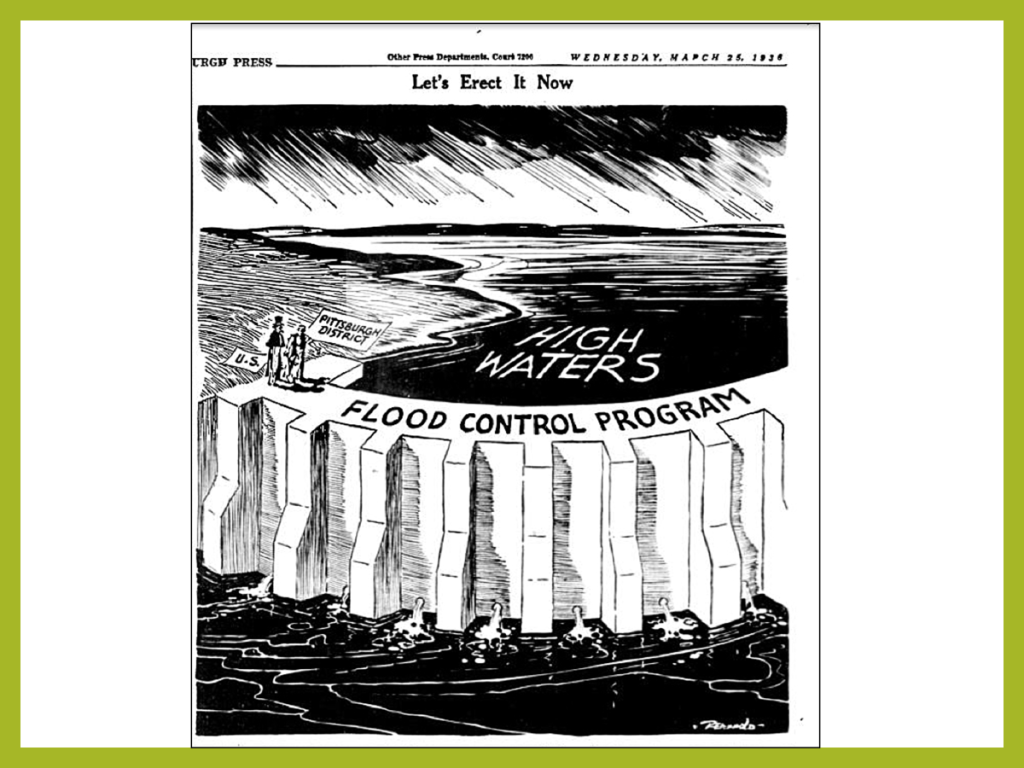
The ferry and footbridge service in Pegtown never resumed. Griftlo Park only partially opened the next few years before closing completely. Trolleys were replaced with Penn Transit Motor Buses. Flood control became a priority. The Conemaugh Dam was improved and enlarged. A new dam, the Loyalhanna, was built near Saltsburg. With these well engineered dams built for flood control, this kind of flooding should never happen again.
 Apollo Area Historical Society
Thank you for posting this. As many of the pictured buildings are no longer standing, it is a bit of a challenge; but one can roughly follow the route using Google Maps. Truly an astonishing event.
LikeLike
Thank you for your kind words. Glad you enjoyed the article! I experimented with including a Google Map to the blog…we’ll see how that works!
LikeLike